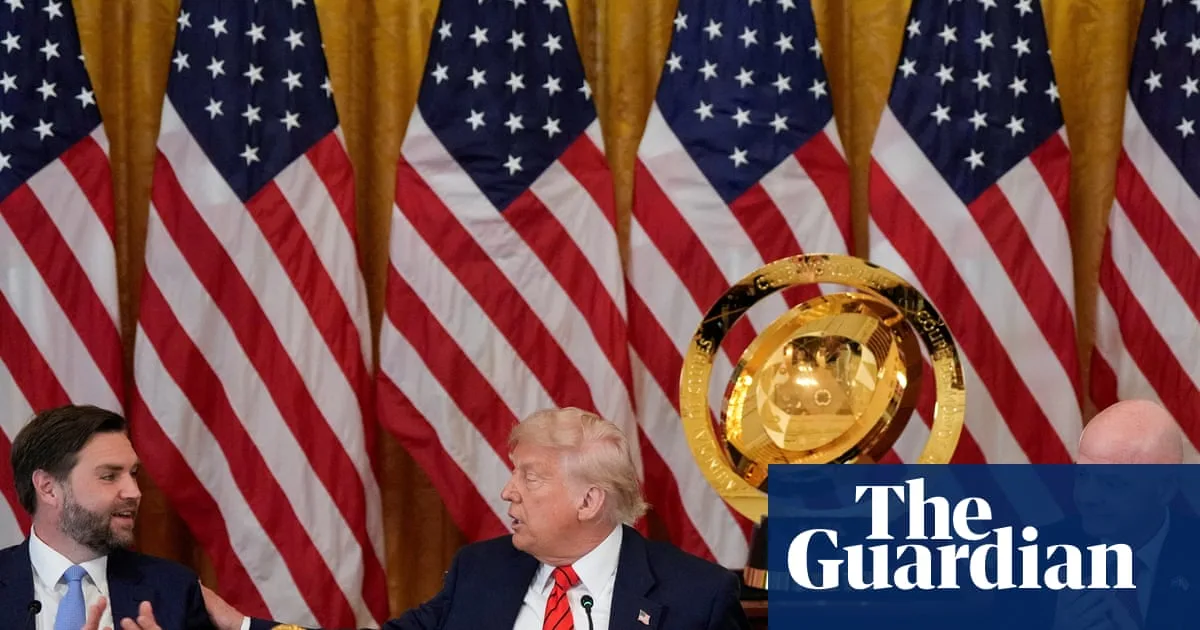
US President Donald Trump convened the first meeting of his administration's 2026 World Cup taskforce on Tuesday, boasting that the tournament would be the 'biggest, safest and most extraordinary soccer tournament in history'. However, concerns over visa processing and security were highlighted by Homeland Security Secretary Kristi Noem, who said 2 million foreign visitors are expected.
Noem acknowledged the challenges, stating that her department would work with the State Department and FBI to handle travel documents, and that 'it will go smoothly'. Former US Soccer Federation president Carlos Cordeiro will also assist with document processing. FIFA President Gianni Infantino added that 'everyone who wants to come here to enjoy, to have fun to celebrate the game, will be able to do that'.
Despite assurances, Vice-President JD Vance warned visitors: 'When the time is up, they'll have to go home. Otherwise they'll have to talk to Secretary Noem.' Transportation Secretary Sean Duffy said inter-city travel would rely on buses, and encouraged visitors to take road trips, but added: 'Don't overstay your visa.'

Trump denied that tensions with Mexico and Canada would affect co-hosting, and said the matter was discussed with Canadian Prime Minister Mark Carney. Trump also revealed he was unaware that Russia is banned from FIFA competitions due to its invasion of Ukraine, prompting Infantino to confirm the ban and express hope for peace.