World Cup 2026 Faces Mounting Uncertainty Amid Escalating US-Iran Conflict
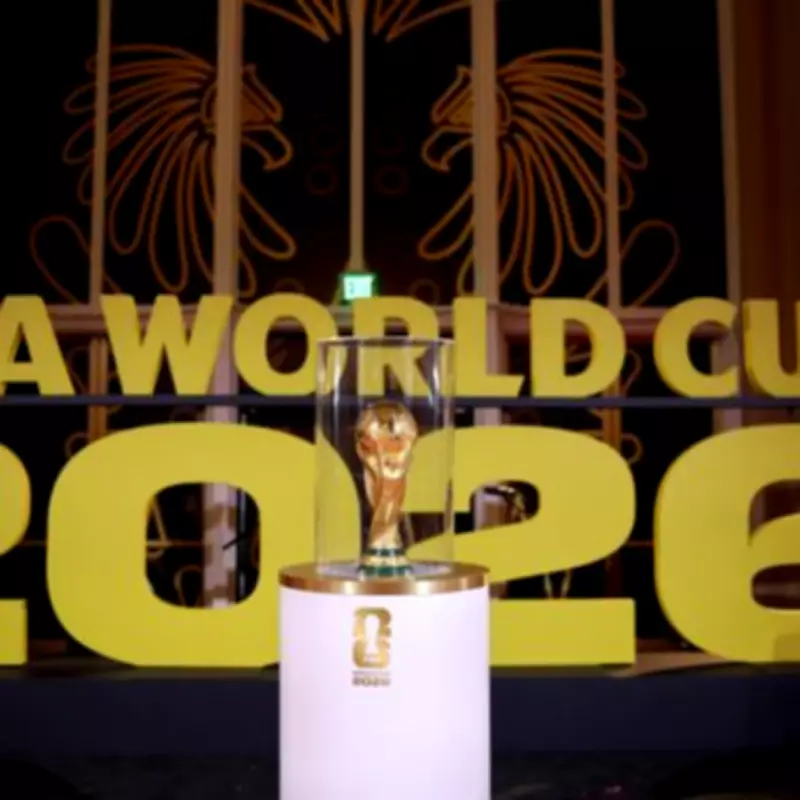
The highly anticipated 2026 FIFA World Cup, scheduled to be hosted across the United States, Canada, and Mexico, is now shrouded in significant uncertainty as escalating tensions between the United States and Iran spark widespread fears of potential disruption or even cancellation. With the tournament's kick-off merely three months away, analysts and officials are grappling with the geopolitical fallout that threatens to overshadow this premier global sporting event.
Iran's Boycott Threat and Global Conflict Backdrop
Iran's sports minister, Ahmad Donyamal, has issued a stark declaration, stating in a recent interview, "Since this corrupt government assassinated our leader, we have no conditions under which we can participate in the World Cup." He elaborated, citing malicious measures against Iran that have forced two wars within eight or nine months, resulting in several thousand casualties, and concluding, "Therefore, we definitely have no possibility of participating in this way." This statement follows recent missile exchanges between the US and Iran, amplifying concerns about regional stability.
The global context is particularly fraught, with numerous conflicts worldwide creating a social and political climate some describe as verging on World War-like conditions. This marks the first time in 32 years that the United States will host the football tournament, yet the nation finds itself embroiled in several significant ongoing conflicts just as preparations reach their final stages.

Historical Precedents and Political Boycotts
History provides sobering parallels, as World Cups have been cancelled twice before due to wars. During the Second World War, when stadiums were repurposed as military bases, the 1942 and 1946 tournaments—originally scheduled for either Nazi Germany or Brazil—did not proceed. Following the war's conclusion, plans revived with FIFA granting hosting rights to Brazil after a 12-year hiatus.
Moreover, unilateral boycotts by federations are not uncommon in football history. Examples include:
- In the 1950s, Turkey, Indonesia, Egypt, and Sudan withdrew from qualifiers, refusing to play against Israel.
- The entire African continent boycotted the 1966 World Cup after FIFA ruled it must compete with Asia and Oceania for a single spot.
- The USSR boycotted the 1974 playoffs, declining to play Chile for political reasons.
- England held extensive talks in 1982 about avoiding a match against Argentina during Falklands War tensions.
FIFA's Response and Tournament Outlook
FIFA has issued a statement addressing the growing concerns. Heimo Schirgi, FIFA's World Cup chief operating officer, stated at the tournament's International Broadcast Centre, "If I had a crystal ball, I could tell you now what is going to happen, but obviously the situation is developing. It's changing day by day, and we are monitoring closely." He emphasized collaboration with federal and international partners to evaluate the situation, taking it day by day until a resolution is reached.
Schirgi added, "And the World Cup will go on, obviously, right? The World Cup is too big, and we hope that everyone who has qualified can participate. Given the state of the world today, this will be a great opportunity to bring everyone together." He highlighted the tournament's unique global unifying power, witnessed in previous hosts like Qatar and Russia, where people were amazed by its international scope.
Additional Geopolitical Factors and Qualifications
Other analysts note that Iran did not withdraw from group matches in 2025, despite reports of the US targeting its nuclear facilities, suggesting some resilience in sports diplomacy. Meanwhile, Russia remains barred from international football competitions following its 2022 invasion of Ukraine. Ukraine's involvement in the World Cup is currently unconfirmed, dependent on qualification match outcomes scheduled to be determined by the end of March.

When questioned about Iran's potential participation, former President Donald Trump told Politico, "I really don't care. I think Iran is a very badly defeated country. They're running on fumes." This dismissive stance contrasts with the high stakes for FIFA and global football fans, who now await further developments with bated breath as the tournament approaches amidst unprecedented geopolitical challenges.