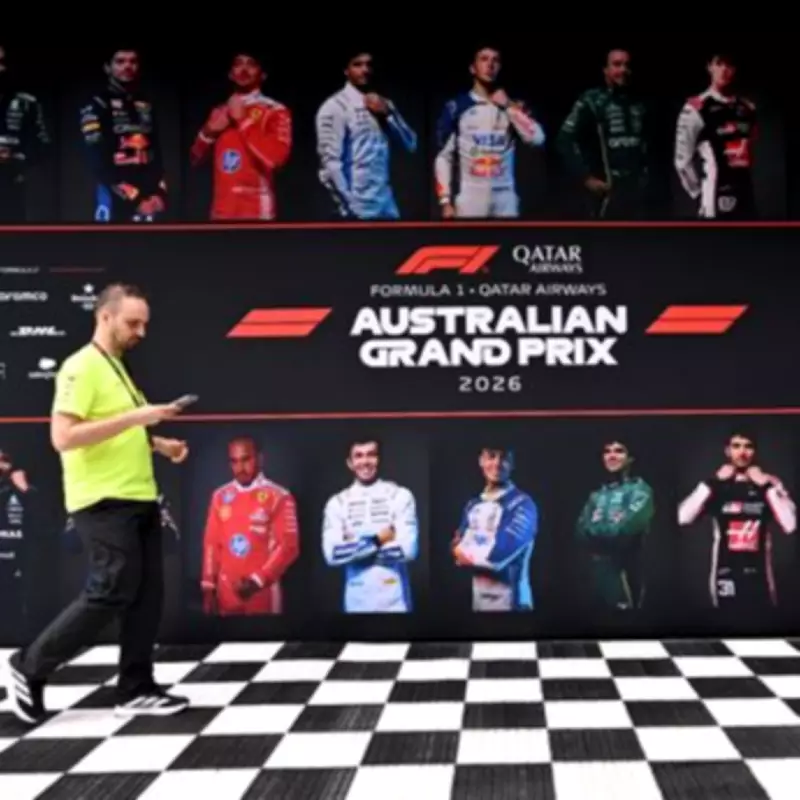
Formula 1 has taken urgent measures to secure the Australian Grand Prix in Melbourne this weekend, as escalating conflict in the Middle East throws the upcoming races in Bahrain and Saudi Arabia into serious doubt. The sport's governing bodies have been forced to charter planes from the UK and Europe to transport approximately 1,000 team and management staff whose commercial flights were cancelled due to airspace closures across several nations.
Travel Chaos and Contingency Plans
Travis Auld, the chief executive of the Australian Grand Prix Corporation, expressed strong confidence that the Melbourne event would proceed without disruption. "We are really confident that the Melbourne race will not be affected," Auld stated, highlighting that priority travel arrangements have been made for essential personnel including drivers, engineers, and team principals.
"The drivers will be here, the engineers will be here, the team principals will be here," Auld confirmed. "They're the ones that have been prioritised for travel and so you won't see any surprise drivers under a helmet."

Logistical Challenges and Solutions
At least half of the stranded F1 personnel have already been accommodated on specially chartered aircraft to ensure their timely arrival in Australia. The race cars themselves reached their destination without issue, having been transported directly from Bahrain following pre-season testing last month.
However, some team members remain stuck in Manama, Bahrain, after Pirelli cancelled a scheduled wet-weather tyre test. The city has been among those targeted by Iranian missiles since counter-attacks began following Saturday's US and Israeli strike on Iranian leadership.
Auld acknowledged that some teams may need to reassign trackside staff into different roles for the initial races of the season, but reassured fans: "Luckily, we've been able to get everyone that needs to be here, here. My understanding is that's all now been locked in, everyone will be here ready for the race and fans won't notice any difference."
Uncertain Future for Middle Eastern Races
While the Australian Grand Prix appears secure, significant uncertainty surrounds the Bahrain Grand Prix scheduled for 12 April and the Saudi Arabian Grand Prix set for 19 April. The World Endurance Championship has already postponed its season opener in Qatar, originally planned for late March, citing safety concerns.
FIA president Mohammed ben Sulayem issued a statement emphasising that "safety and wellbeing will guide our decisions as we assess the forthcoming events scheduled there for the FIA World Endurance Championship and the FIA Formula One World Championship."
Monitoring and Contingency Planning
Formula 1 officials confirmed they are "closely monitoring" developments in the Middle East, with final decisions about the Bahrain and Saudi races to be made closer to their scheduled dates. The sport has prepared contingency plans to maintain a full 24-race season should cancellation of those two events become necessary.
An F1 spokesperson noted: "Our next three races are in Australia, China and Japan and not in the Middle East - those races are not for a number of weeks. As always, we closely monitor any situation like this and work closely with relevant authorities."
Similar contingency arrangements were established for the Qatar and Abu Dhabi Grands Prix late last year, though both events ultimately proceeded as planned. The current situation represents one of the most significant logistical challenges Formula 1 has faced in recent seasons, testing the sport's ability to adapt to geopolitical instability while maintaining its global racing calendar.