F1's New Era Begins in Australia Amid Driver Criticism of 'Worst Ever' Cars
The Australian Grand Prix at Albert Park marks a pivotal moment in Formula One history, as the sport's most significant rule changes are put to their first real test. Daily Mail Sport provides comprehensive lap-by-lap updates, capturing the drama and technical challenges unfolding on one of the year's quickest tracks.
Grid Line-Up and Qualifying Drama
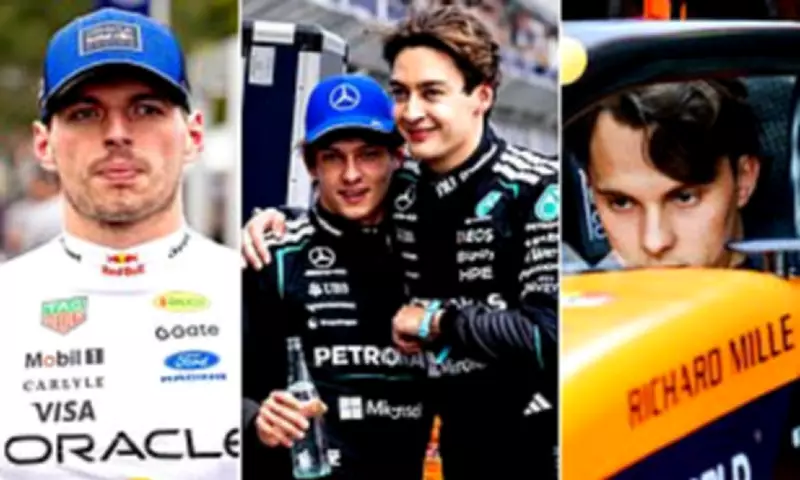
Barring any last-minute developments, the starting grid for the race features a mix of established stars and emerging talents. George Russell of Mercedes leads the pack, followed by teammate Kimi Antonelli, with Isack Hadjar of Red Bull in third. The lineup includes notable names like Charles Leclerc for Ferrari, Oscar Piastri for McLaren, and Lewis Hamilton for Ferrari, while Max Verstappen starts 20th after a qualifying crash.
Qualifying on Saturday confirmed suspicions that Mercedes had been downplaying their pace during preseason testing. Russell and Antonelli dominated, with Russell finishing a staggering eight-tenths of a second ahead of Hadjar. This performance has sparked fears among rival teams, reminiscent of Mercedes' dominance in 2014 when new hybrid engine rules were introduced. However, Verstappen's early exit due to a rear lock-up crash may have skewed the gap, as his Red Bull teammate showed impressive speed.

Driver Backlash Against New Car Technology
The biggest rule change in F1 history centers on a seismic shift in power distribution, with this year's engines generating 50% of their power via battery, compared to just 20% in the previous hybrid era that began in 2014. This requires drivers to constantly top up their batteries in heavy braking zones or through 'super clipping,' using the petrol engine to recharge the battery.
At the fast-flowing Melbourne circuit, which lacks many heavy braking zones, super clipping has become prevalent, leading to significant slowdowns in high-speed sections. Reigning world champion Lando Norris, who qualified sixth for McLaren, did not mince words when criticizing the new cars. He stated, 'Everyone knows what the issues are. It's a 50-50 split and it just doesn't work.' Norris elaborated that drivers must decelerate excessively before corners to manage battery levels, making the vehicles difficult to handle. He lamented, 'We've come from the best cars ever made in Formula One, and the nicest to drive, to probably the worst. It sucks, but you have to live with it.'
Race Expectations and Historical Context
As the race unfolds, all eyes are on Oscar Piastri, who aims to become the first Australian winner since Alan Jones in 1980. The event not only tests driver skill but also the adaptability of teams to the new regulations, which could reshape competitive dynamics for seasons to come. Fans and analysts alike are keenly observing whether Mercedes' qualifying dominance translates into race success or if other teams can overcome the technical hurdles posed by the battery-heavy engines.
Stay tuned for continuous updates as the Australian Grand Prix progresses, highlighting key moments and reactions from the paddock in this new era of Formula One racing.