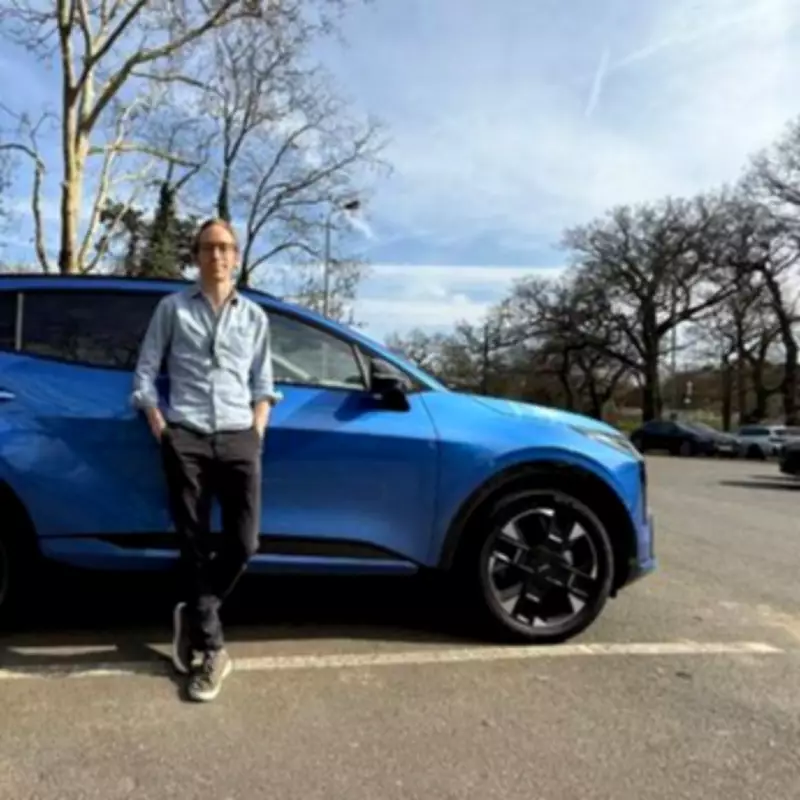
Kia Sportage vs Ford Puma: A Head-to-Head Comparison
In the competitive landscape of the UK automotive market, the battle for the best-selling car title intensifies each year. According to data from the Society of Motor Manufacturers and Traders (SMMT), the Ford Puma has recently held the crown, succeeding the discontinued Ford Fiesta. However, two formidable challengers have emerged: the Kia Sportage and the Jaecoo 7. Early in 2026, the Sportage briefly outsold the Puma, sparking interest in whether it could permanently dethrone Ford's supremacy.
Specifications and Pricing
The Kia Sportage model tested was the HEV 'GT-Line' 1.6 T-GDi 6AT FWD variant, featuring a hybrid powertrain. This configuration combines a petrol engine with a 47.7kW electric motor, delivering 235bhp and 265Nm of torque to the front wheels via a six-speed automatic gearbox. Boot capacity is impressive, offering 587 litres with rear seats upright and expanding to 1,776 litres when folded. On the road, it achieves a combined fuel economy of 50.4mpg. Priced at £36,975 as configured, the Sportage starts from as low as £23,954.17 for the manual gearbox version, making it accessible across a range similar to the Puma's £20,000 to £30,000 spectrum, with finance options available for both models.
Interior Design and Usability
Inside the Kia Sportage, the cabin blends physical buttons, a touchscreen display, and haptic controls. Key features include a manual gear selector, buttons for heated seats and steering wheel, and an ignition button. The steering wheel, with a squared design and rounded edges, mirrors the Puma's approach, though it can feel oversized and hinder manoeuvrability. Shortcut buttons on the wheel allow easy deactivation of lane assist and toggling between Eco and Sport Mode. The infotainment system, shared with Hyundai due to corporate ownership, requires some familiarisation but is generally straightforward. A minor drawback is the climate control managed via a haptic touch bar, which can feel fiddly, and the steering wheel's limited extension for optimal driving positions.

On-Road Performance
Despite its wider frame and unconventional steering wheel, the Kia Sportage delivers a superior driving experience compared to the Ford Puma. The Puma often feels like a city car on stilts, with excessive body roll in corners. In contrast, the Sportage remains composed and stable, providing genuine feedback through the steering and pedals. While it doesn't match the driving enjoyment of luxury models like the BMW iX3, it offers predictable and unremarkable performance, which is a positive trait for everyday reliability. The regenerative braking system, with three intensity levels, can be overly responsive on descents, occasionally disengaging and re-engaging hesitantly. Additionally, the hybrid system's electric-only periods are shorter than ideal, with the petrol engine frequently reactivating, which may reduce fuel efficiency benefits for hybrid seekers.
Conclusion and Verdict
Overall, the Kia Sportage proves to be a better vehicle than the Ford Puma. Its larger size, while potentially less suited for tight spaces, offers advantages for carrying bulkier loads. The interior is more user-friendly, with fewer functions reliant on the touchscreen, and it provides a more enjoyable and stable driving experience on both motorways and B-roads. As the year progresses, it will be intriguing to see if the Sportage can consistently outsell the Puma and claim the title of the UK's best-selling car. Based on this review, the Kia Sportage earns a solid 7.5 out of 10, highlighting its strengths in a fiercely contested market.