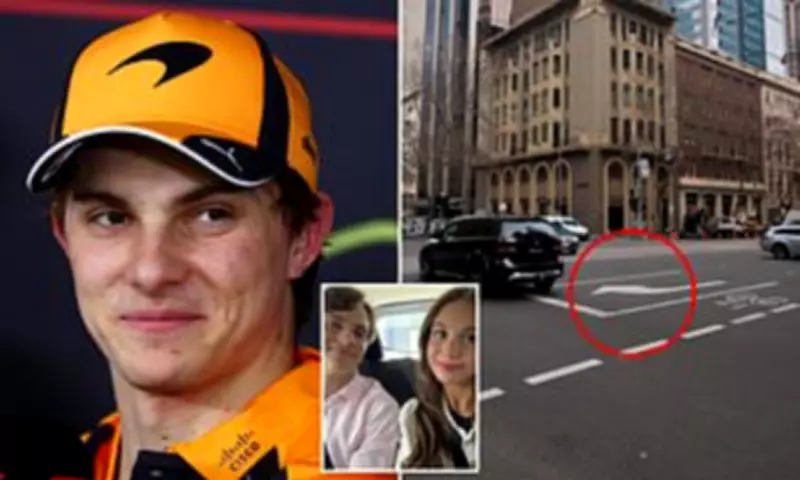
Australian Formula One sensation Oscar Piastri navigates the world's fastest racing circuits with supreme confidence, yet one peculiar feature of his hometown streets leaves him feeling distinctly uneasy. As Piastri mania sweeps Melbourne ahead of this weekend's Australian Grand Prix, the McLaren driver has confessed that negotiating the city's unique hook turns provokes more anxiety than hurtling around Albert Park at 350 kilometres per hour.
The Dreaded Hook Turn Manoeuvre
'I try to avoid the city and avoid the hook turns because they still make me a bit anxious,' Piastri revealed. 'But no, I drive myself around when I'm home.' This admission comes despite his comfort with extreme racing speeds and complex track conditions.
Hook turns represent a distinctly Melbourne driving challenge, requiring motorists to execute right turns from specific CBD intersections marked with 'Right Turn from Left Only' signage. Drivers must move to the far-left lane, come to a complete stop, and await the perpendicular traffic lights turning green before proceeding with their turn. Approximately forty intersections throughout Melbourne's central business district mandate this unusual manoeuvre, which exists nowhere else in Australia.

Safety Rationale Behind Unconventional Turns
The system primarily serves to keep central lanes clear for trams, Melbourne's iconic public transport vehicles. Transportation experts consider hook turns safer than conventional right turns because they significantly reduce dangerous crossings through oncoming traffic streams. For Piastri, however, this logical safety feature translates to personal driving discomfort when he returns home between international racing commitments.
Championship Ambitions on Track
Meanwhile, Piastri's professional focus remains firmly fixed on becoming Australia's first Formula One world champion in forty-six years. The young driver enters the 2026 season determined to avenge last year's late-season fade-out that saw McLaren teammate Lando Norris claim the championship title.
'He's got to be stronger after that, because obviously every experience you learn from and get better and stronger,' said Ricky Flynn, Piastri's former karting mentor who has guided five drivers to Formula One. 'I'm sure he's gutted he didn't win it, after leading the points. But I don't think it'll faze him in that he'll crumble in any way.'
Adapting to Sweeping Regulation Changes
This season presents additional challenges with Formula One implementing wide-sweeping regulation changes. Cars will become thirty kilograms lighter through modifications to power units, tyres, aerodynamics, and fuel systems—alterations that seven-time world champion Lewis Hamilton has described as 'ridiculously complex.'
Historical evidence suggests Piastri thrives amid change. He claimed the 2020 Formula Three Championship during his debut year in those cars, then secured the Formula Two championship the following season. Even his early European karting transition demonstrated remarkable adaptability when he joined Ricky Flynn Motorsport in 2016 with limited international experience.
'That was unheard of,' Flynn recalled. 'It was a whole new ball game for him. And the competition is obviously the best in the world. Not only did he have to learn the cars, he had to learn all the circuits and everything else. He had a huge, huge learning curve to go through from everything, because obviously he was not at home, not with his parents. And he did it.'
Unflappable Character Tested
Piastri's trademark composure faced its sternest test late last season when a disastrous weekend in Azerbaijan triggered an eight-race slump where he surrendered a substantial championship lead. Flynn watched nervously as his former protégé battled through this challenging period, having also guided Norris to karting junior world championship glory in 2014.
'Nothing particularly fazed him or was a problem,' Flynn noted about Piastri's early career adaptability. 'He settled in pretty quick in both England and then obviously the team. He picked up sticks to come over to the world's highest category. It was a big ask, but he just got on with it.'

As Melbourne prepares for Grand Prix festivities, Piastri balances hometown driving anxieties with global championship aspirations, embodying the paradox of a racer more comfortable at extreme speeds than with unconventional urban intersections.