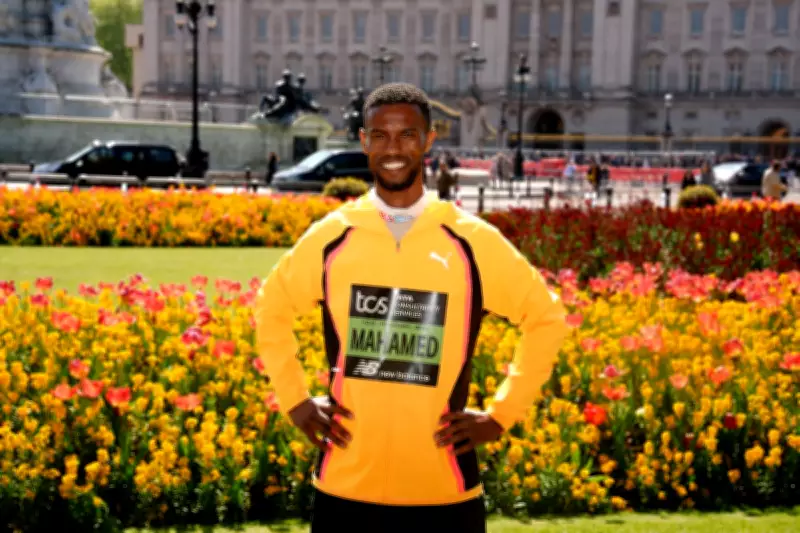
Mahamed Mahamed, the Southampton-based Olympian and fourth-fastest Briton in marathon history, is undertaking a unique training regimen as he prepares for the London Marathon while observing the holy month of Ramadan. The 28-year-old athlete has relocated to Ifrane, Morocco, where he trains nocturnally in the Atlas Mountains after evening prayers at the mosque.
Nocturnal Training Regime in the Atlas Mountains
Mahamed's daily routine during Ramadan is meticulously structured around his fasting and athletic commitments. His longest days commence around 4pm, when he departs for his initial training session. Following this, he returns home to break his fast with a meal, attends mosque for prayers, and then heads out for another session, typically concluding around 1am.
After a late-night snack, Mahamed sleeps for only one to two hours before waking again at approximately 4am for suhoor, the pre-dawn meal. He then returns to bed, rising for the day between 9am and 10am. The athlete acknowledges the challenge of this schedule, particularly regarding sleep deprivation, but emphasizes his dedication to both his profession and his faith.

Community Support and Nutritional Considerations
Training under floodlights on the track alongside other Muslim athletes has provided Mahamed with a sense of community among those balancing religious observance with sporting excellence. While some have advised against fasting during critical competition preparation, Mahamed remains steadfast in his routine.
"Some people think I shouldn't fast and train," Mahamed told the Press Association. "Especially now, because I've got a competition coming up, and they think I should focus on training for now, and then maybe fast. But I'm used to it. It became my routine, so I am grateful for that advice, but I just get on with everything."
Nutritionally, Mahamed benefits from having someone prepare meals for him, though he follows no specific dietitian-prescribed plan. Instead, he consumes hearty traditional Moroccan dishes that provide the necessary sustenance for his demanding schedule.
Competitive Ambitions and Olympic Aspirations
Mahamed is determined to push his limits this season as part of what he describes as a "new era" of British marathon running. He is one of only four active British male marathoners who have completed the distance in under two hours and eight minutes.
His immediate goals include achieving a personal best at the London Marathon, where he finished fourth in 2024, and securing a podium position at the European Championships in Birmingham. Beyond these objectives, Mahamed harbors ambitions of potentially competing in both summer and winter Olympic Games.
Cross-Country's Olympic Prospects
World Athletics president Lord Sebastian Coe has been advocating for cross-country's inclusion in the Winter Olympics, suggesting there is a "good chance" it could feature as early as the 2030 Games in the French Alps, though this would require amendments to the Olympic charter.
Mahamed, a two-time English cross-country champion who represented Great Britain at the 2019 World Championships, expressed enthusiasm for this possibility. "I would love to see cross-country in the Olympics," he said. "It would be a dream come true to do both. I think I would do both. If that sport is available, I want to go."
The athlete views Ramadan not as a hindrance but as a source of focus and self-understanding. "I take my job seriously, but Ramadan is the most important for me," Mahamed explained. "It makes me focus as well. It makes me understand who I am and what I could do."
Through his unique approach to training during Ramadan, Mahamed Mahamed demonstrates how elite athletes can successfully integrate religious observance with world-class athletic preparation, finding both physical and spiritual strength in the process.