The upcoming Milan Cortina 2026 Winter Olympic Games are set to make history as the most geographically dispersed Olympics ever staged, covering a staggering area of over 22,000 square kilometres across northern Italy. This unprecedented logistical approach presents both significant challenges and unique opportunities for athletes, spectators, and organisers as they prepare for the February 6-22 event.
An Unprecedented Olympic Landscape
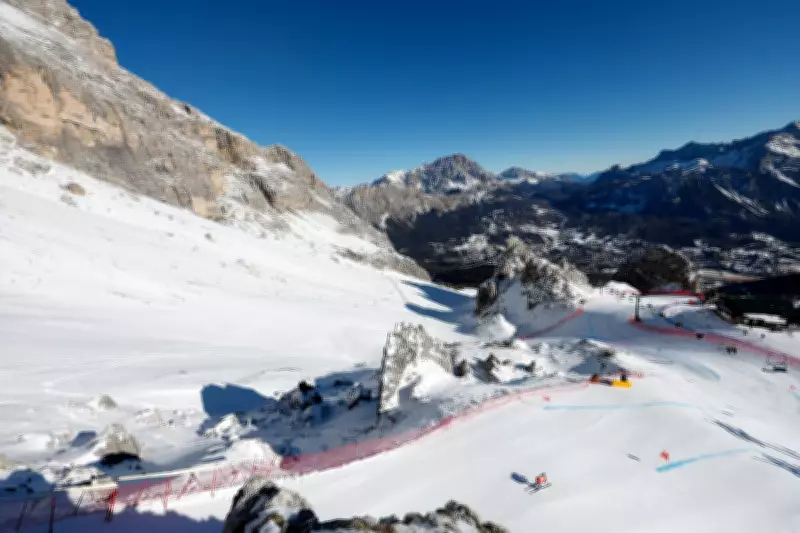
Organisers have deliberately chosen to utilise existing infrastructure as much as possible, resulting in a Games without a central hub that requires strategic planning from everyone involved. The competition venues will be spread across multiple locations including Milan for ice sports, Bormio for men's Alpine skiing, Livigno for snowboarding, Predazzo for cross-country skiing, Anterselva for biathlon, and Cortina d'Ampezzo for women's Alpine skiing, with the closing ceremony scheduled for Verona.
This geographical spread means that attempting to attend events across all venues would involve a circuit covering more than 850 kilometres or approximately 530 miles, amounting to nearly thirteen hours of non-stop driving. The decision to distribute events so widely has reduced the need for new construction while allowing multiple regions in northern Italy to benefit from Olympic investments and tourism.

Strategic Choices for Spectators and Athletes
However, this dispersed model also means the Games lack a single emotional centre, forcing spectators to make difficult choices about which events to attend and making it challenging for athletes to support teammates competing in far-flung disciplines. Organisers have faced particular challenges in completing the Cortina sliding venue and Milan's Santagiulia ice hockey arena on schedule, highlighting the complexities of managing such a widespread event.
Navigating the Olympic Circuit
Mona Patel, a Los Angeles-based lawyer, exemplifies the strategic planning required for these Games. She and her partner have developed an intricate itinerary months in advance to attend men's downhill skiing and snowboarding in the Valtellina cluster near the Swiss border, along with bobsled and luge events in Cortina d'Ampezzo.
"Our priority is to see Olympic events," Patel explained. "If there is going to be a powder day, we would love to get out. Sometimes if there is an event in the afternoon or evening, we can do both. We are not daunted by the distances."
To make their ambitious plan workable, they've booked accommodation in both Valtellina and South Tyrol, positioning themselves within range of their selected mountain events while allowing time for personal skiing. Patel has made the complex itinerary affordable through HomeExchange, using points accumulated from listing her California property on the exchange platform.
Family-Friendly Olympic Experiences
For Lars Thorn, attending his sixth Olympics but the first with his wife and two young children, the geographical spread has influenced different decisions. Coming from southern California, he ruled out outdoor competitions due to cold weather concerns and decided to focus exclusively on ice sports in Milan.
"With two little kids, being outside in the elements doesn't lend itself to a family experience," Thorn noted, adding that distance was another factor in his decision, though he expressed regret about potentially missing Lindsey Vonn's competition in Cortina following her recent knee injury.
Thorn plans to take his five-year-old son to long track speed skating and hockey events in Milan, all accessible by public transport, while his wife and daughter explore Milan's attractions. He contrasted this experience with the upcoming Los Angeles Olympics, where he'll be able to walk to four venues from home and reach seven more by a quick ferry ride.

Innovative Ceremonies and Accommodation Solutions
These will be the first Olympics with two official hub cities and events clustered in four distinct areas, requiring housing solutions not only in Milan and Cortina but also in Anterselva near the Austrian border, Bormio and Livigno near Switzerland, and the Val di Fiemme in Trentino. While Milan will receive a legacy Olympic Village that will become student housing for 1,700 people after the Games, Cortina has a temporary village, with existing hotels and facilities adapted in other locations.
The opening ceremony at Milan's San Siro Stadium will feature performances by headliners including Mariah Carey and Andrea Bocelli, but to ensure participation from athletes at distant venues, elements will be broadcast simultaneously from Livigno, Predazzo, and Cortina. Medal ceremonies will also adapt to the geographical challenges, taking place immediately after competitions at each venue rather than at a central location.
"If you have tickets to an event, it's nice to see the crowning of the champion," Thorn observed, while noting that centralised celebration areas like those in Turin 2006 and Salt Lake City created unique atmospheres where "the city could feel like they are part of it."
This innovative approach to Olympic hosting represents both a practical response to infrastructure considerations and a bold experiment in distributed event management that could influence future Games as organisers balance sustainability concerns with spectator experience and athlete participation.