Winter Olympic Stars-in-Waiting Ready to Usher in New Era of Success for Team GB
Great Britain will head to the Games in Milan and Cortina with medal hopes higher than ever, marking a profound transformation from the nation's historical role as winter sports underdogs to a genuine powerhouse across multiple disciplines.
From Snowy Beginnings to Medal Avalanche
When Jenny Jones swept to slopestyle bronze in Sochi in 2014 to clinch Great Britain's first ever Olympic medal on snow, she ignited a spark that has grown into a blazing trail of opportunity. The expanding snowboard and freestyle programmes have fundamentally changed Britain's winter sports landscape. "We don't even have mountains in our country, but this shows anyone can make it happen," exclaimed Jones' team-mate Jamie Nicholls at the time, as snow domes across the nation filled with youngsters inspired to test the sports' high-octane antics for themselves.
Twelve years later, the era of gallant no-hopers has been decisively banished. Nicholls' flush of enthusiasm has proved remarkably prescient. Bolstered by these non-traditional disciplines, Great Britain approaches Milan and Cortina on the cusp of a potentially history-making moment that could redefine the nation's winter sporting identity.

Girl Power Leading the Charge
By mid-January, four British snowboard and freestyle athletes had already won individual World Cup and X Games medals this season across five different disciplines. Should this form be replicated in the Italian Alps, that medal haul alone would match the country's previous best total of five achieved in both Sochi and Pyeongchang in 2018.
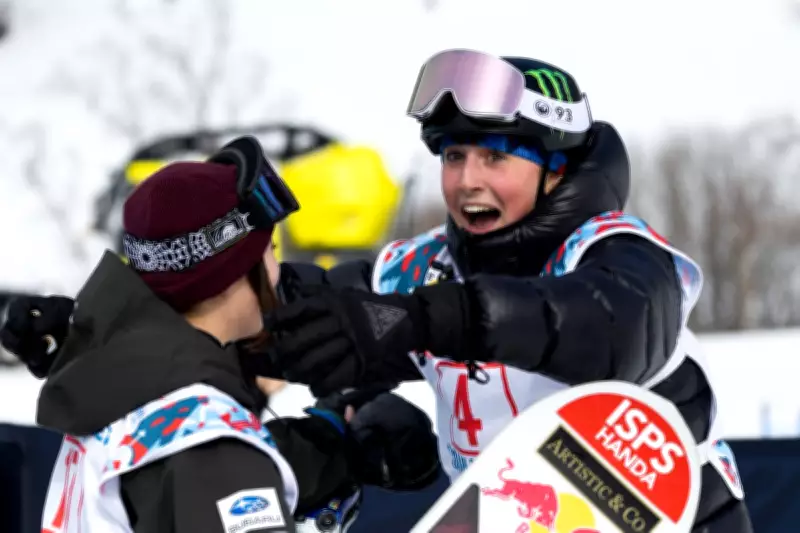
Female athletes are fuelling this remarkable surge. Cheshire's 19-year-old snowboarding sensation Mia Brookes, with her multiple medal-winning exploits in both Big Air and slopestyle in recent seasons, stands as one of several strong contenders to become the first Briton to win two medals at the same Winter Games.
Aberdeen's Kirsty Muir, who reached the Big Air final on her Games debut as a 17-year-old in Beijing, has rebounded spectacularly from an injury that wiped out her 2024 season. Like Brookes, she travels to Italy on the back of a confidence-boosting gold medal at the prestigious Aspen X Games just two weeks ago.
Zoe Atkin, whose sister Izzy became Britain's first medallist on skis in 2018, leads the pack in the women's freestyle halfpipe. Meanwhile, former world champion Charlotte Bankes has secured both individual and team snowboard-cross gold this season, the latter alongside team-mate Huw Nightingale, showcasing impressive depth across the squad.
Beyond the Slopes: A Multi-Discipline Threat
This snowboard and freestyle surge represents just one facet of an evolution that lifts Team GB's medal prospects for Milan and Cortina to previously unimaginable heights. The Cortina sliding chute presents another venue that could single-handedly yield a record-equalling tally. Matt Weston and Marcus Wyatt have dominated the World Cup season in skeleton, while Tabby Stoecker and Amelia Coltman have both reached the women's podium. Britain has also won two of four mixed team World Cups in the sliding disciplines.
In curling, Bruce Mouat's men's team arrive at the Games perched atop the World rankings, eager to improve upon their near-miss silver medal from four years ago. Mouat and Jennifer Dodds, part of Eve Muirhead's gold medal-winning rink in Beijing, start as firm favourites in the mixed team event, adding further strength to Britain's curling contingent.
A Cultural Shift in British Winter Sport
This marks an extraordinary evolution from previous eras of also-rans. Between Torvill and Dean's iconic 1984 Bolero performance and Rhona Martin's curling 'Stone of Destiny' in 2002, genuine medal hopes were few and far between. The nation often contented itself with celebrating minor successes, such as Nicky Gooch's short-track bronze in 1994.

Today's landscape could not be more different. Throw in ice dancers Lilah Fear and Lewis Gibson, who aim to become Britain's first ice dancing medallists since Torvill and Dean with their innovative Spice Girls routine, and perhaps even Dave Ryding. Ryding epitomises a new approach to winter sports, having progressed from a dry slope at Pendle to a remarkable World Cup win in Kitzbuhel in 2022. Great Britain's Winter Olympic hopes have never appeared more robust or diverse.
The Inevitable Jeopardy of Winter Sport
Of course, jeopardy will inevitably intervene. Even the biggest Winter Olympic favourites remain acutely aware of history's cautionary tales, such as Steven Bradbury picking his way through the wreckage of four fallers to claim short-track gold in 2002, or US snowboarder Lindsey Jacobellis crashing off her final jump four years later with gold at her mercy.
This unpredictability is precisely what makes the Winter Olympics so irresistibly unique and renders even the best-intentioned medal predictions open to potential ridicule. The fine margins between triumph and disaster define these Games.
Yet, almost forty years after a nation would shut its eyes, hold its breath, and simply hope its plucky British athletes would land on two feet and escape unscathed, there is now every reason to raise expectations dramatically. The new generation of British winter athletes stands ready not just to participate, but to compete for the podium across multiple disciplines, fulfilling Jamie Nicholls' prophetic vision and ushering in a genuinely new era of success for Team GB.