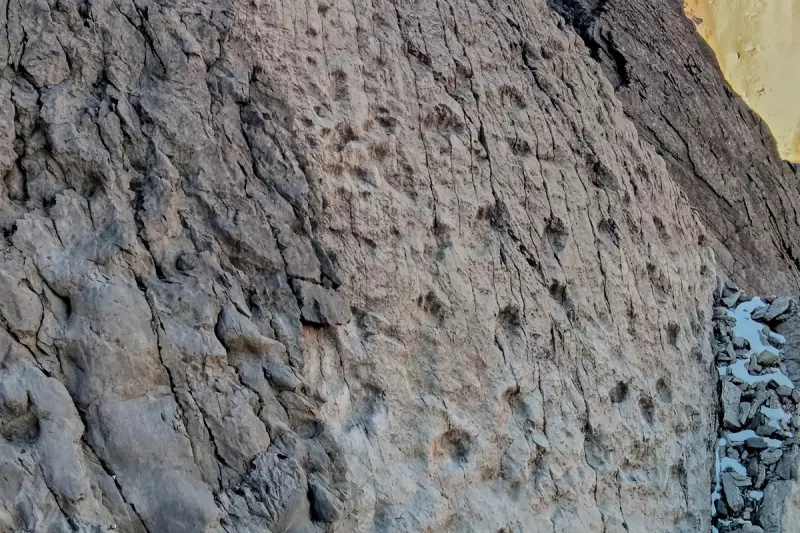
In a remarkable discovery that bridges deep history and modern sport, a vast collection of dinosaur footprints, dating back an astonishing 210 million years, has been found in an Italian national park near a venue for the upcoming 2026 Winter Olympics.
A Photographer's Keen Eye Uncovers Prehistoric Treasure
Wildlife photographer Elio Della Ferrera made the stunning find in September while photographing deer and vultures in the Stelvio National Park. His camera lens, trained on a north-facing rock wall some 600 metres above the nearest road, picked up something unusual. Scaling the vertical surface with difficulty for a closer inspection, he was met with an incredible sight.
"The huge surprise was not so much in discovering the footprints, but in discovering such a huge quantity," Della Ferrera said. He had stumbled upon one of the oldest and largest known assemblages of dinosaur tracks ever recorded.

An Unprecedented Herd of Triassic Giants
Officials announced the discovery on Tuesday 16 December 2025. Paleontologists, led by Cristiano Dal Sasso from Milan’s Natural History Museum, were swiftly called to the remote site. The findings are extraordinary in both scale and detail.
The tracks are estimated to number up to 20,000 individual prints, spread across a five-kilometre (three-mile) area high in the Alps, at an altitude of 2,400 to 2,800 metres. The location, now near the Swiss border, was once a prehistoric coastal zone but had never before yielded dinosaur evidence.
"This time reality really surpasses fantasy," remarked Dal Sasso. The prints, some measuring 40 centimetres wide with clear claw marks, were made by long-necked, bipedal herbivores similar to Plateosaurus. These creatures could grow up to 10 metres long and weigh four tonnes.
The pattern of the footprints reveals fascinating social behaviour. The dinosaurs travelled in packs and occasionally paused in circular formations, potentially as a defensive strategy against predators. "There are very obvious traces of individuals that have walked at a slow, calm, quiet rhythmic pace, without running," Dal Sasso explained at a press conference.
A Prehistoric Gift for a Modern Games
The significance of the location is amplified by its proximity to the mountain town of Bormio, just two kilometres from the park entrance. Bormio is scheduled to host Men's Alpine Skiing events during the 6-22 February 2026 Milan Cortina Winter Olympic Games.
Lombardy's regional governor, Attilio Fontana, hailed the paleontological find as a "gift for the Olympics." While the site is too remote for winter access and public visitation plans are not yet finalised, the discovery adds a profound historical dimension to the region soon to be in the global sporting spotlight.
The sheer number of prints, preserved on a shaded rock face that made them invisible without a powerful lens, offers an unprecedented window into life during the Triassic Period. This accidental discovery by a dedicated photographer has provided science with a monumental new site for study, forever linking the ancient past with a major forthcoming chapter in international sport.