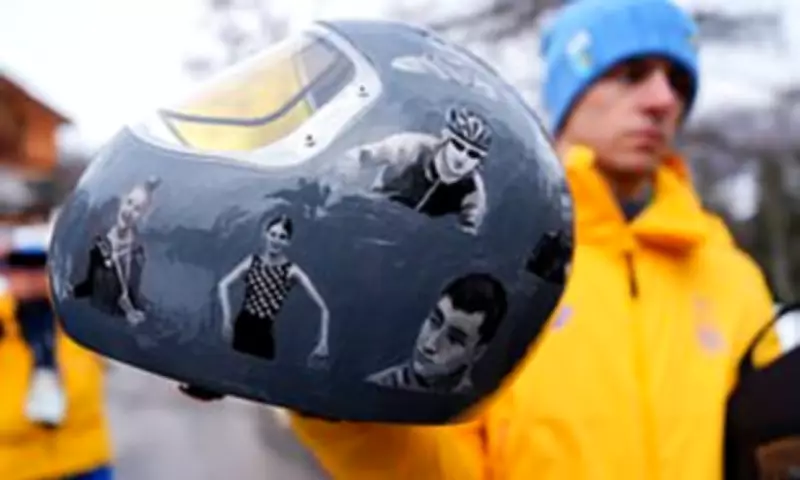
Ukrainian skeleton athlete Vladyslav Heraskevych has definitively lost his appeal against a highly contentious disqualification from the Winter Olympic Games. The Court of Arbitration for Sport (CAS) has ruled against Heraskevych, upholding the International Olympic Committee's decision to bar him from competition for wearing a helmet that displayed images honouring victims of the Russian invasion of Ukraine.
Court Upholds IOC's Political Messaging Rules
After a hearing on Friday morning, the sole arbitrator appointed by CAS found in favour of the IOC's position. The ruling determined that Heraskevych had breached strict Olympic regulations prohibiting political statements at competition venues and on the field of play. The court acknowledged the athlete's desire to commemorate Ukraine's fallen but concluded the existing rules were "reasonable and proportionate."
Freedom of Expression Versus Olympic Protocol
The arbitrator's statement expressed full sympathy for Heraskevych's commemoration and his attempt to raise awareness of the grief and devastation suffered by the Ukrainian people. However, it emphasised that while freedom of speech is a fundamental right for Olympic athletes, the Games' guidelines specifically limit the expression of views during competitions.

The ruling noted that athletes have alternative avenues to express themselves, including in press conferences, mixed zones, on social networks, or—in Heraskevych's specific case—by wearing the memorial helmet during his four permitted training runs prior to the event. The arbitrator stated the primary goal is to maintain the Olympic focus on athletic performance and sport, a common interest of all competitors who have trained for years to participate.
A Long-Shot Appeal and Missed Medal Opportunity
Heraskevych's appeal was always considered a remote possibility, particularly as the first two heats of the men's skeleton competition had already taken place on Thursday. Even if successful, his proposed remedy—to complete two supervised runs on the Cortina track on Friday—was highly impractical due to changing overnight conditions.
The disqualification came at significant personal cost for the athlete. During practice sessions in Cortina, Heraskevych had consistently placed in the top three and recorded the fastest time on Wednesday, positioning him as a genuine medal contender. His Olympic journey was abruptly halted by one of the most controversial episodes in recent Games history.
Athlete's Defiant Response
In the aftermath of the disqualification, Heraskevych took to social media to post a poignant message: "This is price of our dignity." The statement underscored his conviction that honouring Ukraine's war victims was a principle worth sacrificing his Olympic ambitions for, despite the devastating competitive outcome.
The CAS arbitrator concluded by stating she was bound by the proportionate rules and had no legal means to override them, leading to the definitive dismissal of Heraskevych's application. This case sets a clear precedent regarding the boundaries of political expression at future Olympic Games, balancing athlete advocacy with the IOC's longstanding neutrality principles.