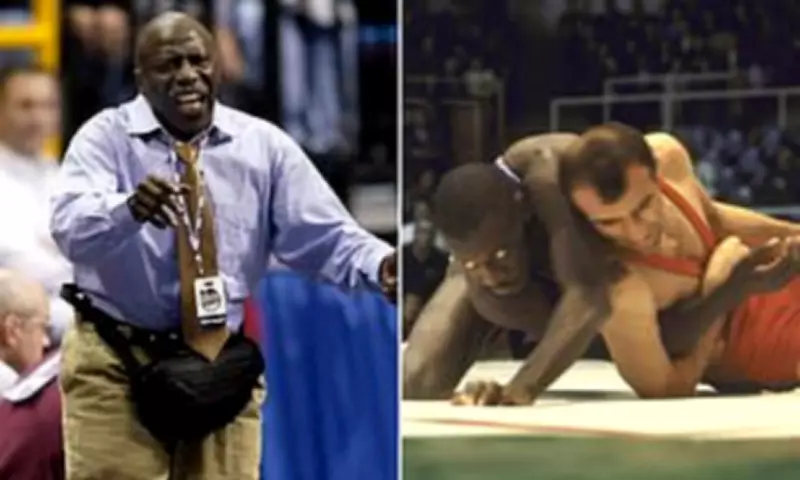
The global wrestling community is in a state of profound mourning following the passing of Olympic legend Bobby Douglas, who died at the age of 83. The wrestling icon, celebrated both for his achievements on the mats and his pioneering fight for racial equality within the sport, passed away on February 24.
University Confirms the Sad News
West Liberty University, where Douglas first emerged as a national talent during the 1960s, confirmed his death in an emotional official statement. The university's Athletic Director, Brad Forshey, expressed deep sorrow and paid tribute to Douglas's extraordinary impact.
'West Liberty University mourns the passing of one of our most distinguished alumni and a true legend in the sport of wrestling, Bobby Douglas,' Forshey stated. 'His influence on wrestling extends far beyond championships and accolades; he fundamentally shaped generations of athletes through his relentless pursuit of excellence, integrity, and discipline.'

A Legacy Woven into History
Forshey continued, emphasizing the enduring connection between Douglas and the institution: 'Bobby's legacy will forever be woven into the fabric of West Liberty, and we are incredibly proud to call him a Hilltopper. On behalf of Hilltopper Athletics, we extend our deepest condolences to the Douglas family and to the countless athletes and coaches whose lives he touched.' He concluded by noting that 'His influence will continue to inspire our student-athletes for years to come.'
Trailblazing Career and Historic Achievements
Born in 1942, Bobby Douglas transformed a fledgling wrestling program at West Liberty University into a national powerhouse before ascending to iconic status worldwide. His career was marked by groundbreaking firsts that broke significant racial barriers in American sports.
In 1964, Douglas made history by becoming the first Black wrestler to compete for the United States in the Olympic Games. He later captained the US Olympic team in 1968, demonstrating leadership on the world stage. Furthermore, in 1966, he achieved another milestone by becoming the first American wrestler of any race to place in the top two at the World Championships.
Transition to Coaching and Hall of Fame Induction
After retiring from active competition, Douglas seamlessly transitioned into coaching, where he continued to make an indelible mark. He became one of only four collegiate coaches in history to surpass 400 dual meet victories, a testament to his strategic acumen and dedication. Overall, his involvement in wrestling spanned six Olympic Games, either as a competitor or a coach.
In 1987, Douglas's contributions were permanently honored when he became the first Black athlete to be inducted into the National Wrestling Hall of Fame, cementing his status as a pioneer.
Personal Tributes from the Wrestling World
In a heartfelt tribute, current West Liberty head coach Danny Irwin shared how Douglas profoundly impacted him both personally and professionally. Irwin reflected on his interactions with the legend, stating: 'Just a legend in the sport, was lucky enough to talk to him over the phone a handful of times in the last several years! Got to see him do some clinics as a young coach that made a big difference for me in my career.'
He added, 'His wisdom & his love for the guys he coached was unmatched. Truly one of a kind person. My sincerest condolences to his wife Jackie and his family!' This personal testimony underscores the deep respect and affection Douglas commanded within the wrestling community, highlighting his role not just as an athlete and coach, but as a mentor and inspirational figure whose legacy will endure for generations.