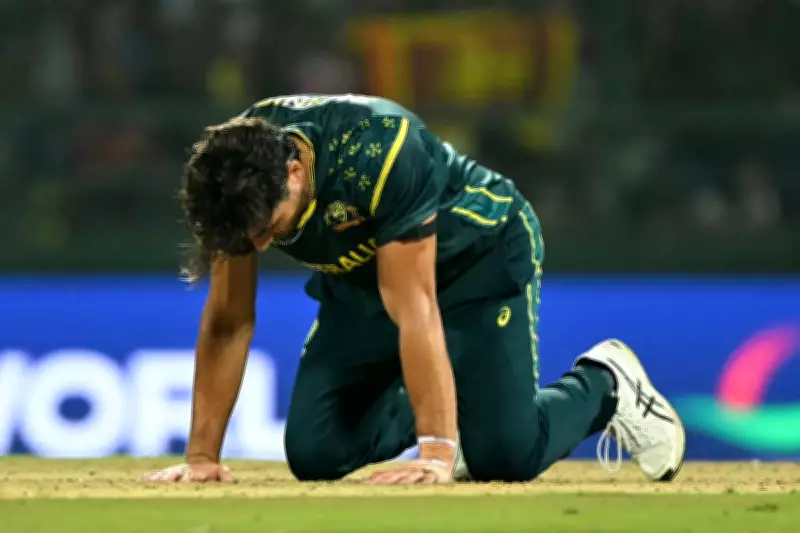
Australia have officially crashed out of the T20 World Cup in a humiliating group-stage exit, with their fate sealed not on the field but by persistent rain in Sri Lanka. The abandonment of Zimbabwe's crucial clash with Ireland due to adverse weather conditions guaranteed the African side a place in the Super 8s, simultaneously confirming Australia's premature departure from the tournament.
A Dramatic Turn of Events
Australia's hopes were hanging by a thread following two consecutive defeats. First, they suffered an abject 23-run loss to world number eleven side Zimbabwe last Friday, then crumbled to an eight-wicket defeat against co-hosts Sri Lanka on Monday. These results left the former champions requiring a specific sequence of outcomes to have any chance of progressing.
Rain Dashes Final Hopes
Australia needed Zimbabwe to lose both their remaining matches against Ireland and Sri Lanka, while simultaneously thrashing Oman themselves in their final group game to potentially sneak through on net run rate. However, those slim hopes evaporated on Tuesday morning when rain descended upon Kandy, delaying the start of Zimbabwe's match against Ireland before the game was eventually abandoned without a ball being bowled just after 12pm GMT.

The abandonment meant both Zimbabwe and Ireland collected a point each, mathematically guaranteeing Zimbabwe will finish in the top two of Group B. This historic achievement marks the first time Zimbabwe have progressed to the Super 8s stage of a T20 World Cup, surpassing their previous best performance of reaching the Super 12 stage in 2022.
Historical Context and Current Struggles
Zimbabwe's advancement represents a significant milestone, though they have previously reached the Super Six phase at both the 1999 and 2003 ODI World Cups, narrowly missing out on a semi-final spot in the former due to net run rate calculations. Their match against Sri Lanka on Thursday will now determine which team tops the group, while Australia's final clash with Oman on Friday has been rendered a dead rubber with no bearing on the tournament outcome.
Australia's Uncharacteristic Collapse
This early exit represents a dramatic fall from grace for Australia, who won the T20 World Cup as recently as 2021 and boast a record six 50-over World Cup titles. However, shorn of key senior players who have traditionally underpinned their success, the team has struggled significantly throughout this campaign.
Left-arm legend Mitchell Starc has retired from T20 internationals, while fellow seamers Pat Cummins and Josh Hazlewood are sidelined with injuries. This marks Australia's first World Cup in over a decade without at least one member of their fearsome pace trio, and backup quicks such as Nathan Ellis have failed to impress under pressure.
Batting Woes and Selection Controversy
Australia's batting lineup has particularly underwhelmed, displaying vulnerability against spin bowling. Against Sri Lanka, after openers Mitchell Marsh and Travis Head established a brilliant platform of 104-0 from just 8.3 overs, the middle order collapsed spectacularly, losing ten wickets for a mere 77 runs.
The selection strategy has attracted significant criticism, most notably regarding Steve Smith. Despite averaging just under 60 for the Sydney Sixers in the Big Bash League, Smith was omitted from the initial squad and remained excluded from the playing XI against Sri Lanka even after receiving a late call-up.
Expert Criticism
Australia legend Mark Waugh expressed strong disapproval of the selection decisions on SEN radio following the Sri Lanka defeat. "I think the whole campaign was doomed from the get-go with selection issues and injuries," Waugh stated. "To me, the non-selection of Steve Smith in the squad originally is the most baffling non-selection I can remember for ages. I just think they've got the selections completely wrong and to have your best player by 100 yards sitting on the sideline in Steve Smith... I think it's an insult to Steve Smith, to be honest."
As Zimbabwe celebrate their historic progression to the Super 8s, Australia face serious questions about their preparation, selection policies, and performance in what has become one of their most disappointing World Cup campaigns in recent memory.