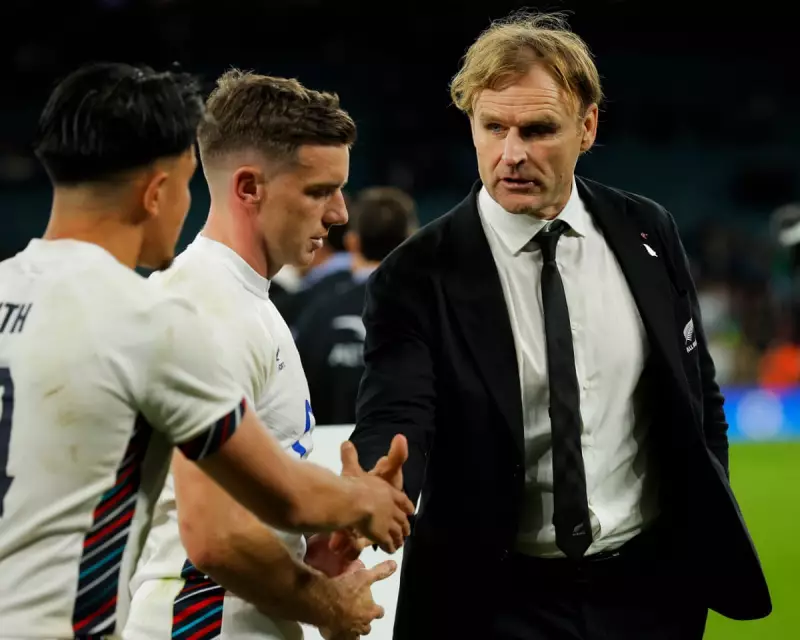
The wave has crashed for Scott Robertson. The charismatic coach, known as 'Razor', has been dramatically ousted as head coach of the All Blacks after just 27 Tests in charge, a decision that sends shockwaves through the world of rugby and signals a profound crisis within New Zealand's most revered institution.
A Tenure Cut Short: From Saviour to Scapegoat
Robertson's appointment in late 2022 was met with widespread optimism. He was the serial winner, having guided the Crusaders to seven consecutive Super Rugby titles, and the relatable figure whose break-dancing celebrations promised a new, vibrant era. His mission was to reconnect the All Blacks with a new generation. Yet, barely two years into his tenure, an internal review into a problematic 2024 season has led to his swift departure.
Despite a win rate of 74% (20 victories from 27 Tests), which statistically improved on his predecessor Ian Foster's 69.6%, the underlying issues were glaring. The review, described as containing a "torrent of salty feedback," pointed to a lack of trajectory and excellence. New Zealand Rugby chair David Kirk conceded the team was "falling a bit short" and, crucially, "not on track" for the 2027 World Cup in Australia.

On-Field Struggles and Player Unrest
The results that sealed Robertson's fate were stark and historically poor. The season featured a record 43-10 defeat at home to South Africa, the heaviest in the All Blacks' 120-year history, and a first-ever loss to Argentina on Argentine soil. The final, damning evidence came in November with a 33-19 defeat to England at Twickenham, where the backline looked devoid of its traditional cohesion and rhythm.
Reports of player dissatisfaction swirled, with suggestions that star number eight Ardie Savea had considered his future under Robertson's leadership. While Kirk sought to dampen these claims, the speed of NZR's response—despite having no permanent chief executive—strongly indicated that player unrest was a significant factor in the decision.
"My job is to connect them and make them believe," Robertson had told journalists in Dunedin in mid-2024. Those worthy intentions ultimately could not translate into Test-match success, serving as a stark lesson that domestic coaching prowess does not automatically transfer to the international arena.
The Road to Redemption: Who Can Rescue the Silver Fern?
New Zealand Rugby now faces the immense challenge of rebuilding an international team whose once-formidable aura has palpably faded. The task is compounded by an ageing core of key players, including Beauden Barrett, Scott Barrett, Codie Taylor, and Ardie Savea, all now aged between 32 and 34.
Nevertheless, a deep pool of experienced coaching talent is available. The early favourite is Jamie Joseph, the former All Black flanker who masterminded Japan's rise and is now with the Highlanders. Other New Zealand-born coaches with proven international pedigrees, such as Dave Rennie, Joe Schmidt, and Warren Gatland, will also be in the frame. The search will be for a leader who can restore the missing "edge" and tactical sharpness.
There is time for a revival before the 2027 World Cup. As South Africa have demonstrated, a mid-cycle jolt can concentrate minds and forge a stronger unit. Furthermore, the All Blacks remain ranked second in the world, ahead of rivals like England and Ireland. Their potential is far from extinguished.
As for Robertson, a move to the northern hemisphere seems likely, with clubs like England's Harlequins potentially offering a fresh start. For New Zealand, the painful process of rescuing the drooping silver fern has now begun in earnest.