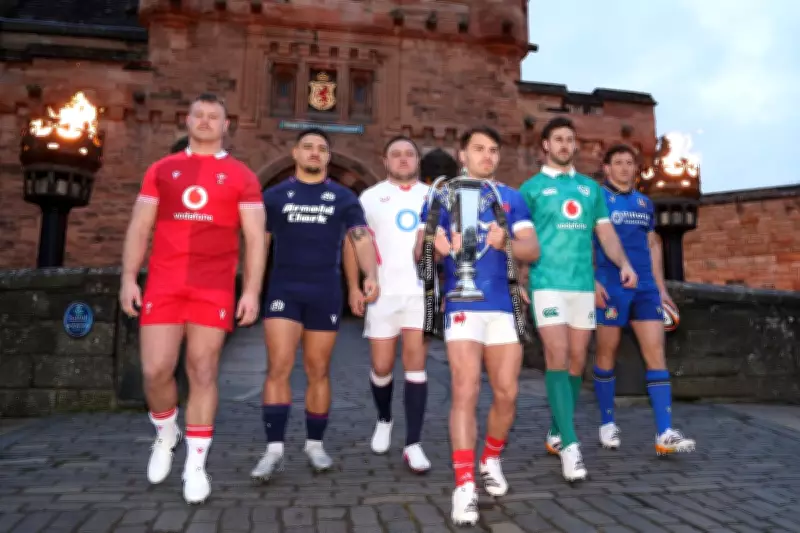
The Six Nations Championship returns for its 2026 edition, bringing with it a subtle yet potentially significant alteration to its traditional format. While France, England, and Ireland emerge as the leading contenders for the coveted trophy, a minor schedule change could have a major impact on the outcome of this year's tournament.
A Tournament of Permanence in a Changing Landscape
In a year of considerable change for men's international rugby union, with the introduction of the new Nations Championship and the "Rugby's Greatest Rivalry" series reshaping the calendar, the Six Nations retains its place as an immovable fixture. It has been 26 years since Italy's inclusion marked the last significant alteration to this unique annual championship. In an era where most major sporting properties undergo frequent tinkering, the relative stability of the Six Nations speaks volumes about its enduring quality and appeal.
Emerging once more from the winter gloom, a fine crop of national teams prepares for battle. This campaign is bookended by pivotal meetings in Paris, with defending champions France opening against Ireland and concluding against England. While Scotland, Italy, and Wales will undoubtedly have their say, these Parisian fixtures could well decide the destination of the Grand Slam.

"We know the last seven Six Nations Championships have gone down to the last round of fixtures," observed Steve Borthwick, the England head coach. "We want England fans flooding across the Channel to Paris to come and watch the team in a massive encounter on the final round with the opportunity to achieve what we want."
The Schedule Shift: From Seven Weekends to Six
While the competition itself remains a constant, a sense of slight uncertainty pervades some camps regarding one minor alteration that could have an outsized impact. A change that may have escaped all but the most ardent Six Nations followers sees the tournament duration reduced slightly from seven weekends to six, with the removal of the first so-called fallow week.
The implications of this adjustment could prove significant. While it will lend this edition far greater flow, with an opening block of three rounds followed by a two-week finale, opportunities for teams to rest, recharge, or shift strategy will be notably limited. England successfully utilised such a break in York during 2024 to alter their approach, an option now unavailable.
The conventional wisdom suggests this compressed schedule will favour sides that have more successfully developed squad depth. For the home unions, the recent British and Irish Lions summer tour proved useful in this regard, although historical patterns indicate France often benefit most in the year following the quadrennial tour.
Contenders and Challengers: Analysing the Field
Examining the leading contenders, France's chances of continuing their post-Lions success appear strong. Excluding 2014 and 2018, when French contendership seemed distant, Les Bleus have triumphed in every Six Nations edition following a Lions tour in the professional era, including four Grand Slams.
Fabien Galthie's side not only welcomes Ireland and England to the Stade de France but has demonstrated renewed competitiveness through a bold squad cull of senior figures. While omitting players of Damian Penaud and Gregory Alldritt's calibre represents a gamble, any squad that can make such decisions while welcoming back Antoine Dupont clearly possesses considerable talent.
Injury management assumes heightened importance under the new schedule, with Ireland already experiencing its unwelcome effects. While this may provide opportunity for necessary regeneration and a broader look beyond the Leinster production line, Andy Farrell's side has previously shone amid adversity. Some observers suggest Farrell's methods may have been challenged by rugby's tactical evolution, but those familiar with the code-hopper know a shrewd strategist will surely have fresh ideas prepared.

England appear to have adapted best to recent shifts in Test rugby doctrine, entering the tournament on an upward trajectory. While some may question a run of 11 consecutive victories that lacks a truly signature away scalp, it has undoubtedly fostered growing confidence. The weight of expectation seems to rest more easily on these shoulders than on some England sides of the past, though potential pitfalls await, particularly in Edinburgh during round two—a venue of unhappy recent memories for Borthwick's team.
The Challenging Pack: Scotland, Wales, and Italy
Scotland remain the likeliest to bridge the gap between contenders and pretenders, though even their most patient supporters express frustration at their tendency to fall just short. Glasgow's success in both the United Rugby Championship and Champions Cup presents Gregor Townsend with both blessing and curse, highlighting the quality available while raising expectations.
For Italy and Wales, the portions may again prove meagre, with both likely scrapping to avoid the wooden spoon. The Azzurri's upward curve faces checking through injury absentees, while Welsh rugby appears mired in yet more off-field uncertainty. One struggles to recall a time when a trip to Cardiff failed to stir the soul—yet we approach precisely that juncture.
Nevertheless, every nation in this tournament has experienced both peaks and troughs, fostering a cultivated sense of kinship and camaraderie. The Six Nations has always been as much about friends as foes, with familial links spanning generations.
A Final Thought: The Human Element
On that familial note, a final reflection turns to France prop Uini Atonio, recovering in hospital after a heart attack prematurely ended his career. The New Zealand-born tighthead, a larger-than-life character with a sideline in Shakespeare, became beloved in La Rochelle for his broad shoulders and even broader smile.
"The image of Uini that we have is of someone who never gave up," France coach Galthie said of his absent friend ahead of the tournament opener. "He was someone who showed the way through his behaviour, always with a smile and talent." A message for us all as we prepare to savour rugby union's great annual feast once more.