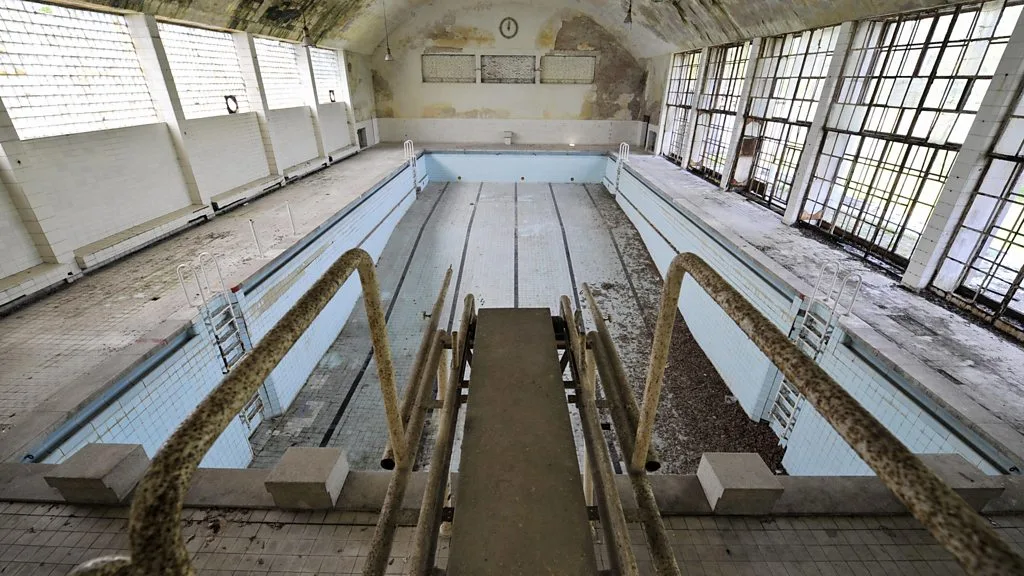
Inside Italy's Forgotten Olympic Venues: A Legacy of Decay
As the 2026 Winter Olympic Games in Milano Cortina enter their final week, with Norway leading the medal table and Team GB positioned 12th with three gold medals, a stark contrast emerges from Italy's previous hosting experience. Urban explorers have uncovered the haunting reality of venues built for the 2006 Turin Winter Olympics, now left empty and decaying just two decades after their construction.
The Current Games and Historical Context
The 2026 Winter Olympics are currently underway in northern Italy, showcasing elite athletic competition. Norway tops the medal standings with 28 medals, while Team GB holds 12th place out of 26 nations, having secured three gold medals. Britain aims to surpass its record from the 2014 Sochi games, where athletes won five medals, with ongoing prospects in curling, ski big air, and ski halfpipe events.
However, this celebration of sport contrasts sharply with the fate of facilities from Italy's last Winter Olympics. The 2006 games in Turin have left a visible legacy, but not the one intended by organisers.
Urban Exploration Reveals Abandonment
A team of urban explorers, known as Broken Window Theory, has documented the decay at two key venues: an ice track for bobsleigh, luge, and skeleton in Cesana Torinese, and a ski jump facility in Pragelato. Their findings, reported by the Express, highlight a troubling post-Olympic reality.
In a video presentation, the explorer stated: "Right now Italy is hosting the world again for the 2026 Winter Olympics, and while these games aim to build something lasting, we investigated what legacy truly means once athletes depart and cameras move on. Last time, some of Italy's Olympic venues were simply abandoned."
He elaborated: "When new venues rise, the old ones remain as scars on the landscape, too expensive to maintain and too costly to erase."
Detailed Findings at the Venues
The ice track in Cesana Torinese, despite being abandoned for 15 years, remains in surprisingly good condition. Olympic flags and cameras are still in place, alongside a cabinet that once held the Olympic torch. The presenter explained: "For two weeks in 2006, the world's best athletes rocketed down this 1.4km course. Twenty years later, the site sits dormant, winding through the southern Alps like a scar through the forest. It was built for 7,000 spectators, but for years it has been empty."
After hosting some training sessions and competitions post-2006, the refrigeration system was switched off in 2011, leaving the facility deserted.
The ski jump venue in Pragelato shows more severe deterioration, with rampant weeds, vandalism, and graffiti. "This site was meant to live on as a national training hub, created to shape the next generation of Italian ski jumpers," the presenter noted. "But, with space for up to 9,000 fans, it was built for a future that never arrived."
Broader Implications and 2026 Promises
Concluding the exploration, the presenter reflected: "With the Winter games back in Italy, promises of legacy have returned. But after seeing what gets left behind, that word can become an excuse for venues too specialised to reuse and too expensive to maintain. While events can create long-term benefits for communities, what we witnessed isn't sustainability—it's a bill that lasts decades. If nothing changes, 'legacy' can just be a polite name for the mess left when the lights go out."
In response, organisers of the 2026 games emphasise that 85% of venues are pre-existing or temporary structures that will be dismantled post-event. The Olympic Village in Milan is slated for conversion into student accommodation, and the games are being used to enhance transport and infrastructure in Northern Italy.
This exploration raises critical questions about the long-term sustainability of mega-events, juxtaposing the excitement of current competitions with the neglected remnants of past celebrations.