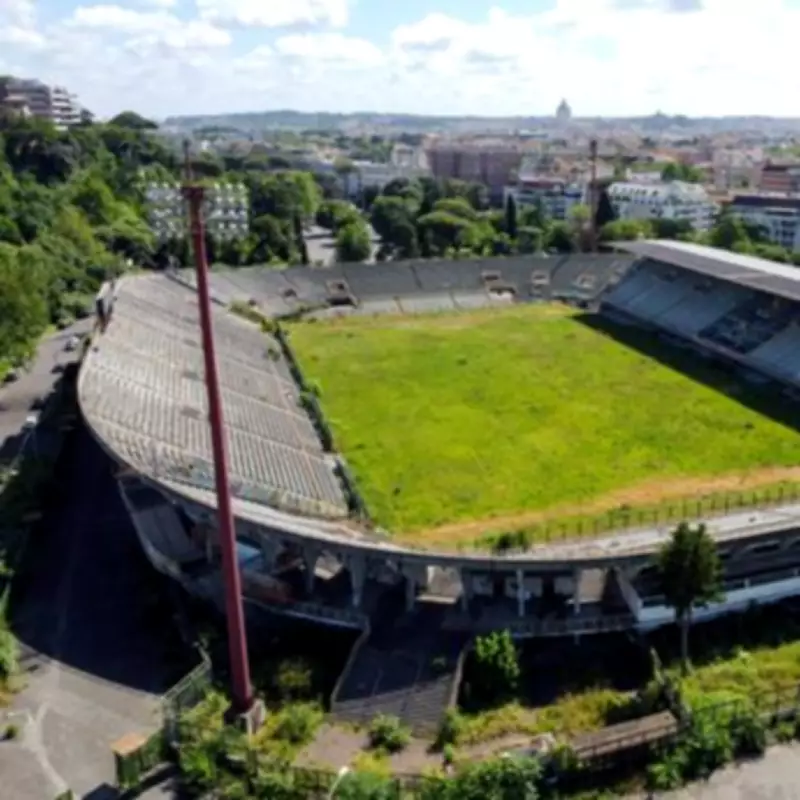
Historic Stadio Flaminio Set for £415 Million Renaissance After Years of Neglect
The iconic Stadio Flaminio in Rome, which has lain abandoned and decaying for over fifteen years, is poised for a spectacular rebirth through an ambitious £415 million restoration project. This historic venue, once a proud host of Six Nations rugby matches, will undergo a comprehensive multi-million-pound upgrade to restore it to its former glory and beyond.
From Glory to Decay: A Stadium's Turbulent History
The Roman stadium served as the home ground for Italian rugby from 2000 to 2011, hosting memorable clashes against rugby powerhouses including Scotland, Wales, and England. However, the refurbishment of the larger Stadio Olimpico in 2008 led to the relocation of official Six Nations fixtures to that 70,000-seat arena, leaving the smaller Stadio Flaminio redundant.
Previously, Serie A giants Roma and Lazio had both utilized the Stadio Flaminio as their home ground before moving to the Olimpico. This dual abandonment left the aging structure to deteriorate through prolonged disuse, with its future appearing bleak until recent developments.

Lazio's Ambitious Redevelopment Plans
Lazio Football Club unveiled detailed proposals to redevelop the site and formally announced the scheme in February, with Rome's City Council holding the ultimate decision-making authority. Club president Claudio Lotito confirmed that financial arrangements are progressing steadily, with LazioNews24 revealing that banks will supply 59 percent of the overall investment—approximately £246 million.
This substantial loan is anticipated to be repaid by the club through revenue generated by the new stadium complex. Internal supporters will furnish the remaining investment, with shareholders themselves projected to contribute between £65 million and £69 million. Reports suggest that the funding will be fully secured by 2027, which marks when construction is scheduled to commence in earnest.
Vision for a Modern Sporting Cathedral
Lotito hopes the extensive redevelopment will be completed by 2031 and aims to utilize the revitalized stadium to stage matches for Euro 2032, alongside Turkey, as one of Italy's primary tournament venues. Currently, the run-down stadium can accommodate up to 30,000 supporters, but ambitious proposals aim to double this capacity to approximately 60,000 seats.
Speaking in February, Lotito emphasized the project's significance, stating: "We are working diligently. We have presented the project, and we want to accomplish serious things, for the good of the entire city."
Innovative Design and Environmental Considerations
According to Stadium DB, the fresh proposals are centered around the concept of 'two stadiums in one,' with the historic 1960s 'bowl' meticulously restored as the lower tier. A modern canopy above will provide comprehensive protection from the elements while blending seamlessly with the original architectural design.
The entire stadium will be constructed to comply with stringent UEFA Category 4 regulations, enabling it to host major international sporting events and large-scale entertainment spectacles. Environmental considerations are integral to the design, with green spaces incorporated to help filter pollution and enhance sustainability.
A Venue with Rich Cultural Heritage
The original stadium first opened its doors in 1959 and was renowned for hosting legendary concerts long before it became a main venue for Six Nations fixtures. Music icons including Bruce Springsteen, U2, Michael Jackson, David Bowie, and Pink Floyd all performed on its stage during the vibrant 1980s, entertaining crowds of up to 45,000 enthusiastic fans.
While the Italian rugby team currently has no immediate plans to leave the Stadio Olimpico, these extensive renovations might potentially change their strategic considerations. Lazio presently shares the Olimpico with rivals Roma but could potentially relocate to their new ground within approximately five years, marking a significant shift in Roman football dynamics.

This monumental restoration project represents not merely the revival of a physical structure, but the reclamation of sporting history and cultural significance for Rome and Italy's sporting landscape. The Stadio Flaminio's journey from abandonment to ambitious renewal symbolizes a commitment to preserving heritage while embracing modern sporting requirements.