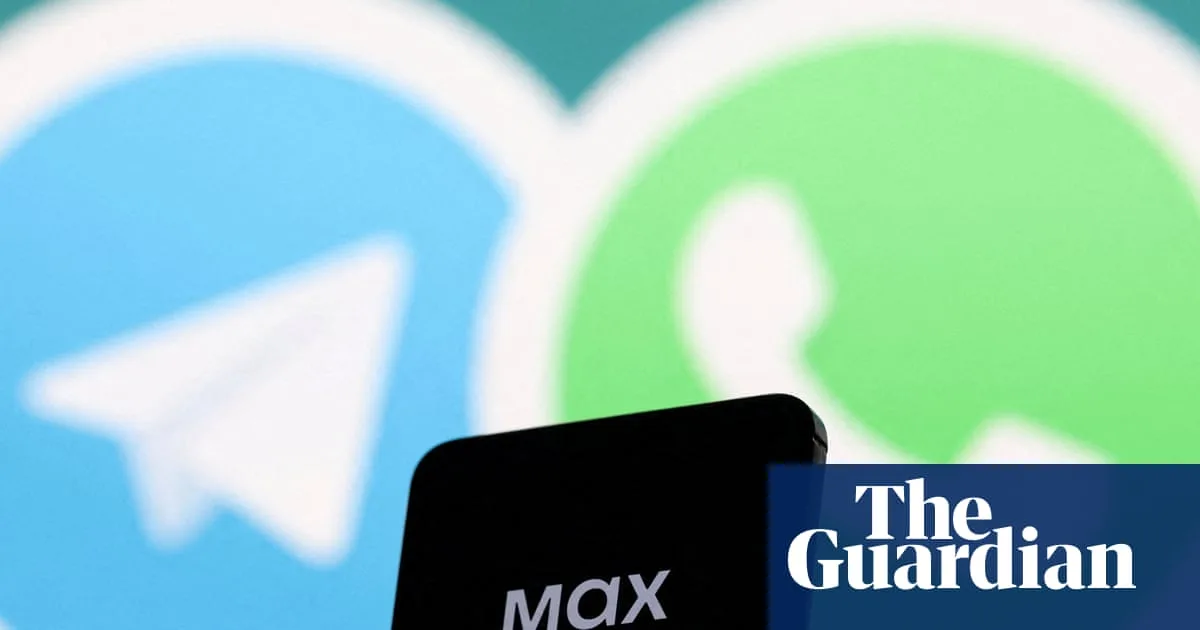
Russia has attempted to “fully block” WhatsApp, according to a spokesperson for the Meta-owned messaging service, in a move described as a “backwards step” that could push users towards the Kremlin’s own communications app, Max. The spokesperson told the Guardian that isolating over 100 million users from private and secure communication would lead to less safety for people in Russia, adding that the company continues to do everything it can to keep users connected.
The attempt is part of the Kremlin’s broader aim to achieve a “sovereign internet” – an online space cut off from Western technology and foreign influence, and more vulnerable to state control. The latest rift comes amid a wider crackdown on social media, including the targeting of Telegram, another popular messaging app used by over 60 million Russians daily. Telegram’s founder, Pavel Durov, criticised Russian authorities, stating that restricting citizens’ freedom is never the right answer.
The Russian state-sponsored app Max, largely modelled on China’s WeChat, has about 55 million users. In August last year, Russia ordered that Max be pre-installed on new phones, with critics arguing it could be used to surveil users – a claim dismissed by state media. WhatsApp reportedly has at least 100 million users in Russia, making it the country’s most widely used messaging service, according to the Financial Times.

Russian authorities have previously removed Facebook and Instagram from an online directory operated by Roskomnadzor, and in December blocked access to Snapchat while placing restrictions on Apple’s FaceTime. When asked about WhatsApp’s potential return, Kremlin spokesperson Dmitry Peskov said that if Meta complies with Russian legislation and enters into dialogue, an agreement could be reached; otherwise, there is no chance.