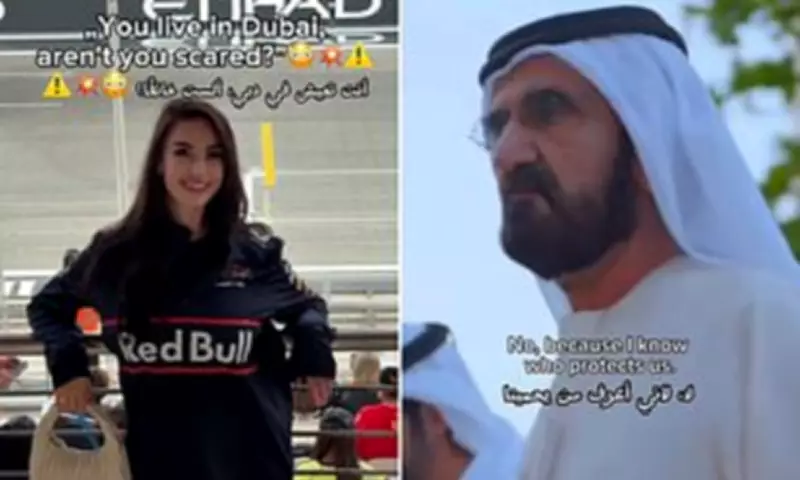
Dubai's extensive network of social media influencers has unleashed a coordinated wave of posts lauding the government in strikingly similar language, raising suspicions that some creators are being compensated to disseminate what critics label as state-sponsored propaganda. Content creators, collectively boasting hundreds of thousands of followers, have responded to recent Iranian attacks by sharing images of Dubai's leader, Sheikh Mohammed bin Rashid Al Maktoum, accompanied by the phrase, "I know who protects us."
Identical Posts and Accusations of Payment
The posts typically begin by asking followers, "Are you scared?" before transitioning to visuals of Al Maktoum waving to crowds. Skeptical social media users have flooded comments sections with allegations that influencers are receiving payments from the UAE government, though several creators have publicly denied these claims. One expert noted the suspicious uniformity of the videos, suggesting they may have originated as a "paid trend" to project an image of safety and stability.
Strict Regulations and Self-Censorship
In Dubai, online content creators must obtain a licence to operate, and the government has responded to the outbreak of conflict by threatening imprisonment for anyone sharing information that "results in inciting panic among people." This tough stance is believed to have fostered widespread self-censorship among influencers in the Gulf state. Earlier clips depicting Iranian drone and missile attacks have been largely overshadowed by posts extolling the regime, with creators deliberately avoiding direct mentions of the war and mirroring the sanitised language of city leadership.

During the initial days of the conflict, authorities cracked down on individuals reposting authentic footage of the first wave of attacks, which included a drone strike on the five-star Fairmont Hotel on the Palm Jumeirah. The Dubai Media Office quickly asserted that "outdated images of past fire incidents" were being circulated to stoke fear and generate clicks, further tightening control over narrative dissemination.
Influencer Responses and Viral Trends
One German TikToker, @julisjoking, shared a video refuting accusations that she had been paid to post the "I know who protects us" meme, stating she was only "paid" by the lifestyle benefits of residing in Dubai. Her original post praised the sheikh and urged followers to "trust God and trust the government." The viral trend often features influencers starting with a photo of themselves and text asking, "You live in Dubai, aren't you scared?" or "Do you feel safe in Dubai?" before cutting to a montage of the UAE leader with the reassuring message, "No, because I know who protects us." One such video has amassed nearly 7 million views.
Social media users have been quick to speculate that the videos appear government-sponsored. Comments like "influencers are doing overtime trying to convince the rest of the world it's all okay" have prompted responses from creators such as Bea Albero, who affirmed, "We are ok, I feel this way."
Legal Ramifications and Expert Analysis
UAE laws impose severe penalties for criticising or insulting the government or causing "reputational harm" to the country, including fines up to £200,000, imprisonment for up to five years, and possible deportation, with harsher sentences for property owners. Few influencers openly discuss these content laws, but Marc Owen Jones, Associate Professor of Media Analytics at Northwestern University in Qatar, described the identical videos as "suspicious."
While unable to confirm payments, Professor Jones suggested a strong likelihood that influencers were compensated to emphasise safety and stability. He also noted that in an authoritarian context, posting such content might serve as a way for individuals to signal patriotism and gain favour with authorities. He explained, "At the moment I don't know for sure if they are paid or not, but my expert opinion is that this started as a paid trend, an attempt to overemphasise the safety of Dubai since the perception of stability is so important for the country."

He added that viral trends often lead to replication, with unpaid influencers recreating similar videos to appear patriotic. The ability to "remix" content on platforms like TikTok and Instagram, while changing very little, contributes to the uniformity observed.
British Influencer's Perspective
The social media trend emerged shortly after a British influencer in Dubai, Ben Moss from Wandsworth, admitted he is more concerned about fines or imprisonment for posting "wrong" content than about Iranian explosives. Moss stated, "I do feel completely safe here because of the UAE air defences, but the laws can sometimes concern me so I always keep everything positive. I'm far more scared of being fined or jailed for posting the wrong content than I am of the Iranian missiles and drones."
When the first waves of Iranian ordnance targeted the UAE, Moss and his Iranian-born girlfriend Parisa, both 31, relocated from their luxury flat in Ras Al Khaimah to a tent near Hatta, a border area with Oman that has remained largely unaffected by the conflict. Moss received a text from Dubai Police warning that "photographing or sharing security or critical sites, or reposting unreliable information, may result in legal action and compromise national security and stability." He expressed understanding and respect for the government's security concerns.
Moss, who has been in the UAE for around three years, views the current situation as an opportunity for influencers willing to stay for the "long haul." He predicted that many expatriates may leave, potentially lowering property prices and creating marketing opportunities for resorts and hotels. "I do see the market bouncing back within 24 months, as people will now view the UAE as being an even safer place to live, given they can defend themselves in such a spectacular way," he said, expressing hope for a safer region if the Iranian regime is removed.
The Government of Dubai Media Centre has been contacted for comment regarding these allegations and the broader influencer campaign.