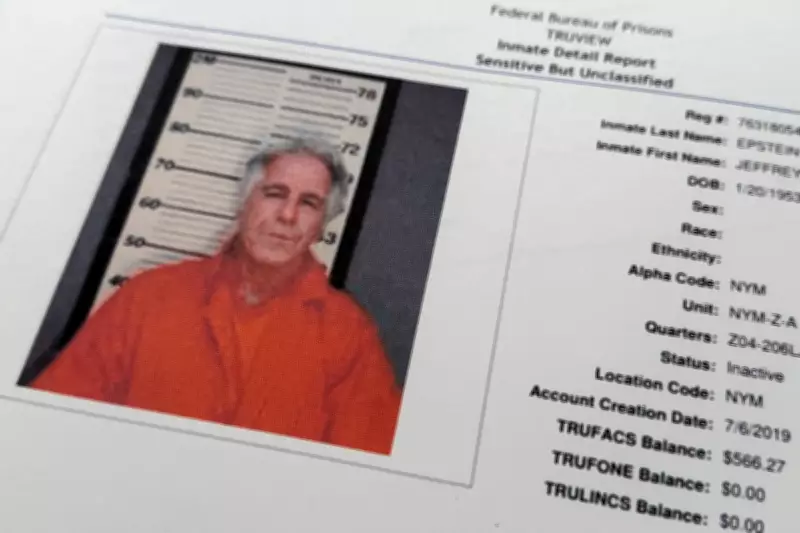
The publication of over 3 million documents related to convicted child sex offender Jeffrey Epstein on January 30 has transformed traditional investigative journalism. Instead of small teams of reporters working late into the night, this massive release has triggered what resembles a public audit, mobilising thousands of online users to conduct their own digging.
The Rise of Crowdsourced Investigations
From popular political livestreamers like Hasan Piker and Dean Withers to crowdsourced intelligence communities on Reddit, netizens are combing through documents, comparing excerpts, and attempting to piece together what the archive reveals—and what it conceals. This phenomenon represents a significant shift from earlier document releases, such as the WikiLeaks Cablegate disclosures beginning in 2006, which were more carefully mediated through established media outlets.
Legal Framework and Public Scrutiny
The Epstein Files Transparency Act primarily focuses on protecting victims' identities, but the US Department of Justice also excluded duplicate records, privileged material, and other categories during its review process. Whether these additional filters align with the law's intended limits has itself become part of the story, leading people to examine not only published documents but also the gaps surrounding them.

By pooling their time and expertise, online communities can reveal patterns and contradictions that might otherwise go unreported. For instance, open-source intelligence communities successfully cross-referenced early releases of Epstein flight logs with public charity and event schedules, reliably mapping passenger associations and timelines days before official media verification.
The Darker Side of Public Audits
However, this mechanism can flip into something more problematic. When thousands scan the same archive, patterns emerge quickly, but the crowd is often better at saying "look here" than "this proves that." Incorrect inferences can cause lasting harm when victims' privacy and reputations are at risk.
Psychological Vulnerabilities
Our desire for closure in conditions of uncertainty makes us susceptible to "apophenia"—the tendency to perceive connections between unrelated data points. This psychological vulnerability is amplified in today's digital environment, where social media algorithms reward outrage and information travels as screenshots, fragments, and threads, often losing context along the way.
Modern Digital Challenges
The Epstein file dump contrasts sharply with early WikiLeaks releases, where interpretation was slower and more journalist-mediated. Today's internet infrastructure operates differently, with artificial intelligence tools further complicating matters by introducing synthetic "evidence" into the public record. Since the Epstein files release, numerous AI-generated images, videos, and audio clips have been debunked, including a viral AI image falsely claiming to show Epstein alive in Israel.
Real-World Consequences
Large archives often contain partial names, common names, or ambiguous references. When these fragments circulate online, innocent people can become attached to viral claims through mere coincidence. Ordinary IT professionals and random citizens whose photos appeared in old FBI photo lineups included in the archive have been falsely accused by online mobs and politicians who assumed anyone listed was a co-conspirator.
Information Distortion Risks
Narrative lock-in presents another significant risk. Once a particular explanation gains momentum, later corrections or clarifications often struggle to travel as far as the original claim. For example, a spreadsheet summarising public calls to an FBI tip line went viral with the false assertion that it was Epstein's official "client list." Even after journalists clarified the document's true nature, the initial framing had locked in across social media platforms.

Technical Failures and Institutional Trust
The Epstein case has highlighted technical mistakes within the release itself, with key failures in how the Department of Justice redacted data leading to victims' names and details being exposed. This underscores a deeper lesson about institutional trust: when institutions fail to resolve serious allegations, judgment doesn't disappear but moves outward into the public sphere.
A Balanced Approach to Public Scrutiny
None of this suggests people should stop asking questions—public scrutiny remains the bedrock of accountability. However, scrutiny works best when it follows clear standards. Viral interpretations of files should be treated as starting points for inquiry rather than conclusions. A public that feels compelled to investigate its own institutions is not merely questioning documents but signalling eroded confidence in official processes.
The author, Oliver Alfred Guidetti, is a Post Doctoral Researcher in Cybersecurity and Psychology at the University of Wollongong. This article is republished from The Conversation under a Creative Commons license.