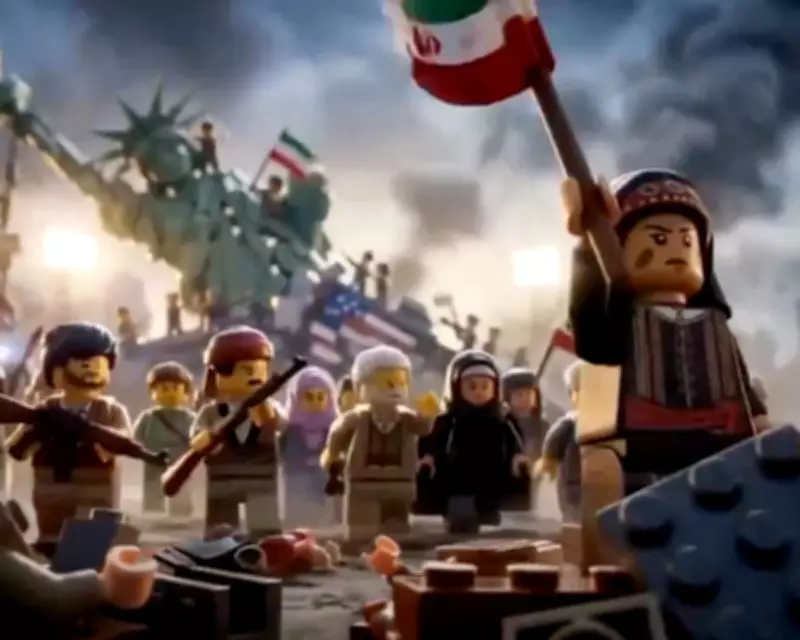
Iran's AI Lego Videos Dominate Social Media in Propaganda War Against US
In a surprising twist in the ongoing tensions between Iran and the United States, Iranian social media accounts are leveraging AI-generated comedy videos and Lego animations to gain an upper hand in the digital propaganda battle. Despite Iran's reputation as a conservative nation wary of Western culture, its tech-savvy Generation Z creators are producing content that resonates globally, using sarcasm and ridicule to target the Trump administration.
Viral Content and Creative Strategies
One notable example includes a video posted by Iran's South African embassy, featuring Donald Trump depicted as a 1980s rock star singing a spoof of Desireless's "Voyage Voyage," renamed "Blockade." This clip garnered over 45,000 likes within 24 hours. Other pro-government accounts have shared AI-generated Lego animations linking Trump to the Jeffrey Epstein scandal, aiming to insinuate that the war was started to distract from such issues. This content often avoids explicit religious themes, focusing instead on humour and cultural references that appeal to Western audiences.
Narges Bajoghli, an assistant professor of Middle East studies at Johns Hopkins University, highlights Iran's strategic advantage. "Wars are fought in two spaces," she explains. "They're fought on the battleground, and just as important is the communications war. Iran has been able to completely monopolise the communications war, especially on social media globally." She notes that Iran's media apparatus has outpaced the US, with young millennial and Gen Z creators given the freedom to craft messages that resonate in the aftermath of events like Gaza.

Challenges for the US and Broader Impact
The United States faces difficulties in countering this narrative, partly due to cuts in social media funding by figures like Elon Musk affecting the State Department's outreach. Meanwhile, Iran's content is making inroads into Arab discourse by questioning sovereignty issues, arguing that Israel's actions, backed by the US, undermine regional autonomy. Bajoghli observes that this has led to viral sharing across political spectrums in the US, from far-right to far-left groups, a phenomenon she hasn't seen in over 15 years of monitoring social media.
Iran's approach may be influenced by the loss of senior Islamic Revolutionary Guard Corps leaders, which has allowed more creative freedom for propagandists who understand US culture. By producing content that doesn't appear government-made, they aim to shift perceptions, though Iran's internal repression limits sympathy gains. Former supreme leader Ali Khamenei emphasized the importance of media in 2024, stating, "The media is more effective than missiles, planes and drones in forcing the enemy to retreat." For now, Iran's digital strategy is proving effective in the global social media arena.