Setting up an email account today involves more than choosing between Hotmail and Yahoo, especially with rising concerns over malware, data breaches, and surveillance. Proton Mail, developed by the Swiss company behind Proton Drive and Proton VPN, offers end-to-end and zero-access encryption to keep emails private. Unlike services that scan messages for advertising or AI training, Proton cannot read your emails or attachments, making password management crucial. The service includes a password manager with subscriptions.
While a free version exists, Proton Mail is primarily a subscription service. Advanced security features, cloud storage, and VPN access require a paid plan. For those prioritising privacy, the investment can be worthwhile. The Ultimate subscription was tested on Windows 11 and Android, comparing features with Google and Microsoft offerings.
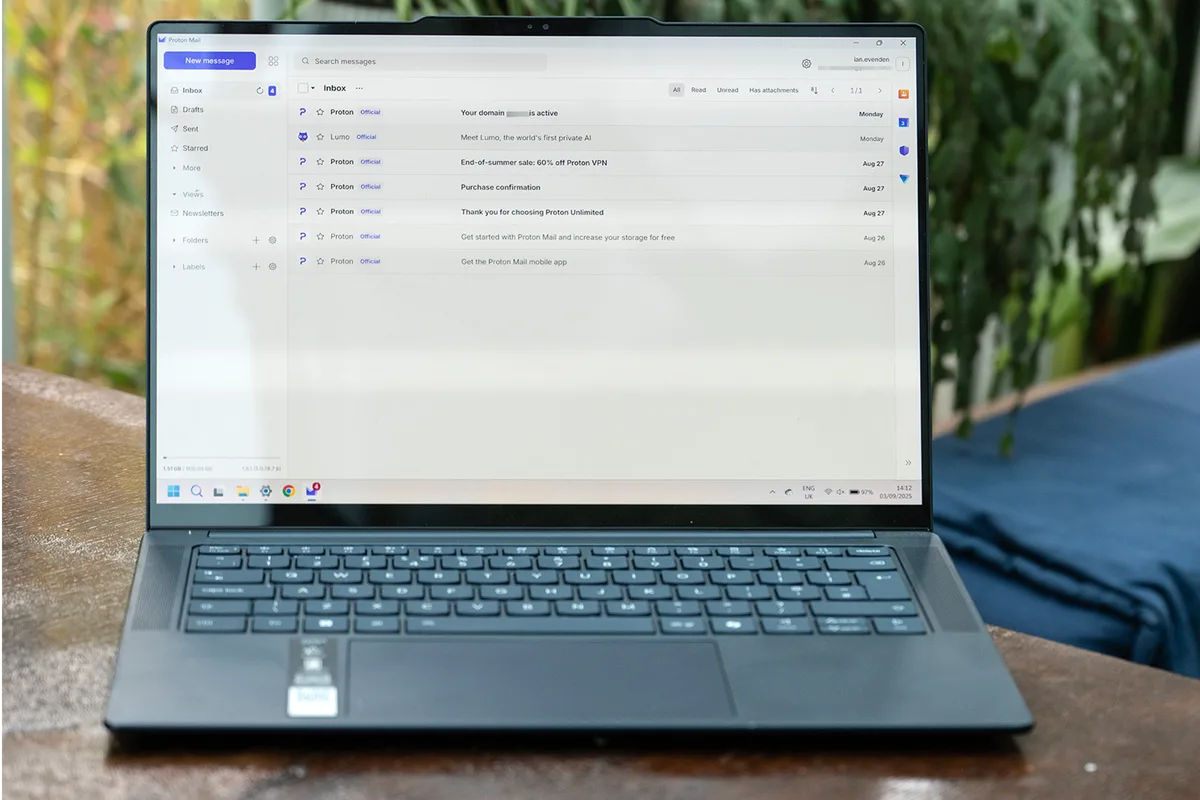
The web interface resembles Gmail's two-pane layout, easing the transition for new users. A prominent 'New message' button sits top-left, with shortcuts to contacts, calendar, security centre, and VPN. Security features include two-factor authentication, a password manager, an authenticator app (compatible with Google's), and dark web monitoring for breached passwords.

Subscription tiers are based on Proton Drive storage rather than mail features. The Unlimited plan offers 500GB of storage, the Docs web app, and up to 15 email addresses using the pm.me domain. Users can create aliases via SimpleLogin browser extension for Chrome, Safari, and Firefox, which forward to the main account. Custom domains are supported by adding a TXT record to DNS, with addresses not counting toward the 15-address limit. Storage is shared with Proton Drive, so large attachments may fill space quickly.
Proton Mail works well via web, with desktop apps for Windows, Mac, and Linux (beta), plus iOS and Android mobile apps. Overall, it provides robust privacy features for those willing to pay.