A new survey has uncovered the emojis that Brits find most irritating in their daily digital communications. Conducted by Perspectus Global, the research polled 2,000 people across the United Kingdom to identify which characters provoke the strongest negative reactions.
The Most Annoying Emojis According to Brits
Topping the list of most annoying emojis is the thumbs up, which 22% of respondents find irritating. Many perceive this popular symbol as blunt or dismissive, with some describing it as passive-aggressive in text conversations.
Following closely behind is the aubergine (eggplant) emoji, which annoys 21% of Brits. This character, often used to symbolise male genitalia, continues to divide opinion among users of all ages.

Complete Ranking of Annoying Emojis
The survey revealed a comprehensive ranking of emojis that Brits find most irritating:
- Thumbs Up: 22%
- Eggplant: 21%
- Woman Dancing: 20%
- Poo: 18%
- Face with Cowboy Hat: 14%
- Check Mark: 13%
- Face with Party Hat and Blower: 13%
- Person Shrugging: 13%
- Zany Face: 12%
- Clown Face: 12%
- OK Hand: 12%
- Grimacing Face: 9%
- Flexed Biceps: 9%
- Loudly Crying Face: 8%
- Face Screaming in Fear: 8%
- Party Popper: 6%
- Smiling Face with Heart Eyes: 5%
- Eyes: 4%
- Thinking Face: 3.5%
- Drooling Face: 3%
Generational Divide in Emoji Interpretation
The research highlights significant generational differences in how emojis are perceived and used. Harriet Scott of Perspectus Global explained: 'Emojis like the eyes, thinking face or even the drooling face can mean very different things depending on who's reading them. What's playful to one person can feel confusing or irritating to another. There's a real generational gap – and it's changing how we communicate every day.'
Among older demographics, 81% of those over 50 reported finding emojis annoying, with 72% of people in their 50s and 60s admitting they don't understand what many emojis mean. In stark contrast, 93% of 18-30 year-olds use emojis daily and generally embrace them as part of modern communication.
Why the Thumbs Up Provokes Such Strong Reactions
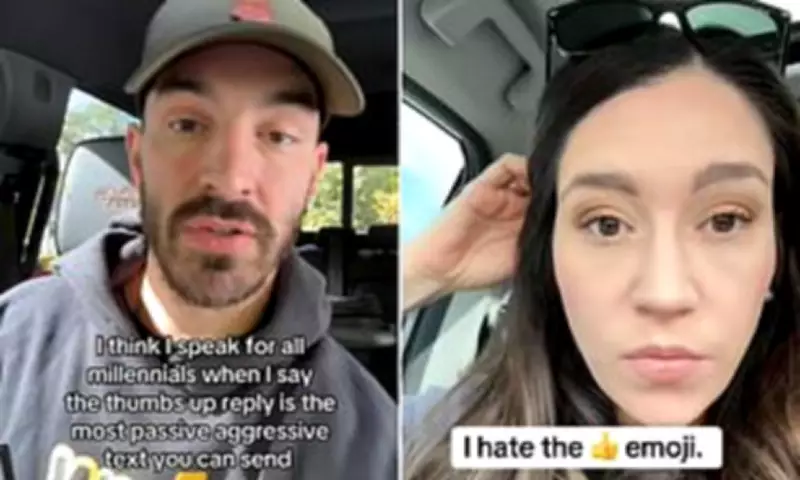
The thumbs up emoji's position as the most annoying character has sparked particular discussion on social media platforms. On TikTok, user @withethanlap commented: 'The single thumbs up reply text is the most passive aggressive text you can send a millennial.'
Another user, @magnolia_thunder, added: 'If you give me a thumbs up on any app – doesn't matter if it's Facebook, Slack, text message – when I see that, I immediately think [middle finger gesture].'
Linguistic expert @etymologynerd provided analysis on why this emoji generates such negative reactions: 'When you use the thumbs up at the end of your messages, it seems dismissive because it shuts down the natural flow of texting, effectively signaling that this conversation is over to me. This is kind of why the period also feels passive aggressive. It has a sense of finality that's almost like it's closing a door on you, but the thumbs up does that even more overtly.'
Context of New Emoji Releases
This survey comes as Apple recently released its fourth developer beta for iOS 26.4, which includes access to 163 new emojis. While 150 are skin tone sequences for existing characters, 13 represent completely new concepts including a 'hairy creature' resembling Bigfoot, a 'fight cloud' featuring an exploding cloud with stars, an orca, a landslide, and a trombone.
The most anticipated new addition appears to be the 'distorted face' emoji, which features rosy cheeks and bulging eyes that users predict will become popular across social media platforms.
As digital communication continues to evolve, this survey demonstrates how emoji interpretation varies dramatically between different age groups and individuals, creating both connection points and communication barriers in our increasingly digital interactions.