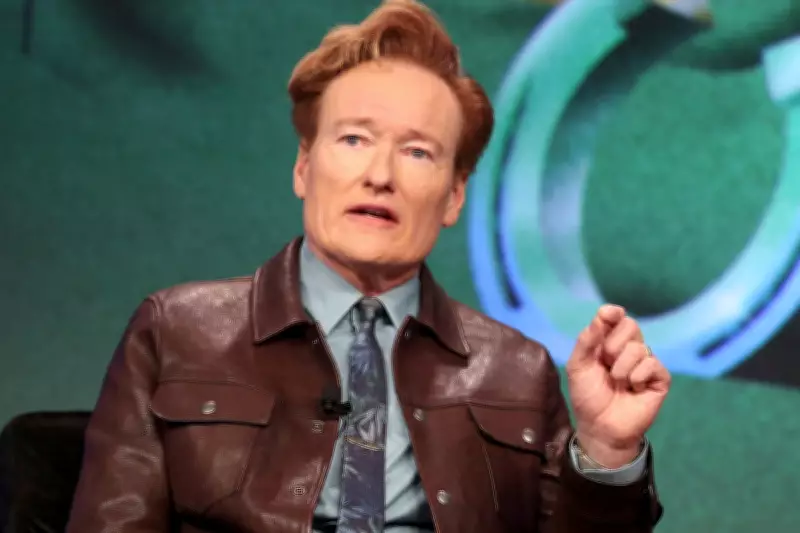
Comedian and former late-night host Conan O'Brien has issued a stark warning about the future of television, declaring that the industry is experiencing a seismic transformation. O'Brien, who helmed late-night programmes for an impressive 28 years, believes that traditional talk shows are now in serious trouble as they face fierce competition from low-overhead online content.
The Viral Revelation on Hot Ones
O'Brien's epiphany came following his appearance on the wildly popular YouTube series Hot Ones, where guests consume increasingly spicy chicken wings while being interviewed. His episode on the show amassed over 15 million views, a staggering figure that prompted him to reassess the landscape of entertainment.
"This was a real eye-opener for me," O'Brien explained. "Seeing those numbers made it clear that audiences are gravitating toward digital platforms in a way that traditional late-night TV simply cannot match." He emphasised that the minimal production costs and direct audience engagement of online shows like Hot Ones present a formidable challenge to established network programmes.

Concerns Over Free Speech and Political Interference
Beyond the shift to digital, O'Brien expressed deep concerns about external pressures affecting free speech on major television networks. He referenced what he described as "malign forces" and government interference that could stifle open discourse. This concern was highlighted when he publicly defended fellow host Jimmy Kimmel after Disney reportedly pulled Kimmel's show following critical comments about an administration.
"Silencing hosts for criticising those in power is fundamentally wrong," O'Brien stated, underscoring his commitment to artistic freedom. However, he maintains a nuanced stance on political commentary in comedy.
Avoiding Political Commentary in His Own Work
Despite his defence of Kimmel, O'Brien generally prefers to steer clear of overt political attacks in his own material. He has previously criticised comedians who focus their acts predominantly on political barbs, arguing that such an approach can alienate audiences and detract from the core purpose of entertainment.
"While it's important to address societal issues, I believe comedy should ultimately bring people together rather than divide them," he remarked. This philosophy shapes his current projects, which continue to evolve in the rapidly changing media environment.
The Future of Late-Night Entertainment
O'Brien's observations point to a broader trend in the entertainment industry, where digital platforms are increasingly dominating viewer attention. The success of shows like Hot Ones demonstrates that audiences crave authentic, engaging content that traditional TV struggles to replicate under its current constraints.
As O'Brien reflects on his decades in television, his insights serve as a poignant reminder of the ongoing evolution in how we consume media. The rise of YouTube and similar platforms is not just a passing fad but a fundamental shift that could redefine the future of talk shows and entertainment at large.