While missiles may be blasting overhead and residents spend nights sheltering in car park basements away from the terrifying havoc above, a significant number of social media influencers have been broadcasting a remarkably consistent message. "I know who protects us," they insist in a viral trend that has swept across platforms like TikTok and Instagram.
The Identical Viral Trend
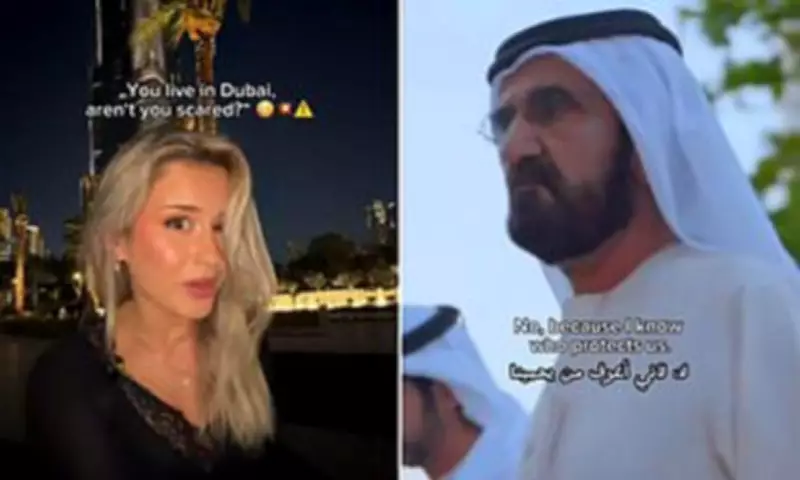
Dozens of influencers who have relocated to the Middle Eastern city are defending Dubai against inevitable questions about safety during regional conflicts. Their videos typically begin with a shot of the influencer, with text appearing above asking variations of "you live in Dubai, aren't you scared?" or "do you feel safe in Dubai?" The content then cuts to a montage of Dubai leader Sheikh Mohammed bin Rashid Al Maktoum, with the words "no, because I know who protects us" written over the footage.
One such video has been viewed nearly 7 million times, with many more accumulating millions of views collectively. The striking similarity between these videos—featuring identical phrasing, editing techniques, and visual elements—has led users online to question whether the influencers have been paid by the state to post this content.

Online Reactions and Influencer Responses
Social media users have been quick to comment that these videos appear as government-sponsored propaganda designed to maintain Dubai's image of stability and safety. One person commented "influencers are doing overtime trying to convince the rest of the world it's all okay," to which influencer Bea Albero responded "we are ok, I feel this way."
When another user wrote "everyone posting the same little clip saying it isn't propaganda," Ms. Albero replied saying "it is not dear I truly feel this way." User Chris Tighe then wrote "say something critical and they will come for you," to which Ms. Albero said "I have no idea about this."
Strict Content Laws and Legal Consequences
The United Arab Emirates maintains strict laws about criticising or insulting the government or causing "reputational harm" to the country. Violations can result in fines of up to £200,000, imprisonment for up to five years, and possible deportation. The penalties are even harsher for property owners in the country.
Few influencers will speak openly about these content restrictions, but the legal framework creates significant pressure to maintain positive messaging about the UAE.
Expert Analysis of the Phenomenon
Marc Owen Jones, Associate Professor of Media Analytics at Northwestern University in Qatar, described the identical videos as "suspicious." While unable to confirm whether influencers were being paid, he believes there is a strong likelihood that they were compensated to emphasise the appearance of safety and stability.
"At the moment I don't know for sure if they are paid or not, but my expert opinion is that this started as a paid trend, an attempt to overemphasise the safety of Dubai since the perception of stability is so important for the country," Professor Jones explained.
He added: "The issue is when trends go viral, people replicate them and they become just that, a 'trend.' I also wonder in an authoritarian context if people think posting such content becomes a way of flagging themselves as patriotic and spreading information that will be viewed positively by the authorities."
British Influencer's Perspective
The social media trend emerged just a day after revelations that British influencer Ben Moss from Wandsworth admitted he's more worried about being fined or jailed for posting the "wrong" content than he is of lethal explosives. "I do feel completely safe here because of the UAE air defences, but the laws can sometimes concern me so I always keep everything positive," Moss said.
"I'm far more scared of being fined or jailed for posting the wrong content than I am of the Iranian missiles and drones," he added, noting that prohibited content would include videos of drone or missile strikes that might anger the authorities.

Safety Measures and Government Communications
When the first waves of Iranian ordnance were launched at the United Arab Emirates, Moss and his Iranian-born girlfriend Parisa, both 31, relocated from their luxury flat in Ras Al Khaimah—the nearest point in the country to Iran—and travelled 70 miles inland to pitch a tent near Hatta, a border post with neighbouring Oman.
Moss received an unambiguous text message from Dubai Police that read: "Photographing or sharing security or critical sites, or reposting unreliable information, may result in legal action and compromise national security and stability. Compliance helps keep the community safe and stable. Your Security is Our Happiness."
He said he understands the security concerns about videos of drone or missile interceptions being posted and respects the government's position.
Business Opportunities Amid Crisis
Moss, who has been in the UAE for around three years, admits that his influencer career is "a weird way to make a living," but his enthusiasm keeps him going as he makes content deals with businesses across the UAE. He believes the current situation represents "an opportunity" for those prepared to stay in the UAE for the "long haul."
"There will be plenty of people who will head home after these events, to the UK or other countries in Europe. And that might leave a gap for the rest of us," Moss explained. "It may also bring down the high property prices and the hotels and resorts will need help with marketing to get their numbers up, and that's where people like me come in."
He added: "I do see the market bouncing back within 24 months, as people will now view the UAE as being an even safer place to live, given they can defend themselves in such a spectacular way, and when the Iranian regime is hopefully removed, we will be living in a much safer region."
The Government of Dubai Media Centre has been contacted for comment regarding the viral trend and allegations of state-sponsored content.