HBO's Legacy and the Streaming Challenge
In 1996, HBO boldly declared, "It's not TV. It's HBO," a tagline that marked the dawn of a new era in small-screen entertainment. Starting as a subscription service in 1972 with films and sports, HBO faced staleness by the late 1980s due to competition. The solution was original content, leading to a creative revolution that redefined television.
The Golden Era of HBO
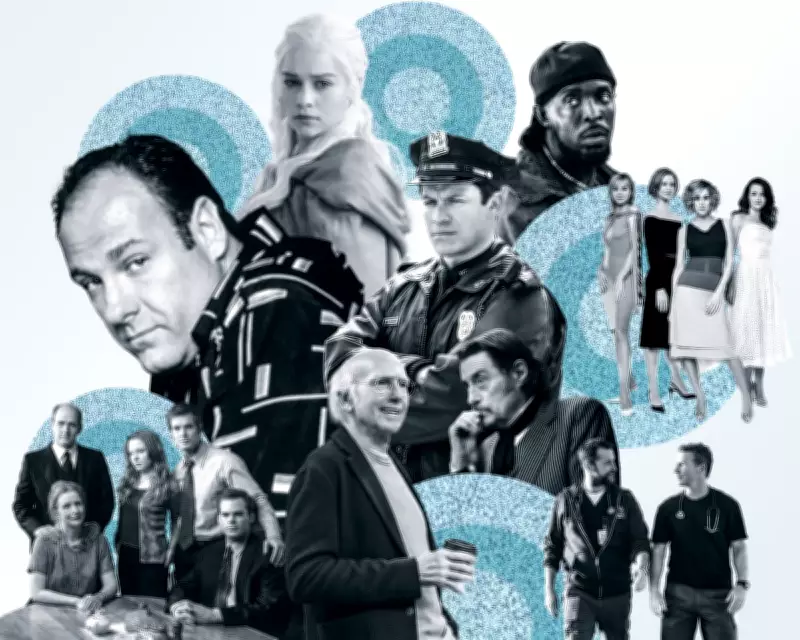
HBO's confidence proved well-founded. Shows like The Larry Sanders Show in 1992 reinvented the sitcom, followed by Oz in 1997, a brutal prison drama. Sex and the City launched in 1998, showcasing the network's ambition. Over the next decade, HBO became synonymous with brilliant, original TV, with series such as The Sopranos, The Wire, Six Feet Under, Curb Your Enthusiasm, and Deadwood. These shows set a gold standard, akin to cultural milestones in music and cinema.
Executives like Carolyn Strauss and Chris Albrecht fostered creative ambition, as seen when David Simon presented The Wire with a grand vision for exploring American society. Casey Bloys, now HBO Max's chairman, recalls this period as one focused on creativity and uniqueness.

Creative Freedom and Maverick Talent
HBO provided an unusually liberating environment for writers and showrunners. Alan Ball, creator of Six Feet Under, received a note to make the show "more fucked up," contrasting with network TV's tendency to soften content. This approach attracted mavericks like Ball, a playwright, and Simon, a journalist-turned-novelist, who brought fresh perspectives.
The network's uncompromising casting, avoiding huge stars, paid off, making shows more distinctive. A focus group for The Sopranos pilot scored poorly, but HBO aired it unchanged, a decision that changed television forever.
From DVDs to Streaming
Initially, British viewers consumed HBO shows on DVD, which fostered binge-watching and comparisons to literature. This open-ended format paved the way for streaming. As streaming services emerged, HBO adapted with shows like Game of Thrones, a fantasy epic that blended scale with existing IP.
The shift towards miniseries and the 2023 writers' strike highlighted changes in the industry. Alan Poul notes that streamers moved away from volume competition, focusing on quality.
Current Challenges and Future Prospects
With HBO Max launching in the UK, the network faces questions about its niche in a crowded market. Paramount's planned acquisition of Warner Bros Discovery, which owns HBO, could lead to mergers, threatening HBO's unique identity. Casey Bloys emphasizes that HBO still avoids testing and research, relying on creative judgment.
However, writer Jack Thorne cautions that new talent isn't trusted as much today, with shows like Baby Reindeer and Fleabag highlighting the need for singular visions. HBO's current headline act, The Pitt, a hospital drama, feels traditional, echoing the golden era's multiseason model.
Political and Industry Pressures
The political context adds complexity, with Donald Trump's comments on streaming deals and Paramount's leadership aligning with him. HBO has often had a polemical slant, but the current environment poses new challenges. Poul worries about industry consolidation reducing buyers and risk-taking, making it harder for creatives to sell high-end drama.
As HBO navigates this precarious moment, its identity feels more uncertain than ever. The network that changed television must now fight to stay itself in an evolving landscape.