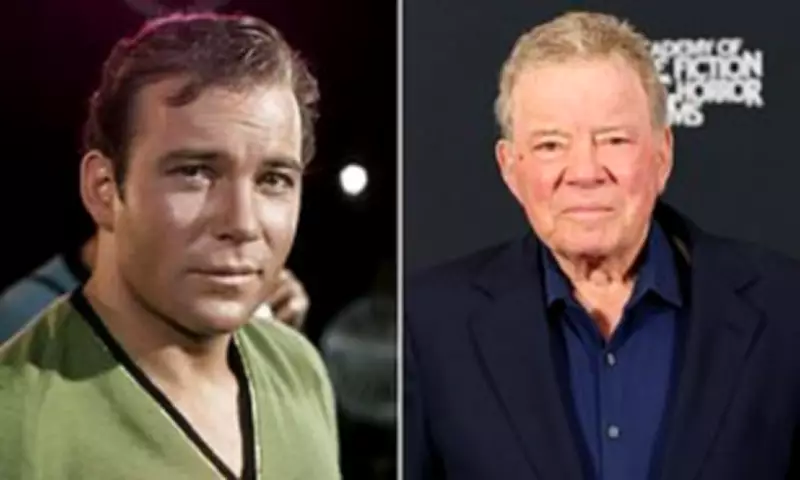
Star Trek icon William Shatner has issued a strong denial regarding viral social media rumours falsely claiming he has been diagnosed with brain cancer. The 95-year-old actor took to X, formerly Twitter, to dismiss the speculation with a photo showing him seated upright in a backyard patio chair, offering a sprightly grin to the camera.
Daughter's Intervention and Social Media Post
In his post on Thursday, Shatner explained that his daughter visited him after her own daughter heard the brain cancer rumour. "She took this photo and sent it to me to upload to prove I'm not ill," he wrote, accompanied by a rolling eyes emoji. "The people who are ill are those that are spreading these ridiculous stories. I'm fit as a fiddle. You don't have to worry," the native Montrealer assured his legion of fans.
Identifying the Source of False Information
Shatner specifically identified a Facebook page called The Beanstalk Functions Group as the source of the brain cancer rumour, along with other fabricated claims including a supposed spat with Erika Kirk. He uploaded another X post that same day criticising the page for "using AI to create horrible fake news stories about me."

"I wanted to put this out yesterday but given the day and the possibility that it would look like a joke I waited for today," he wrote the morning after April Fool's Day, demonstrating careful timing in his response to the misinformation.
Monetisation of False Stories
The veteran actor revealed that the offending Facebook page has "created stories that say I have stage 4 brain cancer, was in some kind of fight with Erika Kirk and that I'm dying." He emphasised that "all their stories are monetized" and that "most of the stories use an AI image of me." Despite his efforts, Shatner reported that "Facebook Support will not remove the page."
Contacting Tech Companies and Warning About AI
In his attempt to combat the false narratives, Shatner contacted the CEO of Next.js, the web development framework apparently used to create the problematic Facebook page, seeking to have the stories removed. He expressed frustration that "none of these stories are true but they apparently seem genuine enough for fans to repost them across social media and send messages of support to me and my family all while the culprits behind the account make money."
The sci-fi legend issued a warning about artificial intelligence, stating: "This is the downside of AI and yellow journalism. While it can be a wonderful tool in the right hands; it can be used as a weapon in the wrong hands." He advised fans: "If you see a bizarre story about me; unless you see it posted on one of my verified accounts take it with a grain of salt."
History of False Health Rumours
This incident marks the latest in a series of false health rumours surrounding the actor. Last September, Shatner found himself denying a report that he had been hospitalised for a medical emergency involving his blood sugar. Insiders claimed emergency services were called to his location, but his agency TalentWorks released a statement insisting the report was false.
His agent Harry Gold confirmed at the time: "I spoke to Bill earlier this evening, he is fine. He is not in the hospital. He is at home. He is 100 percent healthy." Shatner himself responded wryly to that report, posting a meme of himself playing Mark Twain on the Canadian series Murdoch Mysteries with the phrase: "Rumors of my demise have been greatly exaggerated!"
Actual Health History and Cancer Survivorship
While denying current false rumours, Shatner has previously revealed he is a cancer survivor, having been diagnosed with stage four melanoma in the past. He underwent an operation followed by immunotherapy to treat the condition, though he did not disclose specific timing details according to industry publication Managed Healthcare Executive.

In 2016, the actor received a prostate cancer diagnosis that turned out to be a false alarm due to drastically elevated levels of PSA (prostate-specific antigen). "That was really scary," Shatner remembered telling NBC News. "I was told by a doctor I had a terminal disease. That I was going to die." He attributed the elevated PSA levels to testosterone supplements he was taking at the time, which he has since discontinued.
Throughout his lengthy career, William Shatner has remained beloved by Trekkies worldwide for his iconic portrayal of Captain Kirk in the original Star Trek series, a role he first played in 1966 at the height of the franchise's popularity. His current efforts to combat AI-generated misinformation highlight the challenges public figures face in the digital age while maintaining their connection with concerned fans.