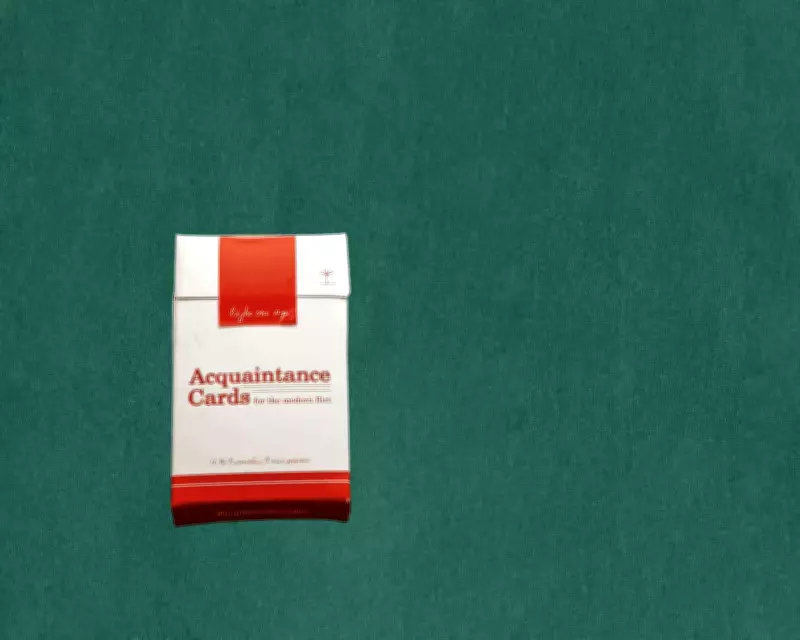
Flirting Like It's 1890: The Return of Victorian Acquaintance Cards
In an era dominated by digital dating apps, singles seeking more authentic connections are rediscovering a charming relic from the past: Victorian flirtation cards. These playful tools, now reimagined by the Brooklyn-based stationery brand No Particular Order, offer a serendipitous alternative to endless swiping, encouraging spontaneous real-world interactions.
From Victorian Courtship to Modern Romance
The concept draws inspiration from the 19th century, when flirtation cards provided a discreet way for men to express interest in women, often in public settings where chaperones were present. Phrases like "May I see you home?" or "I very much desire to make your acquaintance" allowed for furtive romantic advances. Today, No Particular Order's modern versions retain this whimsical spirit but with a more inclusive and playful twist.
Founded by content creator Margot Lee, the brand emerged from her own desire to avoid dating apps after a long-term relationship ended. "I really did not want to do that," Lee explained, emphasizing her preference for connections born from "happenstance of being at the same place at the same time."

How the Acquaintance Cards Work
These cards function similarly to business cards but are designed to foster romantic potential. Users can personalize them by circling or filling in options:
- Greeting: Choose between a casual "hey" or a shyer "um."
- Compliment: Select from 10 provided reasons why someone caught your eye, such as their smile, outfit, or "energy," or write your own.
- Timing: Indicate when you hope to hear back, with options like an eager "soon" or a less committal "someday."
- Contact Information: Add your details at the bottom to facilitate follow-up.
The design even nods to pre-app eras, with packaging reminiscent of a retro cigarette case. Lee noted, "So much of vintage cigarette ads are based on flirting and making a move," citing a 1930s example that reads, "I like what you like."
Real-World Success Stories
Lee shared creative ways to use the cards, such as handing one to someone and saying, "I think you dropped this," before walking away. They also serve as handy conversation starters. In one instance, a friend gave a card to someone on the subway, leading to a date that went "really well." Users can even play Cupid by filling out cards for friends.
The cards have gained popularity on social media, where a viral video prompted comments like "bye bye hinge" and "I just impulsively bought solely bc of this video." This reflects a growing trend among singles attending flirting parties and dating-oriented run clubs to meet partners offline.
A Personal Testimonial: Do They Really Work?
To put the cards to the test, a journalist ventured into downtown Manhattan with friends on a Saturday night. After initial struggles at a music venue and dive bar, they spotted an approachable group at a table. Despite nerves, a friend handed out cards, which were met with enthusiastic praise. Within 20 minutes of returning home, the journalist received a text: "hey, I got your card."
This experience highlights the cards' magic: they bypass the algorithmic constraints of apps, creating opportunities for genuine, nerve-racking yet real connections where "anything could happen." As dating culture evolves, these Victorian-inspired tools offer a nostalgic yet innovative path to romance in the modern world.