Inside Artemis 2: Astronauts' Space Diet and Living Conditions Revealed
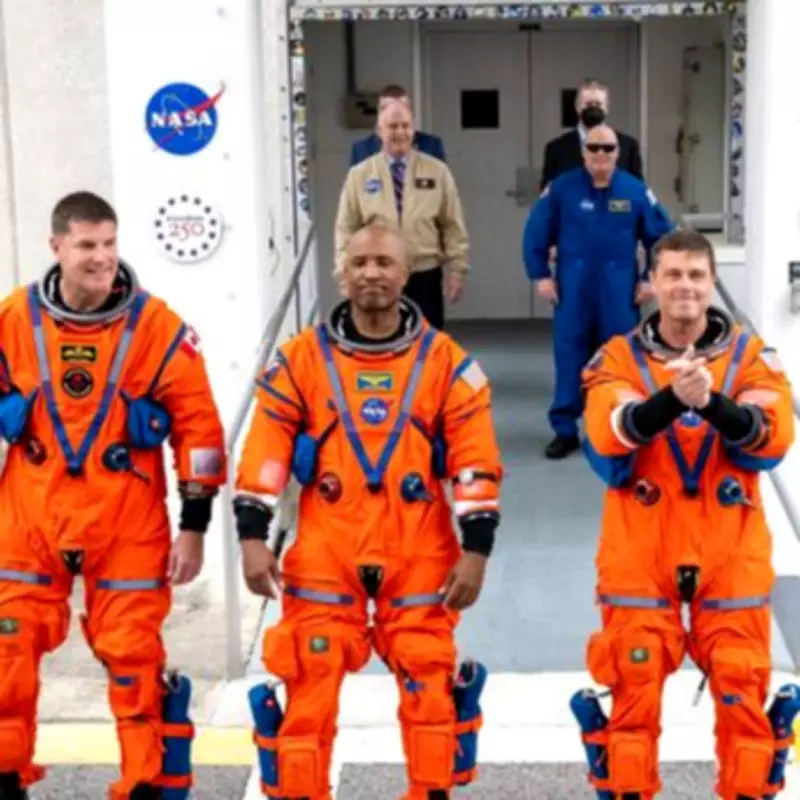
The groundbreaking Artemis 2 mission, marking the first United States lunar flyby in over five decades, is currently underway with four astronauts embarking on a daring journey to the far side of the moon. Launched on April 1, 2026, the crew is navigating the Orion spacecraft, named "Integrity," through the vast expanse of space, having already passed the halfway point between Earth and the moon. This historic endeavor aims to stress-test human endurance, the Space Launch System rocket, and critical life support systems in the harsh environment of deep space.
Cramped Quarters and High-Tech Living
Life aboard the Orion spacecraft is far from glamorous, with the four astronauts sharing living quarters no larger than a minivan. Described as a blend of high-tech innovation and basic camping, the capsule offers six windows providing views of Earth shrinking and the moon approaching. Despite the confined space, the crew has access to essential amenities, including a food warmer and a water dispenser, though notably absent are a fridge or cooker. NASA has allowed some personal touches, with astronauts selecting favorite meals like mac and cheese and prawn cocktail to ease the rigors of space travel.
Freeze-Dried Meals and Microgravity Challenges
The astronauts' diet consists primarily of freeze-dried food pouches that require rehydration and heating before consumption. To combat dulled tastebuds in microgravity, the crew brought five varieties of hot sauce. Daily physical exercise is crucial to prevent muscle and bone weakening in zero gravity, where bones can become fragile without the need to support body weight. A flywheel device enables resistance exercises like rowing and squats, as traditional weights are ineffective in space.

Toilet Troubles and Communication Blackouts
Sanitation presents unique challenges, with a compact, high-tech vacuum toilet system built into the floor. This system uses airflow to manage waste in the absence of gravity, though it offers no privacy. The crew experienced a malfunction on day two but quickly resolved it. Communication with Earth is maintained via Mission Control in Houston, allowing global followers to track the mission in real time. However, as the spacecraft passes behind the moon, a communication blackout of up to 50 minutes will occur, isolating the crew temporarily.
Radiation Risks and Mission Conclusion
Traveling through the Van Allen radiation belt exposes the astronauts to potential solar flares—massive bursts of solar energy. In such an event, the crew can retreat to a designated radiation shelter by clearing storage lockers and crouching under the cabin floor for protection. The mission is scheduled to conclude on April 10, 2026, with a splashdown in the Pacific Ocean near San Diego. The most perilous phase involves parachuting from the spacecraft after atmospheric reentry at 25,000 miles per hour, creating a superheated plasma that blocks radio signals for seven minutes. A US Navy ship will be on standby to rescue the astronauts and ensure their safe return.