NASA's Artemis II Mission Confronts Grave Heat Shield Dangers During Earth Return
The crew of NASA's Artemis II mission has already journeyed farther from Earth than any humans in history, but experts are sounding alarms that the most perilous phase lies ahead. As the Orion crew capsule prepares for its fiery descent back to our planet, serious concerns have emerged regarding the safety of its heat shield and untested re-entry trajectory.
Blazing Atmospheric Plunge at Extreme Speeds
Before splashing down in the Pacific Ocean off the California coast, the Orion capsule must endure a searing plunge through Earth's atmosphere. Measuring 16.5 feet by 11 feet, the spacecraft will hurtle through the air at velocities reaching up to 25,000 miles per hour (40,230 km/h). At such tremendous speeds, the surrounding air will heat to over 2,760°C (5,000°F)—nearly half the surface temperature of the sun.
This nerve-jangling journey will be undertaken by astronauts Reid Wiseman, Victor Glover, Christina Koch, and Jeremy Hansen using a trajectory that has never been validated in real-world conditions. Compounding the anxiety is a heat shield that failed its previous test during the uncrewed Artemis I mission.

Heat Shield Vulnerabilities and Historical Parallels
Dr. Charles Camarda, a former NASA astronaut and Director of Engineering at Johnson Space Centre, has voiced stark warnings to the Daily Mail. He asserts that NASA is disregarding significant disaster risks, operating with "exactly the same thinking" that led to the catastrophic Challenger and Columbia disasters.
The Orion capsule's heat shield relies on a three-inch-thick layer of Avcoat—a material composed of silica fibres and epoxy resin within a fibreglass mesh. Designed as an ablative shield, it intentionally burns away during re-entry to dissipate heat. Ed Macaulay, a lecturer in Physics and Data Science at Queen Mary University of London, likens this to a car's crumple zone, meant to absorb energy and protect occupants.
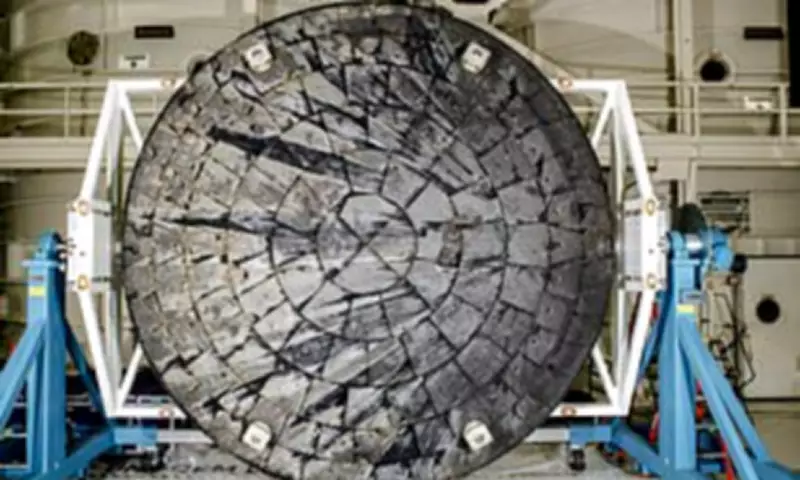
However, the Artemis I test revealed alarming flaws. NASA's investigation documented material loss in over 100 locations, with some large bolts melting due to extreme heat. Unlike the meticulously moulded honeycomb structure of Apollo-era shields, Artemis uses solid Avcoat blocks to cut costs and time. This design trapped gases, causing cracks to propagate and chunks to break off unevenly.
Untested Trajectory and Inadequate Safeguards
In response, NASA has altered the re-entry plan for Artemis II. While Artemis I employed a "skip" trajectory—dipping in and out of the atmosphere to manage speed—Artemis II will take a steeper, faster path to reduce exposure to high temperatures. Yet, Dr. Camarda cautions that NASA cannot guarantee this will resolve the issue, as small-scale tests fail to replicate actual re-entry conditions.
Jeremy VanderKam, deputy manager for Orion’s heat shield, acknowledged in 2022 that tests could not mimic the "heat flux, pressure and shear stresses" of real re-entry. Dr. Camarda emphasizes that without accurate failure prediction, changing the trajectory offers no assurance of safety. He reveals that documents show Artemis I began losing Avcoat chunks during its initial atmospheric encounter, suggesting the problem may persist or worsen.
Critical Moments of Descent
The re-entry process involves precise stages: Orion will detach from the European Service Module, which will burn up below, then fire engines to position its heat shield. Over 16 minutes, speed must drop from seven miles per second to 129 miles per hour before deploying 11 parachutes for a final slowdown. Any failure in the heat shield could lead to uncontrolled heating, endangering the crew and critical systems.
Dr. Macaulay notes the final phase allows "no backup, no contingency, and no chance of escape." Despite NASA redesigning Avcoat for better permeability, Artemis II will use a less permeable version than its predecessor, heightening risks.

Mission Overview and Stakes
Artemis II, scheduled for a 10-day mission launching on April 1, aims to complete a lunar flyby and test systems for future landings. Traveling 620,000 miles at an estimated cost of $44 billion, it represents a monumental step in space exploration. However, Dr. Camarda argues that launching a crew under these conditions is unjustified, stating, "The odds are probably in their favour, but the odds are not what I would want them to be."
As the world watches, the success of Artemis II hinges on overcoming these formidable engineering challenges to ensure a safe return for its pioneering astronauts.