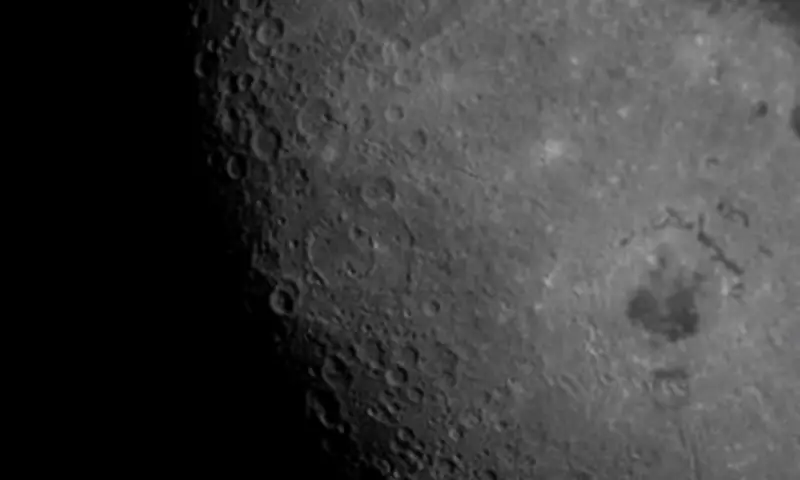
NASA's Artemis II astronauts have captured a remarkable image of a massive crater on the dark side of the moon, but social media users are focusing on an unexpected detail. The photo, taken during the crew's lunar flyby on April 6, shows the rings of the Orientale basin, with two smaller craters at the ten o'clock position that the astronauts have suggested be named Integrity and Carroll.
Social Media Buzz Over Lunar Smiley
After NASA shared the image on X, the platform was flooded with responses from fans who noticed the Orientale basin bears a striking resemblance to a smiley face. One user commented, 'Cute like a hippo,' while another added, 'A smile from the moon it is.' A third viewer humorously noted, 'It appears highly probable that this is Doraemon,' referencing the popular Japanese manga character.
Personal Touches in Space Exploration
To the left of the perceived smiley face, the bright spot known as Carroll is visible. The Artemis II crew has requested this feature be named in honor of commander Reid Wiseman's late wife, Carroll, adding a poignant personal element to the mission. This stunning release came just hours after astronauts Reid Wiseman, Victor Glover, Christina Koch, and Canadian Jeremy Hansen became the first humans in over fifty years to travel around the far side of the moon.

Record-Breaking Mission Achievements
During their six-hour lunar flyby, the Artemis II crew reached a distance exceeding 252,756 miles from Earth, surpassing Apollo mission records and setting a new milestone. From their vantage point 41,072 miles above the lunar surface, the moon appeared as large as a basketball held at arm's length, allowing them to witness its far side with the naked eye for the first time in half a century.
The Science Behind Seeing Faces
This tendency to see faces in inanimate objects, such as the moon's craters, is explained by a psychological phenomenon called face pareidolia. It is a form of apophenia, where individuals detect patterns in random data. Similar instances include the famous 'face on Mars' observed by a Viking orbiter in 1976, later attributed to shifting sand dunes.
Artemis II's Journey Home
Having completed the lunar flyby, the Orion crew capsule is now riding Earth's gravity back home, with splashdown anticipated on Friday. The final challenge will be a high-speed re-entry into the atmosphere at approximately 25,000 miles per hour, followed by parachute deployment and landing in the Pacific Ocean. Favorable weather conditions are predicted, with winds of seven to fourteen miles per hour and waves under five feet along California's southern coast, meeting NASA's safety criteria for recovery.
Key Mission Facts
- Launch Date: April 1
- Objective: Lunar flyby to test systems for future landings
- Total Distance: 620,000 miles
- Duration: 10 days
- Estimated Cost: $44 billion
- Crew: Commander Reid Wiseman, Pilot Victor Glover, Mission Specialists Christina Koch and Jeremy Hansen
The mission stages include launch from Kennedy Space Centre, translunar injection, lunar flyby at 5,523 miles altitude, and return to Earth, culminating in Pacific Ocean splashdown. This historic endeavor marks a significant step in NASA's Artemis program, paving the way for future lunar exploration.