From Moonshots to Moon Economy: The New Space Race's Commercial Frontier
More than five decades after the Apollo program concluded, astronauts are preparing to return to the Moon. However, the Artemis initiative represents a fundamental departure from its predecessor. As Anthony Cuthbertson observes, it is no longer merely about proving that lunar travel is possible; it is about demonstrating that it is economically worthwhile and sustainable.
A Historical Parallel: Transatlantic Flight to Lunar Ambition
On a cloudy summer day in 1919, aviators John Alcock and Arthur Brown embarked on a pioneering trans-Atlantic flight. Their wooden and fabric aircraft carried them from Newfoundland to an Irish bog in under sixteen hours, marking a monumental aeronautical achievement. Almost exactly fifty years later, NASA achieved another historic milestone by landing the first humans on the Moon.
Yet, for over half a century since the last Apollo mission, human lunar exploration has remained stagnant. The initial drive—rooted in Cold War competition—has evolved. Today, the motivation extends beyond national prestige to encompass commercial viability and long-term habitation.

The Cold War Legacy and a New Lunar Vision
President John F. Kennedy famously articulated the Apollo program's ambition in 1962, framing the lunar quest as a challenge undertaken "not because they are easy, but because they are hard." The Moon served as the ultimate prize in a geopolitical rivalry with the Soviet Union, symbolizing technological supremacy.
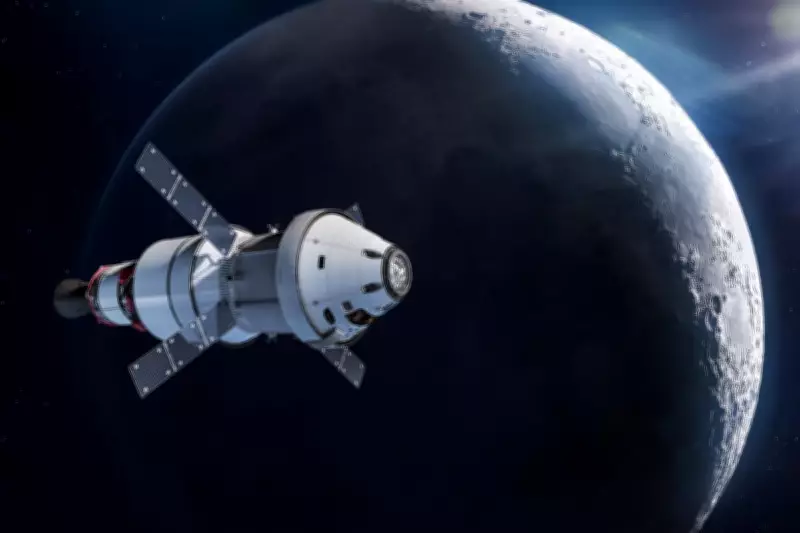
Now, with the Cold War long ended, NASA is orchestrating a return to the lunar surface. A recent pathfinder mission launched from Florida's Kennedy Space Center, carrying a four-person crew farther than any humans have previously traveled. This mission paves the way for a planned astronaut landing in 2028, followed by the establishment of a permanently crewed lunar base by 2030.
Beyond Flags and Footprints: The Artemis Objectives
NASA Administrator Jared Isaacman has emphasized that Artemis is not about repeating "flags and footprints." Instead, the goal is to establish a lasting human presence. This vision aligns with broader aspirations, including eventual missions to Mars and the prospect of becoming a multi-planetary species.
While competition with China persists, the new space race transcends mere national rivalries. It is increasingly driven by private enterprise and economic potential. SpaceX CEO Elon Musk, whose Starship rocket is crucial to Artemis, advocates for lunar exploration as a means to "secure the future of civilisation."
The Rise of the Commercial Space Economy
SpaceX's ambitions illustrate the shift toward commercialization. The company, poised for a historic public valuation, aims to develop a "self-growing city on the Moon" and catalyze a space-based economy. It has already deployed the world's largest satellite constellation and plans space-based AI data centers.
Other tech giants, including Alphabet's Sundar Pichai, Amazon's Jeff Bezos, and Nvidia's Jensen Huang, are investing in similar ventures. This private sector engagement is fostering a new space race focused on commercializing the Solar System.
Emerging Sectors: Tourism, Mining, and Infrastructure
Space tourism is rapidly developing, with companies like Blue Origin and Virgin Galactic competing to offer suborbital flights. Some startups are even accepting reservations for lunar hotel accommodations, despite facilities yet to be constructed.
Beyond tourism, significant financial incentives exist for mining asteroids and lunar resources. Helium-3, a rare element found on the Moon, holds promise for powering future nuclear fusion reactors. Controlling these raw materials could enable nations and corporations to build infrastructure and assert dominance in space.
Economic and Strategic Implications
Mark Boggett, CEO of Seraphim Space, notes that leadership in space now translates to economic resilience, security, and technological advantage on Earth. The convergence of geopolitical competition and commercial scale is driving sustained investment across the sector.
NASA's current leadership, including Isaacman, brings business acumen to the agency. This perspective recognizes space as a solution to capitalism's growth constraints, offering an infinite frontier for expansion.

Artemis as a Gateway to Sustainable Exploration
Retired astronaut Dr. Bonnie Dunbar describes Artemis as "a gateway to living and working on another world." The program aims to lay the groundwork for a sustainable lunar economy, mirroring the evolution of transatlantic flight.
Just as Charles Lindbergh's 1927 solo flight demonstrated the commercial viability of air travel, Artemis seeks to prove the economic worth of lunar exploration. Within a decade, traveling to the Moon could become as routine as crossing the Atlantic by plane.
The new space race is no longer solely about exploration; it is about building a future where the Moon serves as a hub for commerce, innovation, and human expansion into the cosmos.