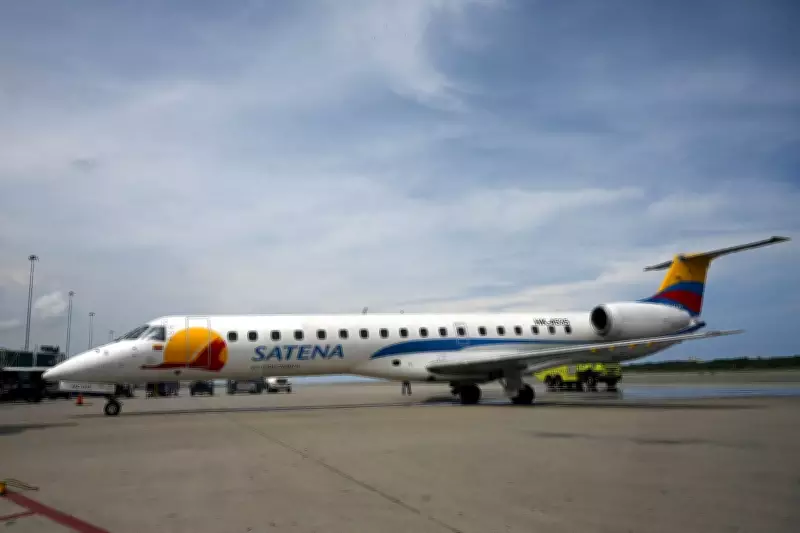
A devastating aviation accident in Colombia has resulted in the tragic loss of all fifteen individuals aboard a small aircraft, including a serving member of congress and a political candidate. The crash occurred on Wednesday in a rural area of Norte de Santander province, close to the Venezuelan border, marking a profound tragedy for the region and the nation.
Flight Details and Immediate Aftermath
The aircraft, registered as HK4709 and operated by the state-owned airline Satena, departed from Cúcuta, the departmental capital, at 11:42 a.m. local time. Its intended destination was the municipality of Ocaña, a journey typically lasting around forty minutes through mountainous terrain. Authorities confirmed that the plane's final contact with air traffic control came mere minutes after takeoff, raising immediate concerns.
Local officials from the community of Curasica were the first to alert authorities to the crash site, prompting the swift dispatch of a rescue team to assess the condition of the passengers. However, Colombia's Transportation Ministry later issued a sombre statement confirming the worst: "once the aircraft was located on site, authorities regrettably confirmed that there were no survivors." The cause of the crash remains undetermined at this early stage, with officials pledging a full investigation.

Victims and Political Impact
The flight was carrying two crew members and thirteen passengers. Among the victims was Diógenes Quintero, a 36-year-old member of the House of Representatives for the Catatumbo region. Quintero was a prominent human rights defender from the troubled border area with Venezuela, where the accident occurred. A lawyer by profession, he was elected in 2022 as one of sixteen special representatives tasked with advocating for the over nine million victims of Colombia's protracted armed conflict—a role established under the landmark 2016 peace agreement with the FARC guerrilla group.
His political party, the U Party, expressed profound sorrow, describing him as "a leader committed to his region, with a firm vocation for service." Also among the deceased was Carlos Salcedo, a social leader who was actively campaigning for a seat in Congress, underscoring the significant political ramifications of this disaster.
National Mourning and Investigation
Colombian President Gustavo Petro conveyed his grief via social media, stating, "I am deeply saddened by these deaths. My heartfelt condolences to their families. May they rest in peace." The tragedy has cast a pall over the nation, particularly in a region already grappling with complex socio-political challenges.
As the community mourns, attention now turns to the forthcoming investigation. Officials have not speculated on potential causes, emphasising the need for a thorough and meticulous inquiry to determine what led to this catastrophic event. The crash serves as a stark reminder of the inherent risks in regional aviation, especially in Colombia's challenging topographical landscapes.