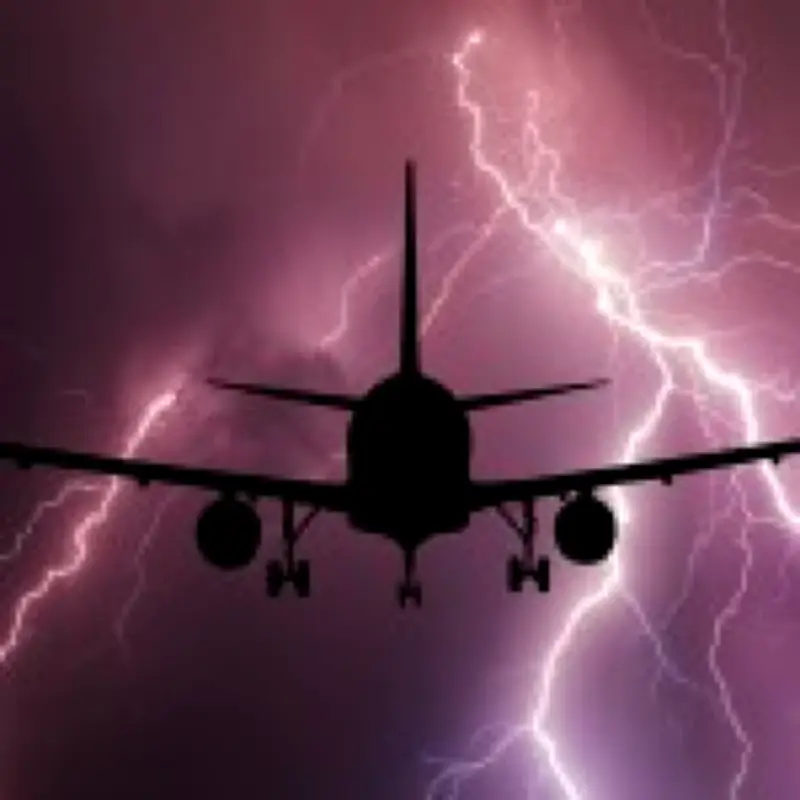
During a recent descent into London Heathrow, a British Airways passenger experienced a lightning strike firsthand. Alice Giddings, a lifestyle reporter, was returning from Mykonos when a loud bang and bright yellow flash startled the cabin. The flight had been turbulent, with the seatbelt sign flashing on and off. Sitting on the back row without a window, Giddings initially thought a bird had hit the engine. Passengers held hands as the plane landed without immediate explanation from the crew. After touchdown, the pilot announced that the aircraft had been struck by lightning.
How Planes Withstand Lightning Strikes
Andrew McKechnie, a former pilot and expert in flight operations and airline management, explained that planes are designed to handle such events. The metal fuselage acts as a Faraday cage, conducting electricity around the exterior and protecting occupants inside. Modern aircraft like the Boeing 787 Dreamliner use composite structures with embedded copper wires for equivalent protection. Passengers typically only hear a loud bang and see a flash, with no direct electrical effects inside the cabin.
Potential Damage and Impact
While planes can continue flying after a lightning strike, minor damage often occurs. The intense heat can punch a small hole in the metal at the strike point. On non-metal parts, cracks or charring may appear. Navigation systems can be affected; magnetic compasses might temporarily point incorrectly. However, modern electronic navigation systems are well-protected and less reliant on magnetic compasses. The lightning strike on Giddings's flight did not necessitate an emergency landing, but severe weather associated with thunderstorms could force diversions. McKechnie recalled a flight from Genoa, Italy, where lightning struck but heavy rain and winds prevented landing at the planned destination, leading to a diversion to Nice, France.

Pilot Protocol After a Strike
Pilots actively avoid thunderstorms using radar and lightning detectors. If a strike occurs, they check for obvious damage and verify that navigation and communication systems function correctly. They report the incident to engineers for a post-landing inspection. The aircraft cannot depart again until engineers locate both entry and exit marks—each about the size of a 5p coin—on the large airframe. This inspection can take considerable time. In about 99% of cases, a temporary repair is made, with permanent repair scheduled during routine maintenance. Passengers should not be alarmed; the aircraft remains safe and continues flying normally.