The annual Lyrid meteor shower makes its spectacular return to the spring skies this week, captivating stargazers with its bright and fast meteors. Although the shower has been active since 16 April, it reaches its peak during the late evening of Wednesday 22 April and continues into the early hours of Thursday 23 April.
Ancient Origins and Celestial Mechanics
Records of the Lyrid meteor shower stretch back an astonishing 2,700 years to 687BC, making it one of the oldest documented astronomical events. In more recent history, its origin has been traced to comet Thatcher, which was discovered in 1861. The meteoroids that produce this dazzling display were once part of the comet's dusty tail, burning up dramatically in Earth's atmosphere to create the shower.
Viewing Details and Radiant Point
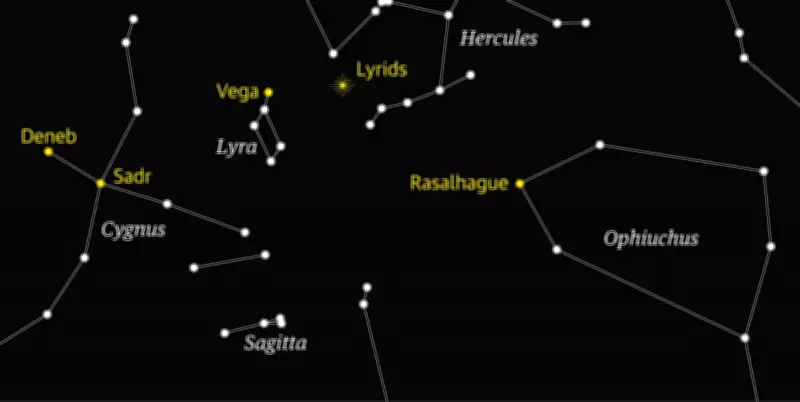
The chart illustrates the view looking east from London at 00.01 BST on Thursday 23 April. The origin point of the meteors, known as the radiant, is labelled Lyrids and is located in the constellation of Lyra, the Lyre, near the bright star Vega. From this radiant, meteors will appear to fan out in all directions, with a maximum rate of approximately 18 meteors per hour.

These meteors are characterised by their brightness and speed, often leaving smoky 'trains' across the night sky as they streak through the atmosphere. For the best viewing experience, it is recommended to observe after midnight, allowing your eyes 20 to 30 minutes to adjust fully to the darkness for optimal visibility.
Global Viewing Perspectives
While observers in the northern hemisphere, such as those in London, will have a prime view of the Lyrids, the spectacle is more restricted from the southern hemisphere. There, the radiant lies low in the northern sky, limiting the number of visible meteors. Nonetheless, this celestial event remains a highlight for astronomy enthusiasts worldwide, offering a glimpse into the ancient and dynamic processes of our solar system.