A devastating 5.8 magnitude earthquake in northern Afghanistan has tragically claimed the lives of at least eight members of a single refugee family on the outskirts of Kabul. The victims, who had recently returned from neighbouring Iran, were killed when the powerful tremor struck on Friday night.
Three-Year-Old Boy Sole Survivor
A three-year-old boy, identified as Aarash, emerged as the sole survivor of this family tragedy. He sustained significant injuries and is currently receiving urgent hospital treatment in the Afghan capital. Health Ministry spokesperson Sharafat Zaman, who visited the boy on Saturday, confirmed he is being treated for a severe head injury.
Conflicting Casualty Figures Emerge
Afghanistan's deputy government spokesman, Hamdullah Fitrat, confirmed on Saturday that the overall death toll from the earthquake had risen to twelve, with an additional four people injured across affected regions. However, the Afghanistan Disaster Management Authority reported a lower figure of nine fatalities. The reason for these differing casualty figures was not immediately apparent.

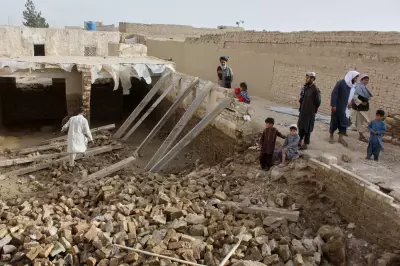
Mr Fitrat detailed extensive destruction, noting that five homes were completely destroyed and thirty-three others significantly damaged. This impacted forty families across multiple provinces including Kabul, Panjshir, Logar, Nangarhar, Laghman, and Nuristan.
Family's Recent Return from Iran
The family near Kabul were among millions of Afghan refugees who have recently returned from Iran and Pakistan. Both countries launched crackdowns in 2023 on foreigners, particularly Afghans, living within their borders. The family had arrived just fifteen days earlier and were living in a tent on land next to neighbour Mohibullah Niazi's home.
"He was a very poor person," Mr Niazi said of family head Najibullah, who was about fifty years old. "He had no other shelter." The family had set their tent up next to a wall separating the plot of land from Mr Niazi's home, which stood on higher ground in the village of Ittefaq on Kabul's eastern outskirts.
Wall Collapse During Earthquake
Heavy rains over recent days, which have caused deadly floods across many parts of Afghanistan, had left the ground sodden and soft. When the earthquake struck, the adjacent wall collapsed directly onto the family's tent.
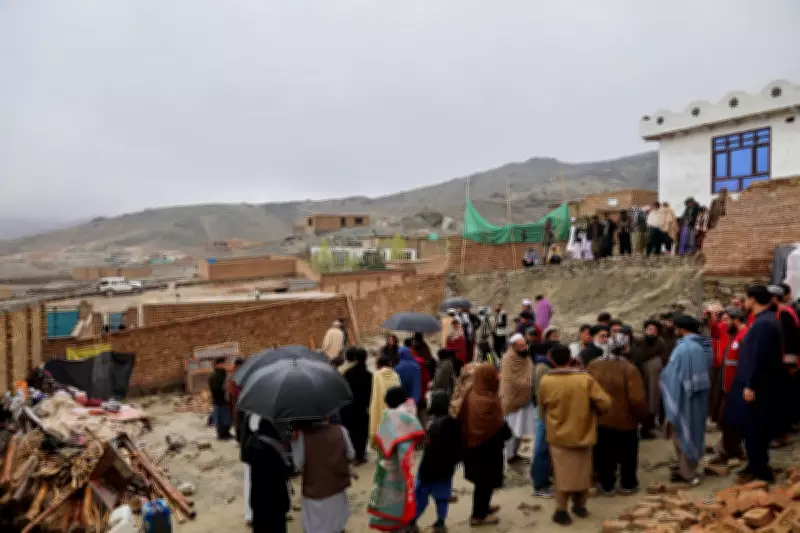
"My daughter shouted to me that a wall had fallen on them. The whole family ran, but there were so many big rocks," Mr Niazi recounted as he stood at the scene. "We tried our best."
On Saturday morning, only piles of bricks and mud remained, along with blankets, cooking utensils, and other personal belongings salvaged from the rubble and set into a pile.
Desperate Rescue Efforts
"For about three minutes, I could hear the voices of these people," Mr Niazi said. "But we couldn't do anything. There were two or three of us, but this was not the work of three people."
Neighbours soon rushed to help, digging through the mud and rubble with spades and their bare hands. They alerted the local Taliban police checkpoint, which dispatched rescuers and ambulances to the scene. The young boy Aarash was pulled out alive but injured, and rushed immediately to hospital.
For the rest of the family - the father and mother, four daughters aged between twelve and twenty-three, and two sons - it was tragically too late. Rescuers could only recover their bodies from the wreckage.
Missed Opportunity for Shelter
In a particularly heartbreaking detail, Mr Niazi revealed he had hosted the family in his own home one night previously. Just half an hour before the earthquake struck on Friday, he had renewed his offer, telling the family they could spend the night in his guest room to shelter from the cold and rain.
"But they did not come with me," he said with evident sorrow.
Earthquake Epicentre and Historical Context
Friday night's quake had its epicentre in the Hindu Kush mountain range, approximately 150 kilometres east of the northern city of Kunduz, according to both the Euro-Mediterranean Seismological Centre and the US Geological Survey. The area lies roughly 290 kilometres north east of Kabul.

Afghanistan occupies a highly seismically active region of the world, and earthquakes have caused thousands of deaths in recent years. Last August, a 6.0 earthquake that struck a remote, mountainous part of eastern Afghanistan killed more than 2,200 people, with most casualties occurring in Kunar province where people typically live in wood and mud-brick houses along steep valleys.
In November, a 6.3 earthquake struck Samangan province in northern Afghanistan, killing at least twenty-seven people and injuring more than 950. That quake also damaged historical sites including Afghanistan's famed Blue Mosque in Mazar-e-Sharif and the Bagh-e-Jahan Nama Palace in Khulm.
On October 7, 2023, a 6.3 quake followed by strong aftershocks in western Afghanistan killed thousands of people, highlighting the country's ongoing vulnerability to seismic events.