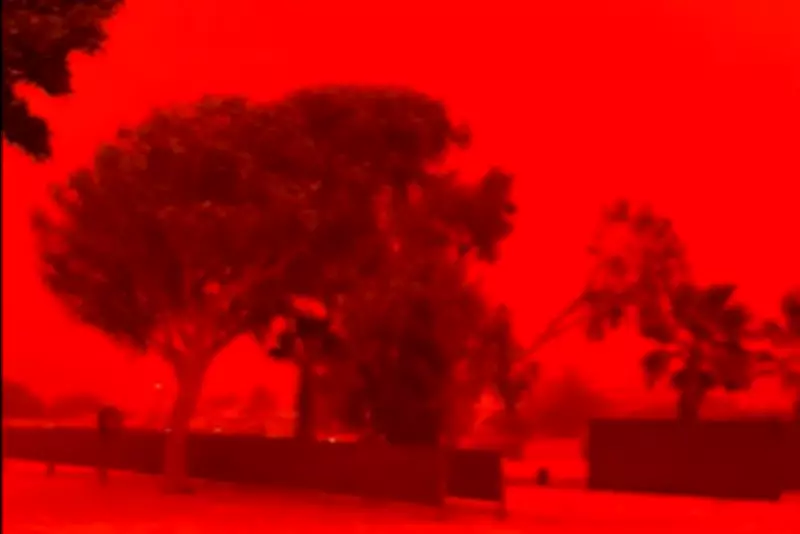
In a striking and unusual meteorological event, the skies over Western Australia turned a deep, blood-red hue, creating an apocalyptic scene that captivated observers. This dramatic phenomenon was directly caused by Severe Tropical Cyclone Narelle, which swept through the region, whipping up crimson dust from the landscape.
Environmental Conditions Behind the Red Skies
The vivid red appearance was the result of a rare combination of specific environmental factors unique to northwest Australia. Key elements included the very dry and exposed terrain, characterized by iron-rich red soils that are prevalent in the area. A lack of preceding rainfall left these soils loose and vulnerable to being lifted by the strong cyclonic winds.
Role of Cyclonic Winds and Dust Particles
The cyclonic winds, blowing from a particular direction, carried high concentrations of iron oxide-rich dust particles into the atmosphere. These particles scattered light in a way that intensified the red color, creating a short-lived 'Mars-like' sky. This effect was heightened by the region's status as one of the few places globally where tropical cyclones impact an arid desert climate, making its fragile soils particularly susceptible to such events.

As the cyclone progressed, the rain associated with Severe Tropical Cyclone Narelle eventually washed the dust away, bringing an end to the vivid display. This phenomenon underscores the unique interplay between weather systems and local geography in Australia, offering a glimpse into the powerful forces of nature that can transform skies into breathtaking spectacles.