Northeast US Battles Historic Snowstorm, Faces Another System This Week
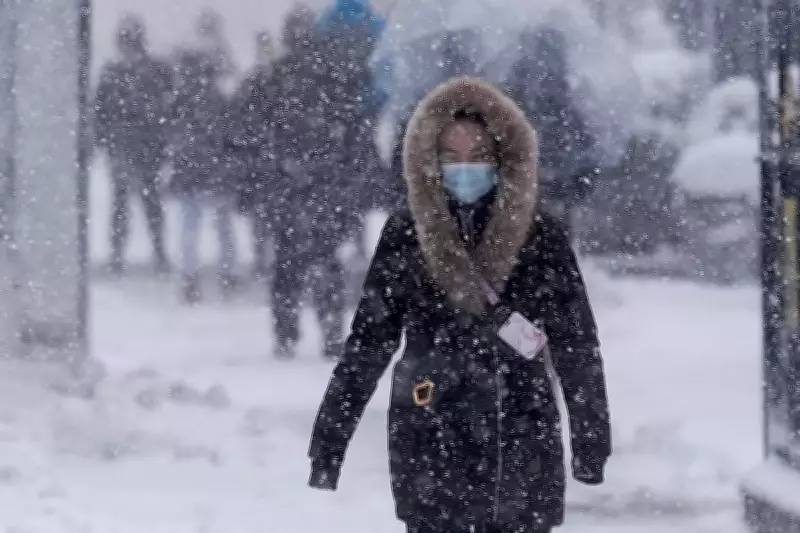
Residents, government crews, and even a formidable railroad snow-clearing machine affectionately dubbed "Darth Vader" are working tirelessly to clear the northeastern United States from a severe winter storm. This powerful weather event, which meteorologists have labeled the strongest in a decade, blanketed the region with heavy snowfall, leading to thousands of flight cancellations and widespread school closures.
Record-Breaking Snowfall and Immediate Impacts
The storm, which moved through the area on Monday, deposited more than 2 feet (61 centimeters) of snow in parts of the Northeast. By Tuesday, efforts were underway to reopen roads and restore mass transportation in some cities. Power was gradually returning for hundreds of thousands of affected customers across Massachusetts, New Jersey, Delaware, and Rhode Island.
Rhode Island's T.F. Green International Airport recorded nearly 38 inches (97 centimeters) of snow, breaking a record set in 1978. Central Park in New York City saw 19 inches (48 centimeters), while Warwick, Rhode Island, exceeded 3 feet (91 centimeters), marking the highest snowfall in the nation so far. Wind gusts reached hurricane-force levels, with Nantucket recording a peak of 83 mph (134 kph).

School Reopenings Spark Controversy
In New York City, Mayor Zohran Mamdani announced that schools would reopen for in-person learning on Tuesday, despite snow still piled along sidewalks. This decision raised concerns about feasibility and safety.
Staten Island Borough President Vito Fossella argued that schools should remain closed, while Michael Mulgrew, president of the United Federation of Teachers, described the situation as "a big mess." Mulgrew predicted low attendance among both students and staff due to travel difficulties.
Spokespersons for Mayor Mamdani did not respond to requests for comment, but Chancellor Kamar Samuels expressed confidence in the decision to reopen. Meanwhile, Philadelphia switched to online learning for Monday and Tuesday, and districts on Long Island and other New York suburbs canceled school again on Tuesday.
Transportation and Infrastructure Disruptions
More than 2,000 flights in and out of the United States were canceled on Tuesday, primarily affecting airports in New York, New Jersey, and Boston. The Metropolitan Transportation Authority reported that subway lines in the New York City area were mostly operational by Monday evening, with the exception of Staten Island, where rail service remained suspended. Commuter rail services to northern and eastern suburbs were expected to resume limited operations ahead of the Tuesday morning commute.
The Boston Globe management canceled printing its daily newspaper for the first time in over 150 years, as snow and winds prevented staff from safely reaching the printing plant.
Community Efforts and Neighborly Support
Amid the chaos, community members stepped up to help. In Brooklyn, Christa Prince and two others were out with shovels and an electric snowblower, clearing a path for a neighbor's car. "We're just doing our neighbor a kind deed," Prince said, highlighting the spirit of cooperation during the cleanup.
Forecasters Warn of Another Storm
As the snow moved northward and tapered off in some areas on Tuesday, forecasters issued warnings about another storm system that could bring more snow to the region later this week. Frank Pereira, a meteorologist with the National Weather Service in College Park, Maryland, noted that while the new storm is not expected to be as strong, even a few additional inches of snow could complicate cleanup efforts in hard-hit areas.
"Any additional snow at this point is probably not going to be welcome," Pereira stated. The Weather Service described Monday's storm as a "classic bomb cyclone/nor'easter off the Northeast coast," a phenomenon that occurs when a storm's pressure drops significantly within 24 hours, often during fall and winter when Arctic air clashes with warmer temperatures.
New York, Philadelphia, and several states declared emergencies in response to the storm, underscoring the severity of the conditions and the ongoing challenges faced by residents and authorities alike.