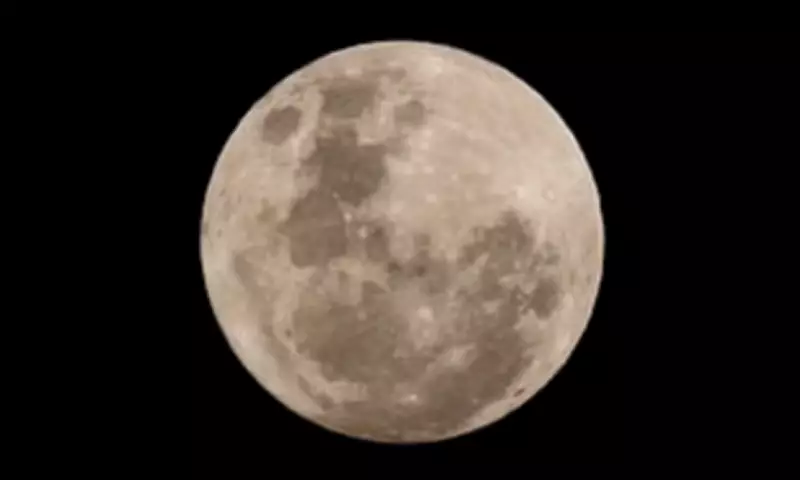
A rare Blue Moon is set to light up the night sky again tonight. Occurring roughly every two to three years, it is a fairly rare phenomenon when we typically see just 13 full moons within a year. The moon will be officially 'full' at 09:45 BST on Sunday morning. In the UK, it will be below the horizon at that particular time, so Saturday night or the night of Sunday 31 will be the two chances to see the Blue Moon. This one is also a 'micromoon' because the moon will become full just before it reaches the farthest distance from Earth in its orbit.
What is a Blue Moon?
A Blue Moon actually has nothing to do with the colour of the moon. Instead, it is about the timings of the full moons during the year. Cultures around the planet, including Native Americans, have given names to each of the full moons, with each typically happening in its own month. For example, the Wolf Moon is usually the full moon that takes place in January. With the cycle of the phases of the moon lasting approximately one month, and there being 12 months in a year, we usually have 12 full moons each year.
However, the phases of the moon actually take 29-and-a-half days to complete, meaning 354 days total for 12 full cycles. This falls some way short of the 365 to 366 days in a calendar year, and so, roughly every two and a half years a 13th full moon is seen. This additional full moon does not fit with the normal naming scheme and so is instead referred to as a Blue Moon. In 2018, unusually, we had two Blue Moons in one year and only two months apart – and one was a lunar eclipse. The next time we will get two Blue Moons in a year will be 2037.

What colour is a Blue Moon?
The term Blue Moon has nothing to do with the actual colour of the moon during this period. However, there are a few recorded times in history when the moon has glowed slightly blue. One of the most notable was during the 1883 eruption of Krakatoa in modern-day Indonesia. The large volume of ash ejected into the atmosphere cooled the Earth by around 0.6°C and also had the effect of making the moon appear slightly blue. This was due to the ash particles absorbing long-wavelength red light whilst allowing more short-wavelength blue light to reach the Earth. Because of its rare occurrence, it is often thought to be the origin of the popular phrase 'Once in a Blue Moon'.
How can you see it tonight?
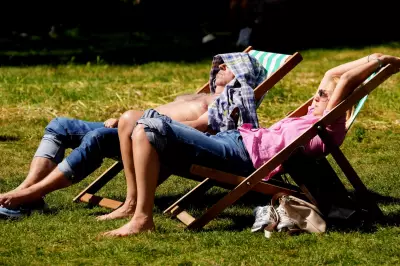
Following a sunny and warmer day on Saturday for England and Wales, the cloud and rainy patch in Scotland and Northern Ireland will be heading across more of the UK overnight. Clearer skies are expected to last longer over East Anglia, south-east England and the east Midlands. Cooler air, clouds and some showers will follow through on Sunday. During Sunday night, the cloud should break up for eastern parts of the UK with showers continuing in the west. So if you are trying to catch a glimpse of the Blue Moon tonight, east is best.