Saharan Dust Plume Engulfs UK, Triggering Health Alerts and 'Blood Rain'
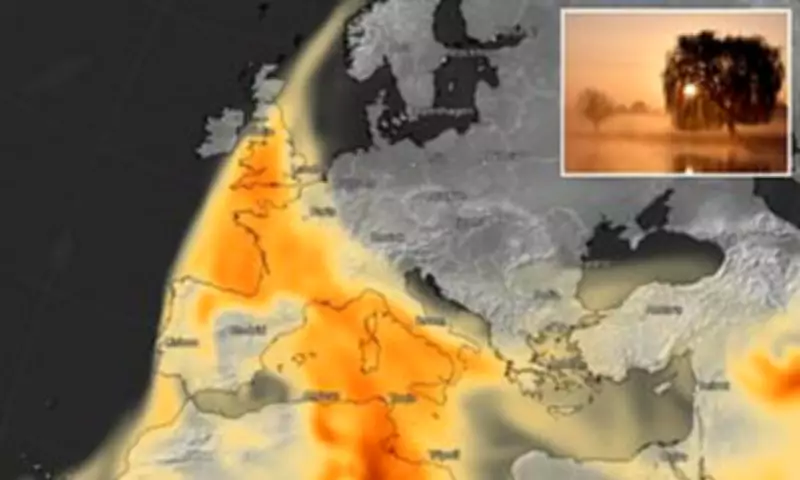
A massive plume of Saharan dust is set to strike Britain over the coming hours, delivering dramatic fiery sunsets and even the possibility of 'blood rain' as authorities activate air pollution health alerts across the country. Composed of sand and mineral particles from the North African desert, this dust has travelled thousands of miles northwards towards the United Kingdom in recent days.
Severe Pollution Warnings Issued
The dust cloud will sweep across southern England, prompting the Government to issue a 'very high' pollution warning for parts of Kent, Essex, Suffolk, and Norfolk tomorrow. London and other areas of the South East have been placed on a 'high' alert, with particular concerns raised for adults and children suffering from heart or lung conditions, as well as older individuals.
Britons have also been cautioned to watch out for 'blood rain', a phenomenon where downpours take on a reddish tint upon reaching the ground after mixing with Saharan dust. This can leave a visible thin residue on vehicles and windows, leading the Met Office to advise motorists to delay washing their cars until the end of the week.

Health Risks and Advisory Measures
The Department for Environment, Food & Rural Affairs (Defra) has warned of moderate to very high air pollution levels possible for parts of England and Wales, driven by a southerly airflow carrying elevated Saharan dust north across the UK. Short-term exposure to such pollution over hours or days can cause a range of health effects, including coughing, chest tightness and pain, difficulty breathing, eye, nose, and throat irritation, worsening asthma symptoms, heart palpitations, and exacerbation of chronic obstructive pulmonary disease (COPD) symptoms.
Defra advises people to reduce their exposure to air pollution, especially if experiencing symptoms, and to consult a doctor or nurse if new symptoms arise, existing symptoms worsen, or symptoms do not improve after a week. For vulnerable groups, such as those with lung or heart conditions and older people, it is recommended to adapt physically demanding outdoor activities and follow agreed management plans, like asthma action plans.
Meteorological Insights and Forecast
Met Office spokeswoman Nicky Maxey explained that the airborne dust is expected to continue moving across the UK through today and tomorrow, leading to hazier skies and potential deposits on surfaces. While Saharan dust itself is a natural particle, its presence can contribute to higher overall particulate levels, with light winds and stable conditions in southern and eastern parts limiting dispersal and allowing locally generated pollution to build up.
Regarding 'blood rain', the Met Office notes it refers to rain that takes on a reddish tint, varying from faint rusty hues to deeper reds based on dust concentration. Genuinely red rain is extremely rare in the UK, but dust-laden rain can leave a thin film on cars, windows, or outdoor surfaces after drying. Effects this week may include reduced visibility at higher altitudes and enhanced sunrises or sunsets due to sunlight scattering.
BBC lead weather presenter Stav Danaos anticipates a 'remarkable display' in the sky, with tiny particles scattering sunlight to filter out blue and violet wavelengths, allowing red and orange tones to shine through. This transforms ordinary sunrises and sunsets into vivid displays with glowing horizons and skies rich in gold, amber, and burnt orange.
Weather Patterns and Temperature Records
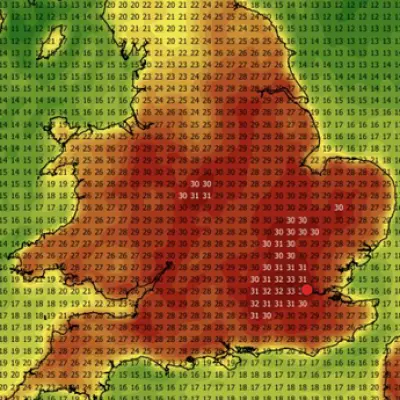
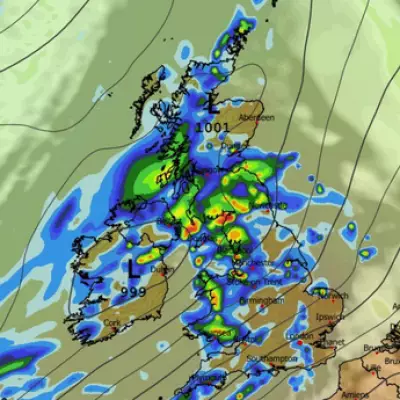
This event coincides with UK temperatures potentially reaching 19C (66.2F) today, which would mark the warmest day of 2026 so far, surpassing the 18.7C (65.6F) recorded in London last Wednesday. Met Office meteorologist Honor Criswick forecasts a band of cloud and rain moving eastwards, with high temperatures of 11C to 12C across England and Wales tomorrow, and a mix of patchy cloud and sunshine over the weekend, reaching up to 14C on Sunday.
Recent examples of visible 'blood rain' include incidents in Kerala, India, in the early 2000s and in Burgos, Spain, in 2022, where cars were covered in Saharan sand. As the UK experiences this meteorological phenomenon, authorities urge caution and preparedness to mitigate health risks and enjoy the surreal atmospheric effects.