The Southern United States is now entering its second consecutive week of biting cold temperatures and widespread, prolonged power outages, creating severe challenges for residents and businesses across multiple states.
Deep Snow and Coastal Destruction
In North Carolina, residents are digging out from more than a foot of snow that fell over the weekend, with Charlotte receiving nearly a foot of accumulation. Governor Josh Stein's office confirmed that crews are working around the clock to clear interstates and highways, though low overnight temperatures are slowing progress.
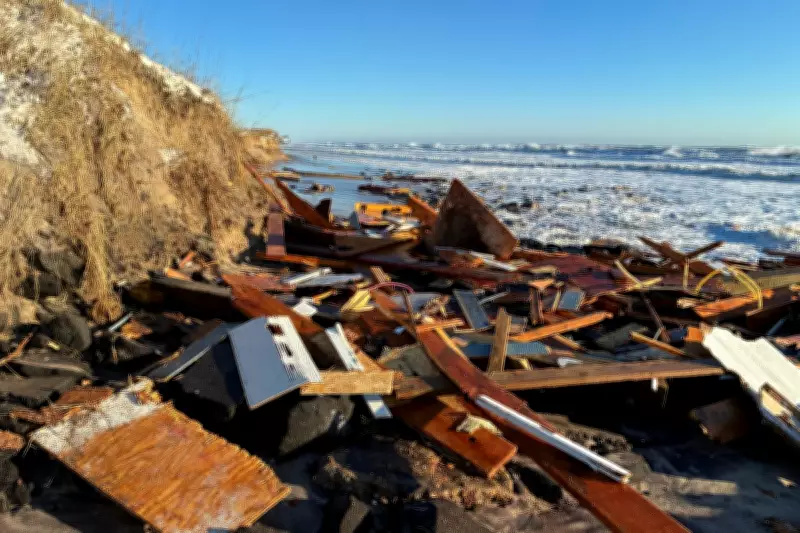
On the East Coast, the situation turned particularly dramatic as four unoccupied homes along North Carolina's Outer Banks collapsed into the Atlantic Ocean since Sunday. A bystander captured one of the structures toppling into the water, with National Park Service photos showing piles of debris along the shoreline in Buxton. These narrow, low-lying barrier islands have been eroding for years, with rising seas swallowing land and more than two dozen houses collapsing since 2020, usually during extreme weather events.

Power Outages Enter Second Week
More than 70,000 homes and businesses in Tennessee and Mississippi have now entered a second week without electricity since an earlier snow and ice storm caused severe damage to power lines and utility poles. The situation has sparked growing frustration with utility companies, particularly in Nashville where more than 20,000 customers remained without power on Monday.
Terry Miles of Nashville described his ninth day without power, living with his wife and their dog in a single bedroom insulated with blankets, cooking and heating water on a propane grill. "We're roughing it," Miles said. "I've been camping before and had it easier than this. I feel like Grizzly Adams."
Utility Under Fire
Nashville Electric Service has defended its response to what it calls an unprecedented storm that cut power to about half its customers, initially affecting approximately a quarter-million people. However, Mayor Freddie O'Connell announced Monday he's ordering a review of the utility's storm preparation and response, stating after meeting with utility leaders that they were "unequipped to communicate about a crisis."
Tennessee Senator Marsha Blackburn also criticized the utility publicly, posting on social media that "whoever is responsible for this breakdown should be fired." The utility has stated that full restoration won't be complete until February 9th.
Agricultural Impacts and Unusual Florida Weather
In Florida, farmers are anxiously waiting for frozen plants to thaw before they can assess the damage to their crops. The timing is particularly devastating for fern growers, who were in their busiest shipping period ahead of Valentine's Day on February 14th.
"It is just terrible timing," said Victoria Register, director of sales and marketing at FernTrust, a growers' cooperative in Seville, Florida. "It's right in the middle of our busiest shipping time of the entire year." Some Florida farmers spray water on their fruit trees and plants ahead of freezing weather to create a protective layer of ice, but growers were waiting Monday for this coating to melt away to evaluate damage.
The cold was so intense in Florida over the weekend that the Tampa-St. Petersburg area saw snow flurries, and cold-stunned iguanas were found motionless on the ground.
Human Toll and Continuing Warnings
The dangerous cold that has afflicted states since January 24th has now claimed more than 110 lives. In New York City, Mayor Zohran Mamdani said Monday that preliminary findings indicate hypothermia played a role in the deaths of 13 people found dead outside in the bitter cold. More than a dozen other suspected hypothermia deaths were reported in Indiana, Louisiana, South Carolina, and Texas.
After more than a week of cold-weather warnings across the eastern United States, the National Weather Service still had several alerts in effect, including a freeze warning through early Tuesday in south Georgia and most of Florida. Some snow was also expected Tuesday across parts of Indiana, Kentucky, Ohio, and West Virginia.

Thermometers hovered below freezing throughout Monday across the northern United States from the Dakotas to Maine, with sub-freezing temperatures forecast to return to the Southeast overnight, reaching into parts of northern Florida.