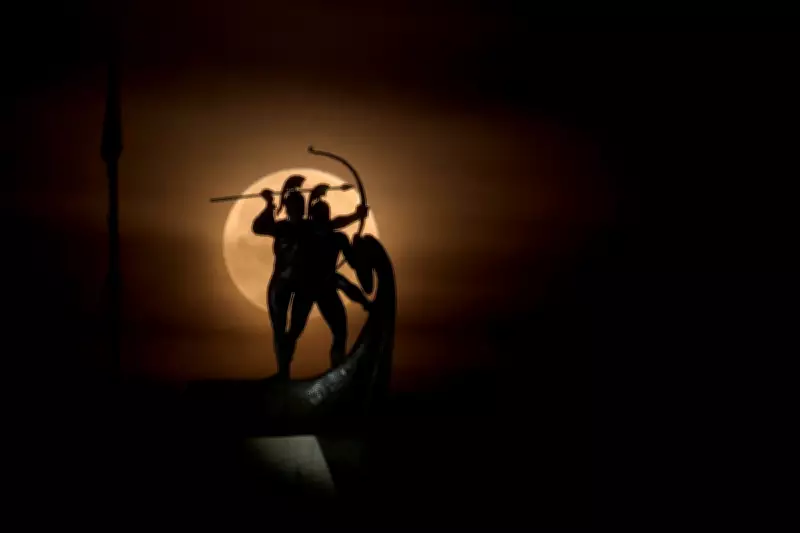
Skywatchers around the world were treated to a stunning astronomical display as a total lunar eclipse transformed the moon into a deep, blood-red orb. This rare celestial event, which occurs when the Earth passes directly between the sun and the moon, cast a reddish glow across the lunar surface, creating a dramatic visual spectacle.
The Science Behind the Blood-Red Phenomenon
During a total lunar eclipse, the moon moves into the Earth's shadow, known as the umbra. Unlike a solar eclipse, the moon does not disappear completely. Instead, sunlight filtering through the Earth's atmosphere scatters shorter blue wavelengths and allows longer red wavelengths to reach the moon, bathing it in a crimson hue. This effect, often referred to as "Rayleigh scattering," is the same process that causes sunsets and sunrises to appear red.
Global Observations and Public Reaction
Observers from various continents reported clear views of the eclipse, with many sharing photos and videos on social media platforms. The event sparked widespread excitement among amateur astronomers, photographers, and the general public, who gathered in parks, observatories, and open spaces to witness the phenomenon. In some regions, the eclipse coincided with optimal viewing conditions, enhancing the visibility of the blood-red moon against a dark night sky.

Experts noted that this particular eclipse was notable for its duration and intensity, with the totality phase lasting for an extended period. The reddish tint varied in shade depending on atmospheric conditions, such as dust and cloud cover, with some areas reporting a brighter copper color while others saw a deeper, almost maroon tone.
Historical and Cultural Significance
Lunar eclipses have long held cultural and historical importance across different societies. Often associated with myths and legends, the blood-red moon has been interpreted as an omen or a spiritual event in various traditions. In modern times, however, such eclipses are celebrated as opportunities for scientific observation and public engagement with astronomy.
This event also provided a chance for educational outreach, with many institutions hosting live streams and informational sessions to explain the science behind the eclipse. Researchers utilized the occasion to study lunar surface details and atmospheric effects, contributing to ongoing astronomical studies.
Future Eclipses and Viewing Tips
While total lunar eclipses are relatively rare, they occur periodically, with the next significant events predicted in the coming years. For those interested in observing future eclipses, experts recommend checking local astronomical forecasts, finding a location with minimal light pollution, and using binoculars or telescopes for enhanced viewing. Unlike solar eclipses, lunar eclipses are safe to watch with the naked eye, making them accessible to all.
The recent blood-red moon serves as a reminder of the wonders of our solar system and the importance of preserving dark skies for astronomical observation. As technology advances, such events continue to inspire awe and curiosity, bridging the gap between science and public interest.