Britons across the United Kingdom could witness the Northern Lights for a second night in a row on Saturday evening, following a spectacular display on Friday. Known scientifically as the Aurora Borealis, the vibrant colours were observed from as far south as Norfolk after a powerful solar storm.
Solar Activity Drives Stunning Display
The appearance of the Northern Lights in the UK is attributed to heightened solar activity, which sends energy towards Earth. This energy interacts with gases in our atmosphere, producing the mesmerising colours that light up the night sky. On Friday night, a strong geomagnetic storm, caused by a coronal mass ejection—waves of charged particles erupting from the sun's surface—brought the Aurora to British shores.
How the Colours Are Formed
As charged particles from the sun approach Earth, they collide with atmospheric gases. Oxygen atoms generate a distinctive green hue, while nitrogen atoms produce red, blue, and pink shades. During intense storms like the one on Friday, the Aurora becomes visible further south across the country, delighting observers from Scotland to southern England.

Factors Enhancing the Phenomenon
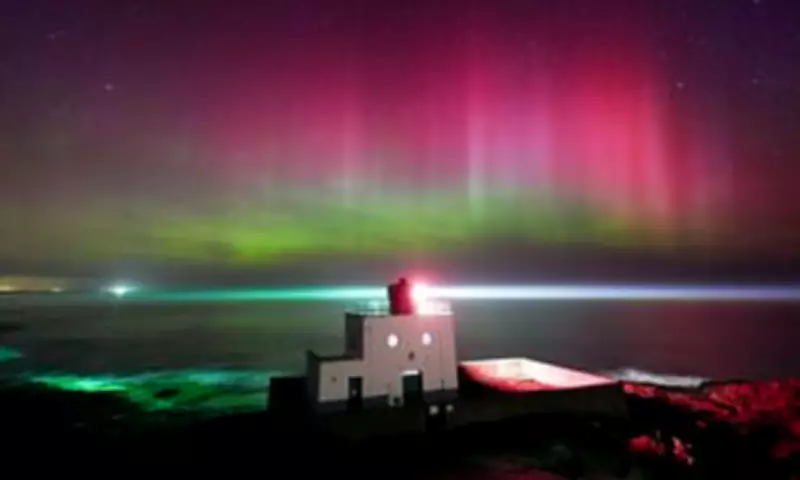
Friday also coincided with the spring equinox, a period when the Northern Lights can appear more vivid. This is due to the alignment of Earth's magnetic field with incoming solar winds, amplifying the visual effect. Photographers and stargazers in Northumberland captured stunning images, including bright green light over Bamburgh lighthouse and multi-coloured skies across the region.
European Sightings and Forecast
The Aurora Borealis was not confined to the UK; it was also visible elsewhere in Europe, such as in Tallinn, Estonia. Forecasters at the Met Office Space Weather Prediction Centre have indicated that geomagnetic activity is expected to persist on Saturday night, with a chance of reaching strong storm levels. They told BBC News that while there is a slight possibility of sightings in southern England, the lights are more likely to be seen across Scotland, Northern Ireland, and northern areas of England and Wales.
Viewing Conditions and Safety
Scotland and Northern Ireland may experience cloudy conditions during parts of Saturday evening, potentially obscuring the view. However, other regions are anticipated to have clearer skies, offering better opportunities for observation. It is important to note that geomagnetic storms and solar flares are generally safe for humans, as Earth's atmosphere provides protection from radiation. Nevertheless, these events can interfere with technological systems, such as satellite communications and power grids.
As solar activity remains elevated, enthusiasts are advised to keep an eye on the skies for another chance to witness this natural wonder. The combination of scientific phenomena and celestial timing makes this a rare and awe-inspiring event for many across the UK.