Travel Expert Addresses Concerns Over Qatar Flights Amid US-Iran Tensions
The Independent's journalism is supported by our readers. When you purchase through links on our site, we may earn commission. Travel questions often arise in uncertain times, and Simon Calder, a seasoned travel expert, recently tackled queries on the wisdom of flying via Doha, navigating cancelled connections, and finding the best way from Perth to Fremantle in Australia.
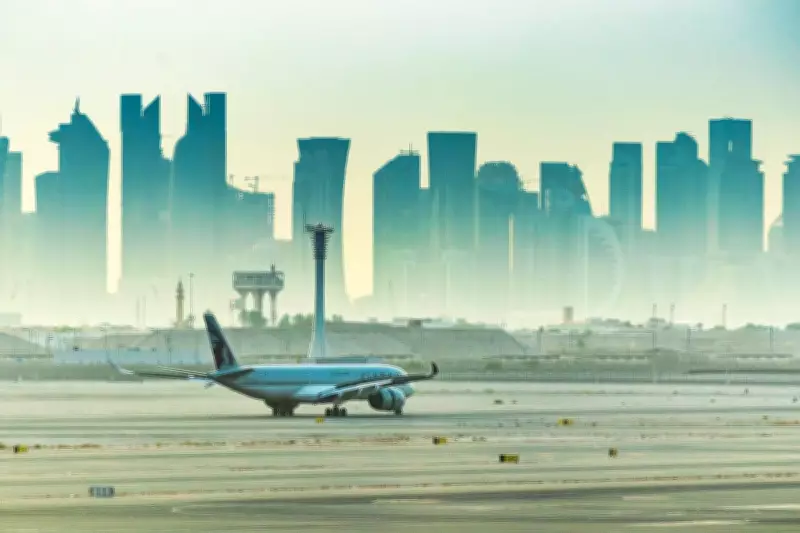
Should Travellers Avoid Qatar Airways Amid US Threats to Iran?
A reader named Karen S expressed concern about a booked trip to Australia via Qatar Airways on Monday 2 March, in light of Donald Trump's threats to strike Iran. She asked if avoiding the Middle East by switching airlines would be advisable. Calder responded from both a geopolitical and traveller's perspective.
From a global standpoint, he acknowledged concerns about potential conflict in the Middle East. However, as a traveller, he emphasized that the aviation industry is well-prepared to respond to any military actions. He urged against changing plans, noting it would be extremely expensive and unnecessary for safe travel to Australia.

Calder shared that he has personal experience in this area, as he is heading to Australia himself in early March, though via Istanbul instead of Doha. His top worries include possible misconnections in Turkey due to separate tickets, sleep quality, and in-flight catering—danger is not on his list.
He explained that all airlines, particularly Qatar Airways, monitor Middle East developments closely. During a recent Gulf flare-up, Doha's hub was temporarily closed, but authorities were informed in advance, and no passenger planes were at risk. While flights were disrupted, they were cleared relatively quickly.
Under UK air passengers' rights rules, if a flight is cancelled or a connection is missed, Qatar Airways must find alternative ways to get passengers to their destination, potentially using other airlines. In case of Middle East airspace closure, journeys could be prolonged, with rerouting adding at least an hour and risks of misconnects, but the carrier must provide hotel accommodation and meals if needed.
Calder expressed 95 per cent confidence that journeys will proceed normally and wished readers an excellent trip.
Best Way to Travel from Perth to Fremantle by Public Transport
Another query came from Megan D, who is flying into Perth on the Qantas nonstop from London and staying in Fremantle. She sought advice on the best public transport option after landing.
Calder described Perth as an outstanding state capital with Fremantle, a handsome oceanside port about 10 miles southwest of the Central Business District (CBD). However, he noted that Perth has one of the most annoying airports in Australia for surface links, with terminals on either side of an active runway.
Unlike Sydney, where an airport train serves all terminals, Perth's airport station only serves Terminals 1 and 2, a 15-minute road journey from Terminal 3, where flights from London arrive. Calder recommended a 12-15 minute walk from Terminal 3 to Redcliffe rail station. Trains run every quarter-hour via Perth city centre to Claremont, most of the way to Fremantle, with a short wait for a final train.
For those exhausted after a long flight with heavy luggage, he suggested a taxi or Uber to the CBD for around £20. From there, he urged taking the Captain Cook voyage from Barrack Street Jetty down the Swan River to Fremantle. The Qantas flight arrives at 12.30pm, and the sightseeing boat departs at 2.15pm, allowing time for lunch and enjoying superb scenery, making sightseeing begin almost immediately.
Dealing with Short-Haul Flight Cancellations on Long-Haul Journeys
Malcolm Harris shared a frustrating experience of a cancelled Amsterdam to Birmingham flight after a long-haul journey from Auckland via Hong Kong, resulting in a six-hour wait at Schiphol airport. He asked if such cancellations are common on short-haul flights to European hubs and if some carriers are worse than others.

Calder expressed sympathy for the long wait but noted that Schiphol offers amenities like an outpost of the Rijksmuseum. If luggage was checked through, passengers might even explore Amsterdam, though weariness often prevents this.
He explained that network carriers like KLM aim to run full operations but, during serious disruption, typically protect long-haul flights over shorter links due to higher earnings, especially from point-to-point flyers. Harris did not mention compensation or care, but Calder highlighted entitlements under air passenger rights.
Unless KLM can prove extraordinary circumstances unrelated to the airline, passengers are entitled to compensation for cancellations and delays, plus meals at the airport. These rights apply even to past trips, and there is still time to claim.
Calder emphasized that building in connections increases disruption risk. For example, with a one-in-10 risk per flight, a three-sector trip has close to a three-in-10 chance of trouble. This is why passengers often pay extra for nonstop flights, though they may not be available from all locations like Auckland.
For further travel questions, readers can email s@hols.tv or tweet @SimonCalder.