US Air Travel Chaos Continues as Severe Storms Sweep from Midwest to East Coast
Air travelers across the United States are enduring persistent and widespread disruptions as a powerful storm system continues to wreak havoc on flight schedules. The severe weather, which initially slammed the Midwest with significant snowfall, has now moved eastward, causing thousands of cancellations and delays at major transportation hubs.
Massive Flight Cancellations and Delays Reported Nationwide
According to data from FlightAware, more than 1,000 domestic flights were canceled on Tuesday, with approximately 4,200 additional flights experiencing delays. This follows an even more tumultuous Monday, when over 4,800 U.S. flights were canceled and delays exceeded 12,800.
Atlanta's Hartsfield-Jackson International Airport has been particularly hard hit, with over 200 flights scrapped and roughly 450 delayed on Tuesday alone. Other major hubs suffering significant disruptions include Chicago O'Hare International Airport, which saw about 600 cancellations on Monday, and New York's LaGuardia Airport, with roughly 450 canceled flights.

The National Weather Service reported wind gusts nearing 50 mph (80 kph) in parts of New York as the storm system swept through the eastern half of the country. The Federal Aviation Administration issued ground stops and delays at several major airports as conditions deteriorated.
Travelers Stranded and Frustrated Amid Chaos
Kelly Price, attempting to return home to Colorado after a family vacation in Orlando, Florida, described sleeping on the airport floor after her Sunday night flight wasn't canceled until early Monday. "By that time, the only place for us to sleep was the airport floor. So we're all tired and frustrated," she said, noting the soonest available flight for her family wasn't until Tuesday afternoon.
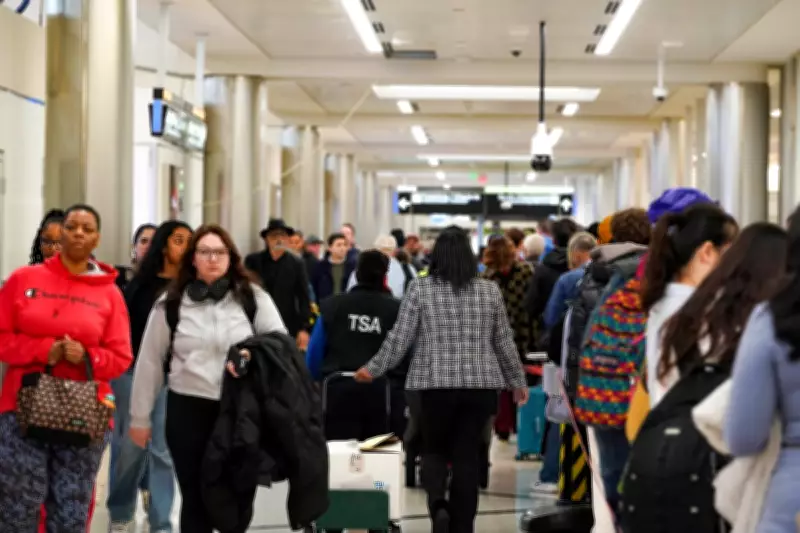
Mel Stewart and his wife arrived four hours earlier than usual for their Monday flight from Atlanta's Hartsfield-Jackson airport to account for extended TSA security lines. "I think it's being politicized way too much — way too much," Stewart commented regarding the ongoing government shutdown affecting TSA workers. "And these people are working. They work hard, and for TSA people not to get paid, that's silly."
Compounding Factors: Government Shutdown and Seasonal Travel
The storm disruptions come at an already challenging time for air travel. A partial government shutdown that began on February 14 has thinned staffing at security checkpoints, leading to longer lines at many airports. Homeland Security reports that more than 300 TSA agents have quit since the shutdown began.
Aaron Barker, a local leader with the American Federation of Government Employees, revealed that many TSA workers "are coping with eviction notices, vehicle repossessions, empty refrigerators and overdrawn bank accounts." Despite mounting financial strain, he noted that many officers continue reporting to work.
Outside Atlanta's airport on Monday, TSA union leaders held a news conference warning that air travelers could face increasingly long wait times as the shutdown continues. Supporters held signs reading, "We want a paycheck, not a rain check."
This marks the third shutdown in less than a year to leave TSA workers temporarily without pay. Once the government reopens, employees will have to wait for back pay.
Additionally, airports are experiencing heightened congestion from spring break travelers and fans heading to March Madness, the annual NCAA men's and women's college basketball tournaments. The combination of severe weather, staffing shortages, and seasonal travel volume has created a perfect storm of travel disruption affecting thousands of passengers nationwide.