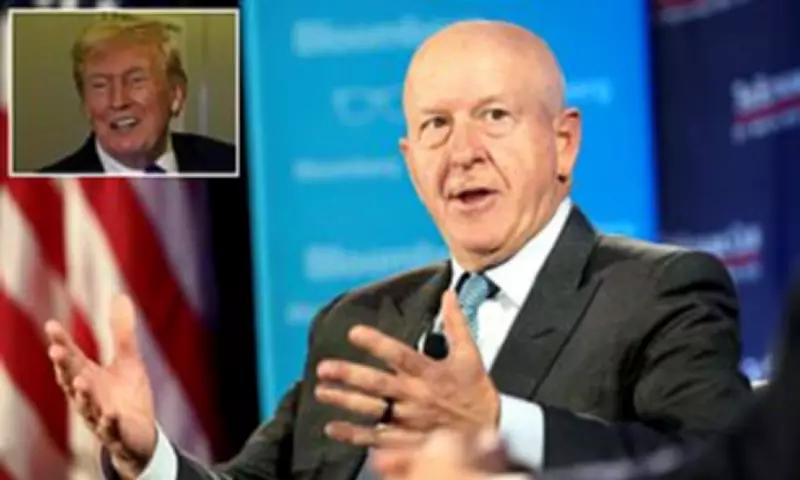
Goldman Sachs Ends Use of Race and Gender in Board Member Selection
In a major policy reversal, Goldman Sachs has announced it will cease considering race, gender identity, ethnicity and sexual orientation as factors when evaluating potential board members. This decision represents the latest high-profile retreat from diversity, equity and inclusion initiatives at a major American corporation.
Conservative Pressure Leads to Policy Change
The shift follows pressure from the conservative nonprofit National Legal and Policy Center, which owns a small stake in the investment bank. In September, the group requested that Goldman executives remove diversity, equity and inclusion considerations from hiring protocols entirely. The NLPC specifically asked for its anti-DEI proposal to be included in Goldman's proxy statement ahead of the shareholder meeting scheduled for late April.
According to people familiar with the matter, Goldman has agreed to remove these specific DEI criteria through a signed agreement with the NLPC. However, the bank has indicated it will continue to consider other diversity factors including viewpoints, background, and work and military service experience when evaluating candidates.

Broader Corporate Retreat from DEI Initiatives
Goldman Sachs is not alone in scaling back its public commitment to diversity initiatives. Since President Donald Trump returned to the White House over a year ago, numerous major financial institutions have either significantly dialed back or completely abandoned their public messaging on DEI. This list includes Morgan Stanley, JPMorgan Chase, Citigroup, Wells Fargo and Bank of America.
The corporate retreat extends beyond the financial sector, with companies like Ford, McDonald's, Walmart, Meta and Google also reducing their emphasis on diversity programs. This widespread shift was largely prompted by Trump's executive order on January 21, 2025, which directed the federal government to consider launching civil investigations into corporations and nonprofits that maintained DEI programs.
Goldman's Evolving Public Messaging
The policy change represents a notable departure from previous statements by Goldman CEO David Solomon, who has publicly spoken about elevating women and minorities within the company. The board is expected to officially approve this policy change later this month.
Goldman's website revisions reflect this changing approach. Months after Trump's executive order, the bank removed all references to race from its webpage promoting the One Million Black Women program. Previously, the page described a straightforward initiative to invest billions of dollars in assisting at least one million black female entrepreneurs by 2030. The current version makes vague, racially-neutral references about helping families and low-income neighborhoods in New York City.
Additionally, Goldman no longer states that companies in the United States and Western Europe must have diverse boards to be taken public through initial public offerings.
Parallel Retreat from Environmental Commitments
The move away from DEI initiatives parallels a broader corporate retreat from environmental, social and governance commitments. Following Trump's election victory in November 2024, banks have largely abandoned previous commitments to reach net-zero emissions by 2050.
Weeks after the election, Goldman Sachs became the first major American bank to leave the Net-Zero Banking Alliance, a United Nations-backed initiative that at its peak included nearly 150 banks across more than 40 countries. These institutions had pledged to achieve net-zero emissions by 2050 and represented approximately 40 percent of global banking assets at the movement's height.
Five more banks quickly followed Goldman's departure, including Bank of America and JPMorgan Chase. The retreat from ESG principles has not been limited to American institutions, with Canadian banks also withdrawing from the alliance. In October 2025, the Net-Zero Banking Alliance voted to cease operations entirely after membership collapsed.

This represents a significant reversal from the ESG movement's peak, when BlackRock CEO Larry Fink popularized socially conscious investing by integrating environmental, social and governance frameworks into his company and urging others to adopt long-term sustainability goals to attract socially conscious investors.
Goldman Sachs declined to comment when approached about these policy changes.