Chinese Consumers Prioritise Quality Over Patriotism Amid Global Tensions
In a significant shift in consumer behaviour, Chinese shoppers are increasingly prioritising quality and value over nationalist sentiment, despite ongoing diplomatic tensions with countries like Japan and the United States. This trend marks a departure from previous patterns where geopolitical friction frequently triggered consumer boycotts and protests.
Historical Context of Nationalist Consumer Campaigns
Historically, the ruling Communist Party has frequently mobilised nationalist sentiment through propaganda campaigns targeting countries perceived as violating China's territorial claims regarding Taiwan and Tibet. Companies making ideological missteps in advertising or mapping have often faced official backlash.
Past tensions with Japan and the United States have led to organised boycotts, street protests, and even vandalism targeting embassies and restaurants. However, contemporary Chinese consumers, particularly urban middle-class and younger demographics, are demonstrating greater independence in their purchasing decisions.

Japanese Brands Maintain Appeal Despite Political Friction
Recent diplomatic incidents have failed to significantly impact consumer enthusiasm for Japanese products. Following controversial comments by Japanese Prime Minister Sanae Takaichi regarding potential military intervention in Taiwan, Chinese officials condemned the remarks and implemented some trade restrictions with Japan.
Official warnings against travel to Japan have notably affected tourism numbers, with Chinese visitors to Japan declining 45% year-on-year in December to approximately 330,400 travellers. State-owned companies and government agencies have largely complied with travel advisories, resulting in cancelled flights and tour packages.
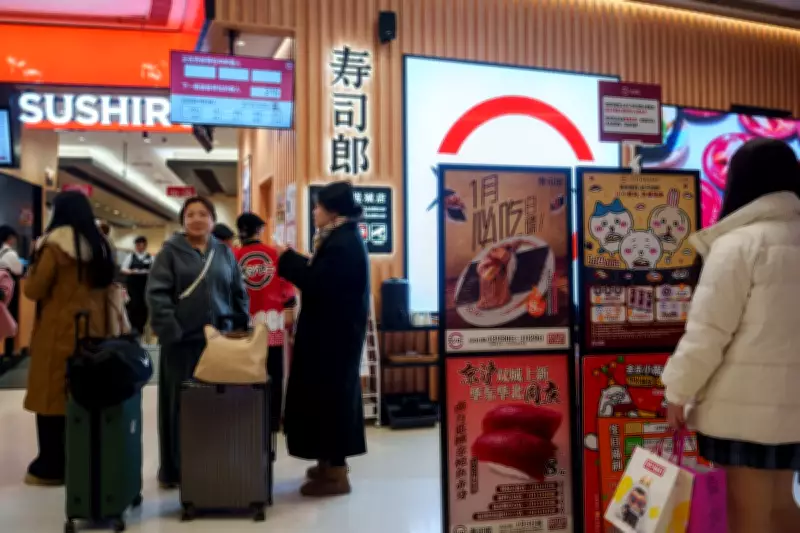
Nevertheless, Japanese consumer brands continue to thrive in the Chinese market. The Sushiro conveyor-belt sushi chain, which opened its first mainland China branch in 2021, attracted huge crowds to a Shanghai mall opening in December. University student Edith Xiao, who queued for over thirty minutes at a Beijing location, explained her enthusiasm: "It tastes good. The quality of the ingredients is guaranteed."
Xiao, a fan of Japanese manga and anime series Chiikawa, noted that diplomatic statements have minimal impact on her consumption choices: "It's just statements made by leaders. It doesn't represent a change in the attitude of people of the country."
American Cultural Products Thrive Amid Trade Tensions
Similarly, tensions between Chinese and US governments over tariffs, Taiwan, and other issues appear to have limited effect on consumer reception of American brands and cultural products. Disney's Zootopia 2 achieved remarkable success in China, becoming the highest-grossing Hollywood film in Chinese history with over 4.4 billion yuan ($634 million) in revenue.
Despite government initiatives to promote domestic cinema and establish China as a "strong film power" by 2035, Chinese audiences continue to embrace foreign entertainment. Beijing moviegoer Ruan Wenlin described Zootopia 2 as "so hilarious" and a welcome escape.
Market analysts attribute this trend to broader societal factors. Shaun Rein, managing director at China Market Research Group, observed: "Many Chinese consumers are tired, exhausted and anxious from COVID and from the weak economy. People are watching Hollywood movies, especially cartoons like Zootopia, because they're stressed out and just want something to relax themselves."
Fashion Brands Succeed Through Quality Positioning
American fashion labels are similarly succeeding by emphasising quality and aesthetic appeal rather than national origin. Ralph Lauren has experienced faster sales growth in China than in Europe or North America by cultivating an "old money" and quiet luxury image that resonates with urban middle-class consumers.

Beijing shopper Zhang Tianyu explained the brand's appeal: "What attracts me most is its stable brand image and design." Jacob Cooke, CEO of WPIC Marketing + Technologies, noted that successful foreign brands "genuinely meet consumer needs or represent a lifestyle Chinese consumers want to associate with, not because of country-of-origin alone."
Evolution of Patriotic Buying Trends
The "guochao" (national tide) movement, which promoted patriotic purchasing of Chinese brands, has matured significantly. Many consumers now comfortably integrate both foreign and domestic products into their lifestyles based on personal preferences rather than nationalist considerations.
Rein explained this evolution: "Chinese have stopped buying just for the sake of buying Chinese brands. Consumers are scared about the economy, they're anxious about their job prospects. So they'll just buy whatever brand, domestic, Chinese or foreign, fits their definition of value and lifestyle."
Analysts note that nationalist sentiment exerts considerably less influence on consumer behaviour compared to a decade ago. While incidents like the 2012 anti-Japan protests and 2021 boycotts of Western brands over Xinjiang-related issues demonstrated the potential for consumer nationalism, contemporary responses to geopolitical controversies are more measured.
Independent consumer analyst Yaling Jiang observed: "We may believe that all Chinese consumers should follow Beijing's direction of discarding foreign influence, which is misleading. Geopolitics does not dictate business flows on the local level."
Rise of Competitive Domestic Brands
Despite this consumer pragmatism, the growing competitiveness of Chinese brands presents significant challenges for foreign companies. Domestic manufacturers in sectors including electric vehicles, smartphones, and athletic wear are rapidly gaining market share both domestically and internationally through improved quality and value propositions.
Rein noted this shift: "Chinese will choose Chinese brands because they're better, better value, better quality, better pricing." This creates a marketplace where consumers increasingly make decisions based on practical considerations rather than patriotic sentiment alone.
The evolving consumer landscape suggests that while geopolitical tensions may influence official policies and institutional behaviour, individual Chinese consumers are demonstrating greater independence in purchasing decisions, prioritising quality, value, and personal preference over nationalist considerations in their daily consumption choices.