Supreme Court Redefines Oat Milk: Beyond the Legal Terminology
The UK Supreme Court has delivered a landmark ruling that oat milk is not, according to trademark law, actually milk. This decision has triggered predictable outrage from plant-based advocates, triumphant commentary from dairy industry representatives, and a wave of headlines declaring that a beverage poured into millions of flat whites has been officially unmasked. The more immediate practical question, however, feels faintly more urgent: what exactly are we meant to call it now while ordering our morning coffee?
The Linguistic Slippery Slope of Food Terminology
Oat drink sounds vaguely medicinal. Oat beverage suggests airline catering. Oat water is technically honest but emotionally bleak. Yet "milk" was never really a statement about biology. It described how the product behaves – in tea, in coffee, on cereal – while quietly sidestepping what it actually is. That linguistic sleight of hand has always done more work than we acknowledge, functioning as nutritional shorthand that signals protein, calcium, satiety, and familiarity.
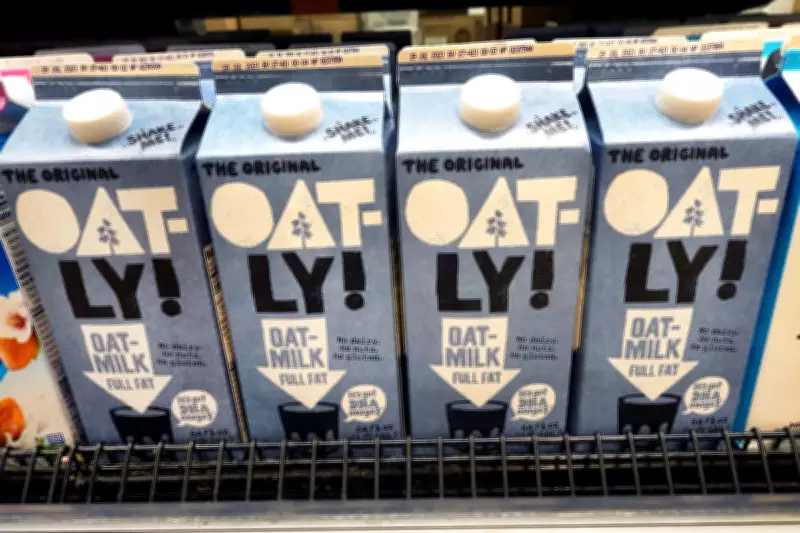
Plant-based alternatives adopted the word not because oats resemble dairy, but because the term instantly communicates function and context. It tells consumers what to do with the product. It also, perhaps inadvertently, imports assumptions about its healthfulness. The judgment itself delivered was far narrower than the cultural noise surrounding it. The case centred on Oatly's "Post Milk Generation" slogan and the legal protections afforded to reserved dairy terms.

Oats have not changed for millions of years. Nothing inside the carton has changed. Only the language surrounding it has. But language is rarely neutral, particularly in food, where words carry heavy nutritional and cultural baggage.
Nutritional Controversies and Scientific Disagreements
Oat milk's rise was built on compelling associations: positioned as the plant-based upgrade to almond and soy, it arrived wrapped in a narrative of being better for the planet and implicitly healthier than old-fashioned dairy. For many shoppers, the choice was not simply practical but moralised, woven into broader ideas about wellness and sustainability. Yet oat milk has been nutritionally contested for years, long before judges began weighing its terminology.
Some critics have been characteristically blunt. Jessie Inchauspé, the biochemist known online as the Glucose Goddess, dismissed it in an interview: "Oat milk comes from oats, and oats are a grain, and grains are starch. When you're drinking oat milk, you're drinking starch juice. You're drinking juice with a lot of glucose in it. So it leads to a big glucose spike."
Others have raised concerns less theatrically but no less critically. Functional medicine specialist Sarah Carolides noted that oat milk is "pretty much all carbohydrates," while nutritionists have frequently pointed to its comparatively low protein content when set against cow's milk. Yet even within the same scientific community, caution against overstatement is common.
Dr Federica Amati, head nutritionist at Zoe, has urged consumers not to panic over simplified metabolic fears."If you are drinking occasionally in your tea or coffee, go for the one you like the taste of the most and if you don't have diabetes don't worry too much about sugar spikes; your body will likely be able to handle it." The disagreement itself is the point. Nutritional science rarely produces the tidy moral clarity consumers crave.
The Processing Paradox and Environmental Complexities
Professor Tim Spector has long argued that processing and food structure matter more than simplistic nutrient hierarchies. "We need to be honest about how processed some of these alternatives are. It's not just oats and water – you're looking at a list of ingredients that often includes industrially refined vegetable oils and gums." His broader warning is not an indictment of oat milk specifically, but of the ease with which products acquire health halos by virtue of category alone.

Which brings us to a deeper, more awkward tension. In the current cultural reckoning with ultra-processed foods, oat milk occupies an unexpectedly ambiguous position. Transforming oats – a solid grain – into a shelf-stable, milk-like liquid is, by definition, an industrial act. Enzymatic breakdown, homogenisation and stabilisation are not optional quirks but structural necessities.
- The result may be convenient and palatable
- It sits uneasily within a consumer landscape increasingly suspicious of anything perceived as heavily manufactured
- Plant-based branding trades heavily on the language of naturalness
- Production realities are rather less pastoral
The environmental narrative is no less complicated. Plant-based milks were long presented as the unequivocally sustainable choice, shorthand for reduced emissions and resource use. Yet agricultural systems are not monolithic. Regenerative and organic dairy farming, increasingly visible in the UK, positions well-managed livestock as contributors to soil health and carbon cycles rather than simple ecological liabilities.
Buying milk from regenerative farms allows consumers to feel reasonably confident that production methods aim to restore rather than deplete ecosystems.Oats, meanwhile, are frequently grown within large-scale industrial farming systems reliant on fertilisers, monoculture practices and chemical inputs. Before reaching the carton, they must also pass through extensive processing stages to become something resembling milk – or at least milk's functional stand-in. Neither category is environmentally innocent. Both depend on systems consumers rarely see.
Consumer Shifts and the Meaning of Food Language
Against that backdrop, last year's revival of full-fat dairy begins to look less like nostalgia and more like another expression of consumer scepticism. As retailers reported rising interest in whole milk and a softening enthusiasm for plant-based alternatives, consumers appeared to be renegotiating what "natural" and "healthy" actually meant. The Supreme Court ruling does not transform oat milk's health profile any more than it settles the dairy debate.
- What it does expose is how much meaning consumers load onto food language
- How readily words shape expectations of health, virtue and risk
- "Milk" was always shorthand for something more complex
- The real argument was never about vocabulary, but about what people believed they were buying
The cartons look familiar. The terminology, following the Supreme Court ruling, is less straightforward. What remains unchanged is the fundamental question: when we pour that creamy liquid into our coffee, what exactly are we consuming, and what stories are we telling ourselves about its nutritional value, environmental impact, and place in our diets? The legal definition may have shifted, but the cultural and nutritional conversations are only just beginning.