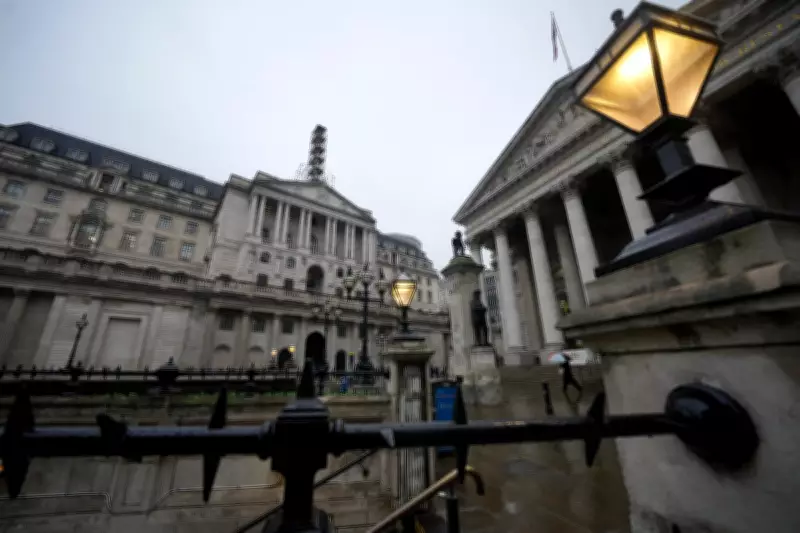
Bank of England Expected to Maintain Interest Rates Amid Iran War Economic Turmoil
The Bank of England is widely anticipated to keep its main interest rate unchanged at 3.75% on Thursday, a significant shift from earlier expectations of a cut. This decision comes in response to the economic upheaval triggered by the Iran war, which began on February 28, 2026, and has since disrupted global markets.
Impact of Iran War on Global Economic Forecasts
Until the United States and Israel launched the attack on Iran less than three weeks ago, it was viewed as a near certainty that the Bank of England would reduce interest rates again. However, the onset of the conflict has set in motion a chain of events that has upended global economic projections, particularly regarding inflation and growth.
The most immediate and tangible impact has been on oil and gas markets, with prices rising sharply since the war started. This surge is largely due to the closure of the Strait of Hormuz, a critical waterway through which a fifth of the world's crude oil passes. The longer the war and strait closure persist, the greater the economic pain will be, affecting everything from fuel prices at the pump to domestic energy bills.

Inflationary Pressures and Central Bank Reassessment
With these new inflationary pressures stalking the global economy, central bankers, including those at the Bank of England, are having to reassess their 2026 projections. On Wednesday evening, the U.S. Federal Reserve held its key interest rate, as expected, reflecting a cautious approach amid the uncertainty.
For the Bank of England, the situation means that inflation is unlikely to fall to its target rate of 2% as soon as previously anticipated. This will lead to a higher price profile for the rest of the year, creating a backdrop that is hardly conducive to further interest rate reductions in the near term.
Expert Analysis and Future Outlook
Andrew Wishart, a U.K. economist at Berenberg Bank, commented on the bank's prudent stance. "The bank would be wise to wait and see whether a rise in energy prices triggers a reacceleration of underlying price pressures before acting," he said.
Wishart noted that the Bank of England's nine-member Monetary Policy Committee could potentially cut its main interest rates from the current 3.75% as early as June, but only if the closure of the Strait of Hormuz proves to be short-lived. "If energy prices stay high for six months, the bank would probably delay the reduction until 2027," he added, highlighting the long-term implications of sustained price hikes.
Market Expectations and Previous Projections
After last month's rate-setting meeting, financial markets were predicting at least two to three quarter-point reductions in the base rate this year. Economic projections accompanying the decision to keep rates unchanged then showed inflation hitting the target in the spring. However, Bank of England Governor Andrew Bailey had previously indicated that, "all going well," there should be scope for some further cuts this year.
The current geopolitical climate, marked by the Iran war and its economic fallout, has forced a reassessment of these optimistic forecasts. As central banks worldwide navigate this volatile landscape, the focus remains on balancing inflation control with economic stability in an increasingly uncertain global environment.