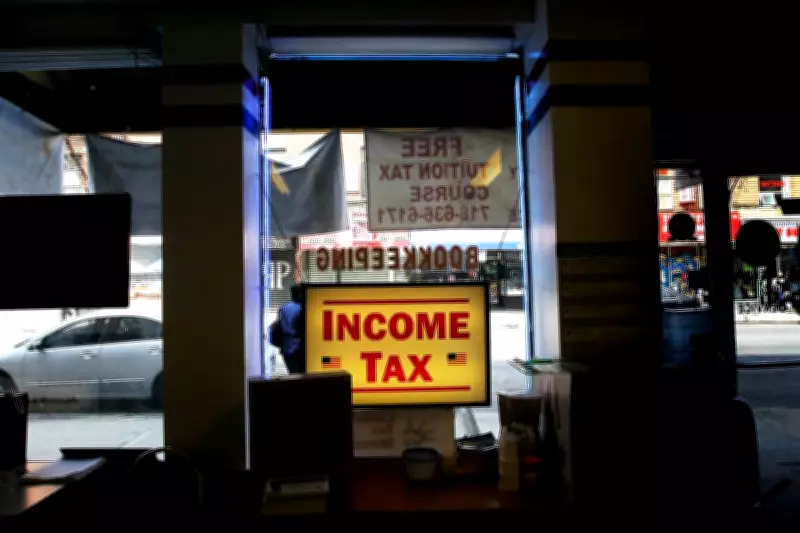
The Widening Income Tax Rate Gap Between Blue and Red States
Across the United States, a profound divergence in income tax policy is unfolding, with Democratic-led states increasingly raising rates on wealthier individuals while Republican-led states aggressively lower or abolish personal income taxes. This growing chasm reflects deeper ideological divides over taxation, public services, and economic competitiveness, reshaping the financial landscape for millions of residents.
Republican States Push for Tax Cuts and Elimination
Over the past five years, twenty-three states under Republican governors have reduced their top income tax rates, according to a Wall Street Journal report. The trend is driven by a desire to attract affluent individuals and businesses from neighboring jurisdictions, fostering a competitive environment where lower taxes are seen as a key incentive. This year alone, seven Republican-led states have implemented cuts to their top rates.
States like Mississippi, South Carolina, and Oklahoma are on trajectories to completely eliminate their top income tax rates, aiming to join the ranks of Alaska, Florida, Nevada, New Hampshire, South Dakota, Tennessee, Texas, Washington, and Wyoming, which already have no or limited income taxes. Mississippi Governor Tate Reeves has championed such legislation, arguing it empowers residents to "feed your family and invest in your home and your community." In a press release, Reeves emphasized that "government should take less so that you can keep more" and positioned Mississippi as a magnet for opportunity and talent.

The Hidden Costs of Tax Elimination
However, experts caution that eliminating state income taxes does not necessarily translate to a more affordable lifestyle for average residents. Aidan Davis from the Institute on Taxation and Economic Policy warns that public services may be cut, and other taxes and fees—such as sales taxes, excise taxes, and fines—could increase, disproportionately affecting low- and middle-income families. For instance, Missouri lawmakers are considering abolishing the state income tax and instead raising sales taxes, applying them to services like TV streaming, auto repairs, salon visits, and plumbing, potentially inflating everyday expenses.
Moreover, states with reduced or no income taxes often face revenue shortfalls that can lead to fewer social services, impacting areas like education, healthcare, and infrastructure. This dynamic challenges the notion that tax cuts universally benefit all residents, highlighting trade-offs between personal income retention and communal support systems.
Democratic States Maintain or Increase Top Rates
In contrast, Democratic-led states have largely maintained or are considering hikes to their top income tax rates. Prominent examples include California, Hawaii, New Jersey, New York, and Washington D.C., where rates of 10 percent or more mean residents take home less of their earned income, influencing the overall cost of living. These policies are often framed as necessary to fund essential services and counteract federal welfare cuts, such as those from the Trump administration.
New York City Mayor Zohran Mamdani has advocated for increasing top income tax rates on New Yorkers earning over $1 million to bolster revenue for public programs. Critics, however, warn that such moves could drive wealthy residents and businesses to relocate to states with more favorable tax environments, gradually eroding the state's competitive edge. Andrew Rein, president of the Citizens Budget Commission, noted that while immediate mass exodus is unlikely, raising income taxes "does chop away at our competitive foundation over time."
The Disappearing Middle Ground
As the ideological gap widens, the middle ground in state tax policy is vanishing, forcing residents to choose between contributing to state programs through income taxes or retaining more earnings while facing alternative levies. This polarization underscores a national debate over the role of taxation in fostering economic growth versus ensuring robust public services. Ultimately, the evolving tax landscape will continue to shape migration patterns, investment decisions, and the quality of life across America's red and blue divides.